


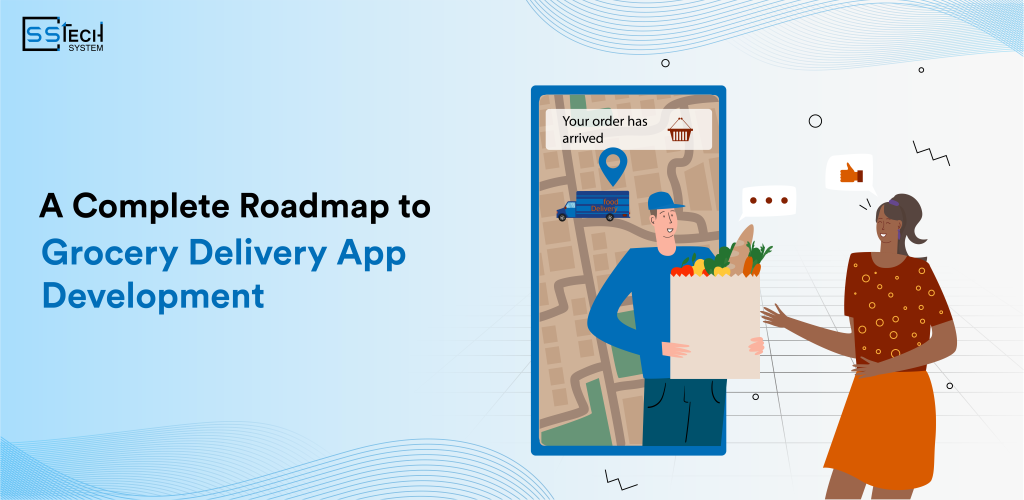
With the growth of mobile usage and the internet, people love to buy things online whether it is clothes, household items, groceries, medicines, learning skills, paying the bill, and many other things. Buying groceries can become a tedious job, go to the market every day, wait in long queues to buy the same items, for payment, carry the heavy items in hand and then come back home, can be a monotonous exercise.
The concept of mobile app development came into existence to save the shoppers from the hassle of this daily parade and bring some comfort into their lives, convenience of seamless shopping, without even stepping out of the house.
Why there is a rise in demand for grocery app development?
Easy mobility
The shopper gets all the items delivered in time at their doorstep. The app acts as a bridge between the buyer and the retailer.
Busy work schedule
Long and strenuous working hours do not leave most people with much time to visit the market. The app saves time with on-the-go purchases.
Timely delivery
On-time delivery eased out the worries of running out of stock at home. The user can easily track their delivery.
On-Demand Grocery App Development: A true blessing for online shoppers!
In the present scenario, entrepreneurs are showing keen interest in setting up an online grocery store and creating their grocery delivery app, as there are ample opportunities to thrive. In this pandemic situation, Grocery app development for retailers is the need of the hour, to reduce the difficulties faced by people in getting essential groceries.
Get a smooth and convenient shopping experience, with Grofers like grocery app from SSTech System, the fastest-growing grocery app development company in India and Australia. It helps businesses to grow their brand awareness and get customer loyalty.
Market Opportunities & Business Benefits
The online grocery delivery sector is witnessing phenomenal growth, with global revenue soaring and estimates predicting the market will go from roughly USD 0.75 trillion in 2025 to more than USD 2 trillion by 2030 at a CAGR of above 22 %, reflective of huge demand and revenue potential for a grocery mobile app.
Potential for income and recurring orders
Recurring purchase behavior can quickly benefit online grocery apps, as consumers regularly order necessities, fresh produce, and staple items from mobile platforms, turning first-time customers into repeat subscribers. Moreover, increased ease in adoption and customer reliance on quick commerce in grocery delivery implies high revenue retention and customer lifetime value.
Advantages for local retailers and supermarkets
Digital channels access brings local retailers and supermarkets into the digital world and expands their market and sales touchpoints by connecting offline customers with online ones. With this collaboration between grocery apps and smaller grocery stores, it becomes possible for small grocery stores to build competitiveness against large players, minimize inventory turnover and increase the frequency of order fulfillment.
Convenience, speedy deliveries and immediate access to inventory for customers
With the growing preference for convenience, visibility into real-time inventory and rapid delivery options, grocery store app is the natural choice for customers, while quick commerce models (10-minute delivery) are changing the shopping behaviour paradigm in urban markets. They ease the shopping pain points, encourage impulse buys, and increase user happiness, which in turn boosts engagement and retention, too.

Types of Grocery Apps You Can Build
The model of the grocery delivery app you should select depends on your target audience, business model, and operational scale. Grocery apps are essentially of two kinds, which focus on different customer needs and provide different growth levers in the on-demand grocery space.
Single-store grocery app
It is the perfect model for ground-level grocery stores that want to prepare for a future where their loyal customer-base prefer to shop online. It enables total freedom with price, stock, brand and customer relationship as it is end-to-end independent of any third-party organisations.
Multi-vendor grocery marketplace app
A multi-vendor marketplace brings different grocery sellers together on one platform and offers customers more product options. Rapidly scales location with the platform owner earning through commission, subscriptions or featured listings.
Hyperlocal grocery delivery app
Hyperlocal apps are for delivering faster within a certain radius, mostly through nearby stores. They are designed for immediate requirements, employing local vendors and delivery partners to offer same-day or express grocery fulfilment.
Entailing subscription-ized grocery app (Staples, milk, vegetables.)
Subscription grocery ordering app guarantees revenue by providing regular deliveries of daily essentials. They increase customer loyalty while simplifying demand forecasting and inventory planning, making it easier to procure stock when sales increase.
B2B wholesale grocery app
Many smartphones are B2B and app-like, Blinkit are B2B, targeted towards retailers, restaurants, and bulk buyers, including wholesale pricing and large order volumes. They also enhance the entire procurement process and facilitate credit management, as well as improving efficiency throughout the supply chain for business buyers.
Challenges in Grocery App Development & How to Overcome Them
Development of a supermarket delivery app needs elaborate operational and technical challenges that correlate with user experience, profitability and scalability. If you understand these challenges from the start, and you plan the right solutions, then you can ensure the smooth performance of your app and long-term app success.
Real-time inventory synchronization
One of the most monumental obstacles comes from managing inventory in real-time across stores, for the warehouses, and for the app interface. Unsynchronized restocking frequently leads to customers placing orders for items which are not available and subsequently cancelling their orders when they find out, leading to customer dissatisfaction.
How to overcome: Connect the app to POS and inventory management systems in real-time and use automated stock updates after every order and establish rules for buffer stock to avoid overselling in high-demand periods.
Managing last-mile delivery
Grocery delivery with time-sensitive items typically requires the most expensive, and the most operationally-complex, last-mile delivery. Late deliveries, unavailability of drivers, and inefficient routing can adversely affect consumer trust.
How to overcome: Use AI-driven route optimization, real-time driver monitoring, delivery slots management, and hybrid delivery model (in-house + third-party partners) to drive speed while reducing costs and ensuring deliveries are reliable.
Scaling and peak load handling
Sometimes grocery shopping app experience surge demand during the weekend, festivals, bad weather or emergencies that can put the servers to the test and limits the fulfilment of the orders. Bad scalability leads to crashed apps, slow checkouts, and revenue lost.
How to overcome: Build the app on the cloud, using a cloud provider that allows for scalable systems, and implement load balancing and a microservices architecture and a way of stress-testing that the platform can withstand/unload traffic in short bursts without the degradation of experience.
Secure payments + data protection of users
Grocery apps deal with some of the most sensitive information of their users, such as payment information, address, name, etc. That makes grocery apps the top targets for cyber threats. Such a security breach will ruin your brand image and also trigger legal proceedings.
How to overcome: Use a payment gateway, end-to-end encryption mechanism, tokenization, API security, two-factor authentication, etc. and comply with data protection standards to gain user confidence and adhere to regulations.
Key Features of a Grocery App
The following amazing feature makes the shopping experience a great one.
Customer Profile
The customer profile will include the name, location, and phone number of the user.
Simple and easy login
An individual account for each user, they can log in to their account with their email id, or registered mobile phone number.
Maps for tracking
Online live tracking to track the delivery boy on his way to the location. The user can guide him in case, there is a problem locating the address.
Read more: Real-Time Tracking Solutions for Smarter Logistics Management
Notifications
The user and delivery executive will get the notifications and alerts, to have an idea about the status of the delivery and the items.
Simple booking
The users can easily choose the items and book their order with a simple UI.
Varied payment options
The user will avail of different payment options; this will not delay the payment. It can range from cash on delivery, credit or debit cards, e-wallet to others.
Customer support
The customer support executive to sort the customer’s problem efficiently.
Customer App
An application makes things easier for the consumers, with easy navigation, intuitive UX/UI. We keep in mind the comfort of the user. In our grocery apps we include:
Easy onboarding
Hassle-free customer sign-in options, to make things easy for the user.
Item categories
A proper section on the items and their categories for easy sorting and choosing the items.
Quick Search
The user can look for the exact items they want with the help of a quick search option. It saves time in scrolling through all the products.
Order history
The customer can view their previous orders and products they have purchased.
Order and reordering of products
Customers have the option to place an order, reorder the older order, and add items when missed.
Geo IP location
Easy identification of the geographical IP location.
Preferences of delivery, date, day, and time
These options help users to receive the order on their availability.
QR Scan
It provides easy access to the users.
Add to Cart
The shopper can easily add items in their cart and keep a track of products they want.
Push notification
Any new offers and discounts are notified to the users.
Secure modes of payment
Ensure secure payments through e-wallet, bank account, debit and credit cards, Paypal, Google Pay, etc. payment through digital wallets are on the rise.
Automatically logged out
If the user forgets to or does not log out within that specific time, they will be logged out automatically.
Social media login
To keep a track of all the ids for different accounts gets difficult. We provide the option of social media login to make things easier for the user.
Delivery Tracking
This option will keep the user alert about the estimated time of delivery, with GPS the user will locate the delivery person.
Social sharing
The user can share the apps on their social media accounts with this feature.
Wish list
The user can add their favorite items using promo codes when it is restocked or price drops.
Rating and reviews
After each delivery, the customer can give ratings and reviews of the delivery experience.
Admin Web Panel
Order management
This feature helps you to easily handle all the placed orders.
Sub-admin creation
Admin can create sub-admins to fasten the process.
Store management
Admin can keep a check on all the stores that sell their products.
Product management
it helps admins to manage the inventory.
Transaction History
All the transaction history to date can be accessed by the admin.
Content management
Admins can manage the contents of different pages.
Reports and analytics
It generates reports and analytics at regular intervals.
Interactive dashboard
Functioning of the application becomes easy.
Real-time analytics
Admin can fetch real-time analytics at any time.
Customer management
admin can manage customers’ activities.
Product list management
Keep track and easily handle product lists.
Payment management
Admin can manage payments with the help of this feature.
Items and category upload/alteration
Replacement/change or re-stocked items is done with the supervision of the management.
Multiple Items by single store
Choose items based on the demands to be on the panels as decided by the management.
Reviews & Ratings
Keep a track of the customer’s feedback; it is to be administered by the management, so they know about the expectations of the customers. It will give them a clue about their performance.
Promotions and offers
The management introduce new products and promotional offers. The percentage of the revenue is decided by them.
Elegant profile management
Profiles of esteemed customers can be tracked by the admin. So privileged customers can be given priority services and offers.
Delivery Boy Panel
Order alerts
The delivery person must be aware of order cancellation, placing, and delivery.
Reviews and ratings
To maintain a good customer base, the delivery executive is also given an option to rate the user.
Earnings
The executive gets a commission for each delivery. Customers can also add tips for the executive. These will be reflected in the earnings option.
Payments
The delivery person can see what the user’s chosen mode of payment is as he will be delivering the order.
Order history
The delivery person will get a preview of the order placed and the items to be delivered.
GPS Navigation
The delivery address will be easily located by the executive with the help of GPS navigation.
Advanced Features
To increase app performance and user experience, we also integrate some advanced features, in our grocery apps.
Seller App
The sellers can manage the sales through this additional app.
Dedicated Interface
It helps to manage the functions of the app with minute precision.
Real–time orders from stores
The admins can place on-demand orders with the help of this feature.
Live to track
The user can track their purchase and order delivery status in real-time.
Multiple orders
Single user can place multiple orders at the same time.
Contact delivery boy
you can share the contact details of the delivery boy with the user.
Invoice generation
The user can generate an online invoice for the purchase after the delivery is done.
E-Wallet
The user can integrate e-wallets with the application to carry out easy transactions.
In-app chat
In case of any query the user can chat with customer support.
Customized offer zone
A customized offer zone can be created for the users based on their purchase history.
Featured products
They can be listed on the top or on the banner to get higher visibility.
Real-time orders from stores
The admins can place on-demand orders through this feature.
Advanced Features to Make Your Grocery App Stand Out
Advanced functionalities take your supermarket mobile app beyond the basics of ordering, enabling greater personalization and convenience for end-users while allowing for more streamlined operational capabilities. Such features amplify the user experience in addition to improving customer retention & average order value.
AI-powered product recommendations
AI-powered recommendation systems analyze user behavior and purchase history along with preferences to recommend products that are targeted. It enhances the upselling, cross-selling and also makes shopping more customized for customers.
Read more: How AI is Revolutionizing Logistics App
Voice search and intelligent reordering
Voice search enables users to add things quickly through voice and natural language like experience which makes the app efficient and more accessible. Reordering made easy with smart reordering where customers can repeat an order with a single tap from their last purchase, creating higher convenience and higher repeat order rate.
Automated subscription & repeat orders
Daily essentials such as Milk, Vegetables, groceries, etc. can be automated using the subscription features with regular deliveries. This allows businesses to have some guaranteed revenue, and customers to avoid the hassle of having to remember to shop at regular intervals.
Chat with us feature and support within the application
Real-time in-app chat between the customers, delivery partners, and support teams. It speeds up order resolutions and increases trust and customer satisfaction tremendously.
Dynamic pricing as well as surge management
Dynamic pricing allows you to price a product or the delivery charge based on various factors such as demand, place, and, time slots. With surge handling, peak hours of demand and supply can be claimed profitably, without confusing the users by hiding earlier-fixed prices.
Multi-language and multi-currency support
With multi-language and multi-currency features, your app easily serves to different regions and the international markets. This also makes the platform more inclusive and scalable to different geographies.
How to Develop a Grocery App: Step-by-Step Process
A grocery app development requires a systematic approach, which enables them to align business goals with technology and user expectations. A reassuring step-by-step procedure minimizes risks, keeps the expenses in check, and aids in performing a successful launch and scalability.
Market research and competitor analysis
The customer is always right, so this step is to figure out exactly what the customers need, how they shop, and where the gaps in the market are in terms of grocery delivery. Understanding the competition reveals what features are table stakes, what you can charge for, and where your market opportunities lie as you design your product.
Set app goals and business model
But having clear goals, whether the app is meant to be a growth, profitability, customer retention, or market expansion, can shape many of these decisions. The business model single store, marketplace, subscription, or B2B has been selected before the development and monetization of an app and it is the basis for this.
UI/UX design and wireframing
UI/UX design refers to an effortless, fast, and smooth shopping journey. Wireframes allow you to visualize what the user journeys, screen layouts, and interactions will look like before anything is actually developed.
Backend and frontend development
Frontend development creates the app interface between the user and the business, and backend development manages logic and databases that process orders. An architect that that can provide great performance, scalability and purple neck operations.
API integration (payments, maps, notifications)
APIs connect the app to various services, such as GPS maps, payment gateways, push notifications, etc. You benefit from secure and smooth transactions, tracking delivery, and providing frequency update to the users in real-time with the use of seamless integrations.
Testing, QA, and security checks
Testing the App on multiple devices, different operating systems, and numbers of use cases to ensure that everything works perfectly. Security Checks: Security checks are in place to secure the data of users, prevent any vulnerabilities and to comply with industry standards.
App launch on Android & iOS
The app goes live on app stores, after going through certain platform guidelines and achieving necessary performance benchmarks. Taking the time to plan out your launch strategy serves to give you a better shot at attracting early users and using their feedback to improve your offering.
Post-launch support and feature upgrades
Post-launch is about fixing bugs, performance and monitoring and user support. Continuous feature updates make the app stand specific in the competition, enhance experiences, and adjust quickly to the evolving market trends.
Technology Stack for Grocery App Development
Backend proper programming
It strengthens the app to work smoothly and act as a spinal cord, go for excellent programming at the backend for the best grocery app solution.
Coding language
Choosing the best coding language will help in the regulation of the services of the app.
Interface
The users must get a clear visual of the grocery app. It is the main motive of developing a grocery app. Your app can go for a toss unless this is fulfilled.
App operating platform
Android is the most user-friendly platform and is mainly used to make these apps work. You can still opt for others as per your budget.
Testing and deployment
Proper testing need to be done before the app goes live. The developer team will check the flaws and the drawbacks on which they will work. The final stage is the most critical one because this gives the team a chance to make changes.
This gives you a clear-cut picture of all the aspects of a grocery app development, however, there might be more at the back of your mind. Infuse all the ideas before your grocery delivery app begins its journey
Cost of Grocery App Development
The following expenses are to be covered for building an online grocery app.
App development team
The online grocery delivery app development cost, will vary from company to company based on their experience and popularity. Hire experienced developers, as app development requires a lot of expertise and skills.
UI/UX designs and layouts
The advanced designs and layouts for an attractive app will cost extra. The basic and cheaper grocery delivery app design might serve the purpose but may not be quite effective.
Registration charges
To get prominence and recognition, this amount has to be paid. You have to pay a considerable amount to get a patent. It will keep your grocery app All of these will keep your grocery app away from legal hassles and copyright issues.
Grocery delivery app development platform
If your grocery app works on a single platform, then it will not turn out to be costly. But for cross platforms like Android and iOS then the charges will be higher.
Documentation and security payments
You need to get your documents and paperwork for the app done well, not to leave any loopholes, and also make the security payments an important feature so that the data and the personal details of the users are secure.
There might be other miscellaneous expenses and cost to build the app, this might occur once the work of the grocery app development makes progress, so you need to make a budget before you delve deeper.
Revenue Models for Grocery Apps
The key to a healthy income stream is the appropriate monetizing strategy that stimulates platform passiveness for both users and vendors. The most successful grocery apps combine many monetization strategies to maximize profitability and scalability.
Commission per order
The platform gets a set percentage or flat fee per order for each order through the app. As order volume and the participation of more vendors increases, this model scales organically.
Vendor subscription plans
Gold & Platinum: Vendors pay monthly or yearly fees to sell through the site and to access premium platform capabilities. Subscriptions offer the app owner predictable repeat revenue.
Delivery charges
Distance, time slots, or order value are setting parameters on delivery fees. This compensates for logistics costs while not compromising flexible pricing for its customers.
Sponsored products & Shown Listings
Paid placements are called featured placements or sponsored product slots, where vendors pay to appear higher on the page. It allows for increasing vendor sales while creating another high-margin revenue stream.
In-app advertisements
It allows brands and vendors to serve targeted in-app ads to active grocery shoppers. Value of in-app ads There is additional income without interfering with the main user experience.
Compliance, Security & Data Privacy Aspect
Compliance and security are paramount in establishing and maintaining user trust while also minimizing the risk of legal and financial liabilities. An grocery app must adhere to the industry regulations with the regional regulations to safeguard customers and vendors too.
Payment security standards
Transactions protected from fraud and breaches via secure payment processing. Adhering to protocols of security standards and helps to maintain trust as well as compliance.
Legislation for the protection of user data and privacy
Providing the data covering sensitive personal and behavioural data from grocery apps, they should again be treated in the correct manner. Data protection laws ensure transparency, they require institutions to give few information from the people, and people to store the data they are collecting securely.
Vendor Verification and Anti-fraud
Vendor verification helps in avoiding fake listings, low-quality merchandise, and frauds that move over them. Well, there is a need for strong fraud detection systems to ensure the credibility of the platform and the confidence of a customer.
How to Choose the Right Grocery App Development Company
The quality, scalability, and future success of the app are greatly dependent on the effectiveness of the development partner. A good company will provide both technical expertise as well as an understanding of the business or industry.
On-demand delivery app experience
A seasoned team knows about real-time operations, logistics workflows, and scaling challenges. It helps minimizing development risks and accelerates the time to market.
Custom vs readymade solutions
Readymade solutions are a quick and inexpensive way to launch your app at the beginning, but the custom solution will be much more flexible and unique. The choice is based on your business goals, budget and growth plans.
Post-launch support and scalability
And having ongoing support means that the issues will be solved as they arise and the performance will be constantly improved. Scalable Architecture: Architecture that allows the application to grow as the number of users, vendors, and orders grow
Price & a clear development modus operandi
Transparent price tags and clearly defined development milestones will not allow the budget to go overboard. Transparency also establishes trust and makes sure everybody is on the same page throughout the design project life cycle.
Future Trends of Grocery Delivery Application
New technologies and resurgence of practices are changing the way customers purchase groceries and operate businesses. Keeping a pace with these trends allow grocery apps to stick to their competition and future-ready.
AI-driven demand forecasting
By analysing historical trends and buying patterns, AI can predict future demand more accurately. This minimizes the wastage of stock, prevents stock outs, and enhances the efficiency of the supply chain.
Quick commerce (10–15 minutes delivery)
Quick commerce focuses on ultra-fast delivery using dark stores and hyperlocal fulfilment. It caters to instant needs and is rapidly transforming customer expectations.
Green delivery as a service
Sustainable packaging as well as green delivery methods contribute to a declining carbon footprint. Being sustainable increases, a positive image associated with your brand and attracts consumers who care about nature.
Integration with smart home devices
User can reorder groceries via Smart home integration. This enhances ease of use and provides a seamless and hands-free shopping experience.
Conclusion
If you are looking for a ready-made grocery app, to manage orders and track deliveries, then get in touch with us now to kick start your online grocery store today. We have a one-stop customize solution for your business, with multiple payment gateways 3rd party integrations, add-ons and easy integration, cost-effective, affordable pricing, 24*7 client support, and much more.

Frequently Asked Questions
How long does it take to develop a grocery app?
Grocery app development generally ranges from 3 to 6 months, but it can vary based on features, platforms, and complexities. Note: Core features might take less time to launch an MVP; however, advanced functionalities such as AI-based recommendations, multi-vendor (admin/manufacturer), and real-time logistics can extend the timeline.
How much does grocery app development cost?
The average cost to create a grocery app is between $20,000 and $80,000+. The price flows from what app features you want, the UI/UX, integrations, the region Development, whether you go with custom-built or a readymade platform.
Can I start with an MVP and scale later?
No doubt, MVP is right way to begin if you want to test the viability of your idea as quickly as possible. This approach allows you to start with a minimum viable product, collect user feedback, and expand by integrating features once you grow your user base and revenues.
Do grocery apps support multiple vendors?
Despite having a primary vendor platform, modern grocery apps can host multiple vendors on the same platform. Multi-vendor functionality means that multiple stores are able to manage their own products, pricing, and orders, while you, the platform owner, manage the commissions and overall operation.
Is cloud-based grocery app development secure?
When built securely, cloud-based grocery apps are very safe. Data security, scalability, and reliable functionality is ensured through encryption, secure authentication, periodic audits, and compliance with industry standards.
Can the app integrate with POS and inventory systems?
Yes, grocery apps are compatible with POS and inventory management systems. Such integrations allow for instantaneous updates of stock levels, processing of orders correctly, minimal manual intervention, and comprehensive visibility of stocks in stores and warehouses.
Related Article