


Visualizing today’s life without apps is just unfeasible and the last 2 years have shown that app development must be the top hand priority for all sectors of the industry. According to the statistics provided in 2021 more than 65 million installs were done. It is predefined thinking that apps are favorable for B2C & B2B industries but it is not so it also includes the logistics sector.
The logistics industry is gaining importance in both national and international markets and has become the backbone for online trading as well. To ensure that the transportation and logistics operations are carried on smoothly the person authorized for it has to be under continuous vigilance. A logistics industry includes managing warehouses, timely deliveries, tracking fleet, safe drive, and much more.
To make these operations flawless and organized with transparency across all the department’s logistics app development services is the best solution. The logistics app development services can be a paved path for the success of your logistics industry. Logistics app development services help to resolve and track the problem even before it arises thus facilitating the authorized person to make hassle-free decisions.
If you are an enterprise logistics provider or a freight logistics startup, building a custom logistics app will help automate, optimize and streamline each process from the order to last-mile tracking.
The Logistics App Market in 2026: Key Statistics & Trends
The digitalisation of the global logistics industry is shifting to a mobile-first strategy in businesses, improving both precision and flexibility in operations. Nonetheless, after searching the next trends and industry forecasts we can offer some information that defines the future of logistics app development:
a. Market Size
The digital logistics market is experiencing rapid growth and is expected to grow at a CAGR of 18.1%, reaching $120.33 billion by 2032. This indicates the speed at which mobile apps, AI enabled, Workflows and cloud-based platforms will be consumed by the global supply chain.
b. Adoption Rate
At the heart of logistics operations still are tracking and monitoring technologies. To that extent, the tracking & monitoring segment is anticipated to account for a major share of the digital logistics market by 2024, thanks to the high penetration of IoT powered sensors, GPS-enabled vehicles, and mobile tracking apps.
Getting real-time visibility is still considered a deal-breaking prerequisite for every business, that is expected to provide consistent experience to their customers.
c. Demand for Same Day Delivery
With customers needing their products delivered on the same day or the next day, businesses need to transform their logistics planning from reactive to predictive. AI route optimization, autonomous dispatching, and accurate traffic predictions are almost becoming a basic part of any logistics app these days.
d. Growing Trend of Cloud Platforms
Cloud-based platforms accounted for 58% of the digital logistics market share in 2024, highlighting the need for scalable, secure, and remotely accessible systems. Cloud-driven logistics apps enable businesses to expand rapidly, onboard third-party partners, and manage distributed teams with ease.
Core Types of Logistics Mobile Applications
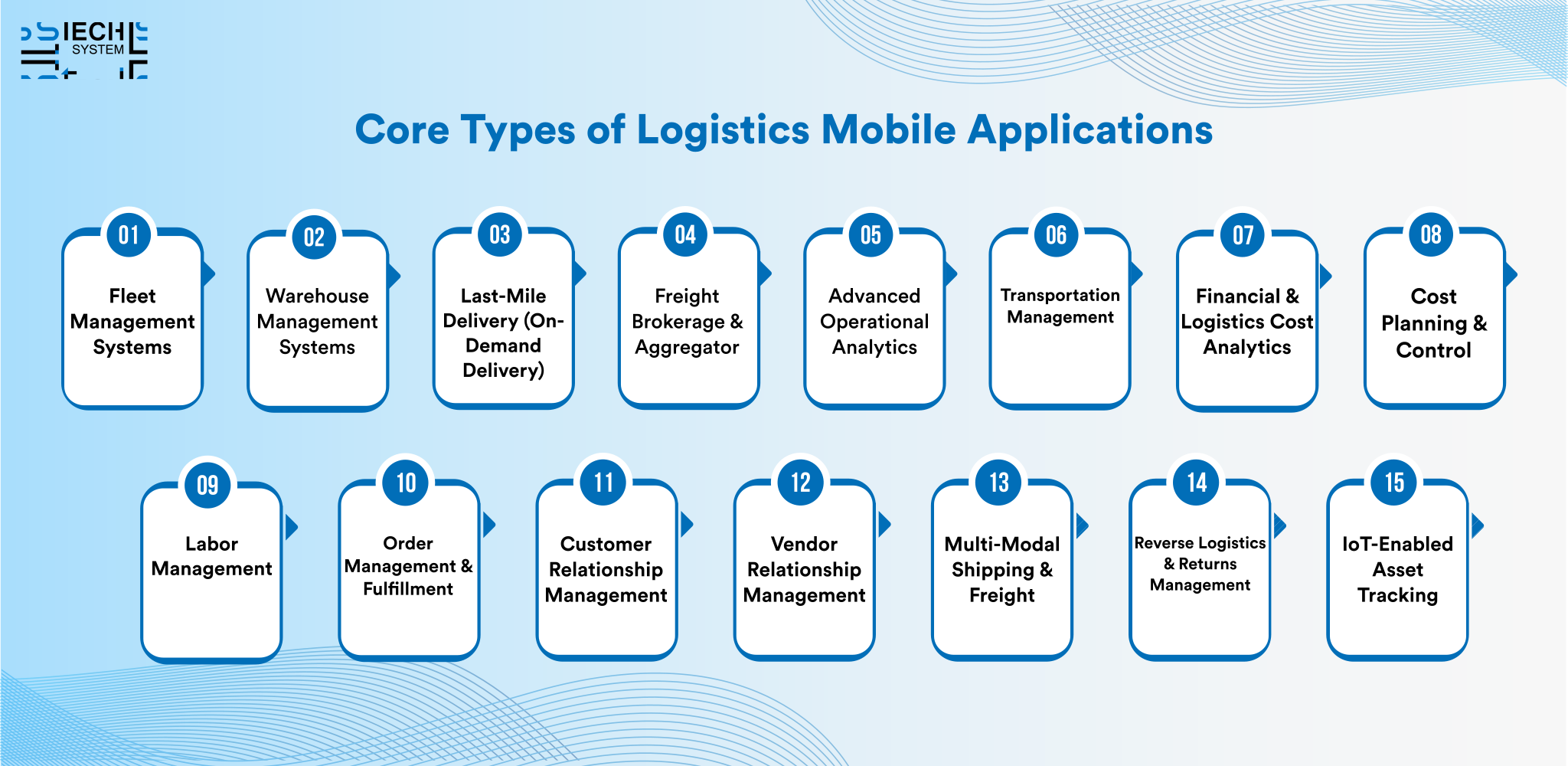
Many of the most modern logistics apps are intended to support multiple use cases throughout the supply chain. Here are the top types of logistics mobile apps, each of them serves a specific purpose in boosting operational efficiency.
1. Fleet Management Systems (FMS/TMS) Apps
These apps are essential for businesses managing vehicles, drivers, and routes.
Key Functions:
- Vehicle maintenance & health monitoring
- AI-powered route optimization
- Driver scheduling & performance tracking
- Compliance and documentation
2. Warehouse Management Systems (WMS) Apps
Built to optimize warehouse workflows and eliminate inventory inefficiencies.
Key Functions:
- Stock visibility & digital inventory audits
- Barcode/QR scanning
- Picking, packing, and sorting automation
- Multi-warehouse coordination
3. Last-Mile Delivery (On-Demand Delivery) Apps
These apps focus on real-time delivery management and customer communication.
Key Functions:
- Live delivery tracking
- Electronic Proof of Delivery (ePOD)
- Route sequencing
- Customer notifications
4. Freight Brokerage & Aggregator Apps
Digital platforms connecting shippers, carriers, and freight providers.
Key Functions:
- Load matching & automated carrier assignment
- Freight bids & negotiations
- Document management (BOL, invoices, contracts)
- Real-time shipment visibility
5. Advanced Operational Analytics Apps
A new category emerging in 2025–2026, these apps provide data intelligence for strategic decision-making.
Key Functions:
- Predictive analytics for demand, fleet performance, and delivery times
- Cost forecasting and risk detection
- KPI dashboards for OTD, fuel efficiency, warehouse turnover
- AI-driven operational recommendations
6. Transportation Management Apps (TMS Mobile Suite)
Built for medium and large enterprises handling complex transport networks.
Key Functions:
- Multi-mode route planning (road, air, sea)
- Carrier rate management
- Load optimization
- Freight audit and payment automation
7. Financial Accounting & Logistics Cost Analytics Apps
Financial control is critical in logistics, where margins are thin and costs fluctuate daily.
Key Functions:
- Trip-wise cost tracking
- Fuel usage and spending analytics
- Vendor & carrier payment automation
- Profitability reports by route, vehicle, driver, or customer
8. Cost Planning & Control Apps
Designed to help logistics companies forecast, manage, and reduce operational costs.
Key Functions:
- Cost simulation for routes, fleet, and warehouse activity
- Resource utilization reports
- Budget planning tools
- Alerts for cost overruns
9. Labor Management Apps
For companies with drivers, warehouse staff, loaders, supervisors, and delivery personnel.
Key Functions:
- Shift planning & attendance
- Productivity monitoring
- Digital timesheets
- Task assignment & performance scoring
10. Order Management & Fulfillment Apps
A central hub for tracking orders from booking to delivery.
Key Functions:
- Order creation, modification, and cancellation
- Real-time status updates
- Multi-channel booking (app/website/ERP)
- Digital invoicing & POD syncing
11. Customer Relationship Management (CRM) Apps for Logistics
Tailored CRMs designed for logistics providers and 3PL/4PL companies.
Key Functions:
- Customer data management
- Service-level tracking
- Complaint resolution modules
- Automated follow-ups & communication
12. Vendor Relationship Management Apps for LPS (Logistics Partner Services)
Critical for companies that work with third-party carriers, freight brokers, drivers, or delivery partners.
Key Functions:
- Vendor onboarding & verification
- Performance scoring
- Contract management & SLA compliance
- Payment management & reconciliation
13. Multi-Modal Shipping & Freight Management Apps
Used by freight forwarders handling shipping via sea, air, and rail.
Key Functions:
- Container management
- Port scheduling
- Customs documentation tracking
- Multi-country shipment visibility
14. Reverse Logistics & Returns Management Apps
Essential for eCommerce, retail, and B2B distribution networks.
Key Functions:
- Return pickup scheduling
- Inspection & condition reports
- Refund integration
- Automated routing for return centers
15. IoT-Enabled Asset Tracking Apps
Used for high-value cargo, temperature-sensitive loads, or international shipments.
Key Functions:
- Sensor-driven tracking (GPS, humidity, vibration, temperature)
- Geofencing alerts
- Tamper detection
- Cold-chain logistics monitoring

Must-Have Features of A Logistics App
Logistics operations have various stakeholders, drivers, fleet managers, warehouse teams, and customers. While developing best-in-class Logistics App Development Services, you need to build features according to unique user categories. An effective logistics platform brings together the supply chain through uninterrupted communication, visibility in real-time and automated processes. The following feature sets meet current industry standards and provide the benefits of logistics software to businesses of any scale.
a. Driver/Carrier App Features
These driver-centric elements play an essential role in enabling efficient deliveries, reducing detour time, and limiting downtime. Following best practices increases the effectiveness of Logistics & transportation application development and ensures improved last-mile reliability.
Checklists/Vehicle Health Check
This allows the business to keep the track of the vehicle as well driver performance. Using GPS location allows for evaluating the deliveries whether they are on time or running late.it also helps in streaming the delivery assignments.
Offline Support & Data Sync
Having internet connectivity throughout all the roads connecting various cities, states, and countries can be a bit difficult. Loss of connectivity is a very hurdle faced by the transportation industry which leads to difficulty in tracking the vehicle and driver. This logistics app must be designed to work with accuracy giving the details about the location thus allowing to tab the delivery process.
AI Route Optimization & Navigation
Just like customers don’t like to spend much time on their way to destination in the same way they don’t prefer their goods being delivered late even. By including pre-planned routes in the logistics app managers can beforehand assign and develop the routes to the drivers.
In-App Communication (Chat/Call)
Drivers can also communicate with administrators via built-in chat or VoIP calling to ensure smooth operations. This makes you independent of third-party apps, minimizing the need for this usage of third-party apps as all communication will now be in the logistics software and app development services ecosystem.
Digital Proof of Delivery (ePOD)
The app allows drivers to record signatures, photos and delivery notes This form of digital documentation minimizes conflicts, expedites the invoicing process, and increases transparency amongst shippers and customers alike, one of the most popular Logistics app features in use around the globe.
b. Admin/Fleet Manager Panel Features
At the heart of all logistics operations are fleet managers. Logistics app development designed a smart admin panel does ensure the decision-making in real-time and a transparent ops window.
Monitoring and Tracking Vehicles in Real-Time
Admin can track vehicle locations, driver speed, deviation in routes and the duration of stops via GPS telematics, geofencing, and IoT integrations. This component is a key pillar of reliable Transport app development services and increases overall fleet safety.
Interactive Dashboard & Analytics
Dashboards present all mission-critical KPIs in one place, order status, delivery cycles, warehouse stock, customer requests, and vehicle performance. Advanced analytics, derived from professional Logistics development services, help managers forecast risks and improve resource allocation.
Automated Dispatching & Scheduling
As per the location, availability of drivers, load carrying capacity of vehicle and real-time conditions, the system auto-assigns deliveries. Such automation reduces the possibility of human error and speeds up the delivery cycles.
Billing & Invoicing Management
Integrated billing modules enable companies to issue bills or invoices, track payments, apply fuel surcharges, and manage financial reports. It minimizes the manual paperwork and enhances the financial accuracy of businesses with the aid of custom Logistics app development services.
c. Customer/Shipper App
End-user features not necessarily related to customer-facing aspects such as transparency, convenience, and satisfaction. In the quite competitive logistics market, every business gives out a customer app for brand promotion & customer engagement.
Real-Time Order Tracking
Customers can follow their order with a track map, estimated arrival times, and driver information. Such visibility is an added benefit for companies looking to invest in Mobile development for logistics.
Fare/Quote Estimation
Customers can see dynamic pricing based on distance, load size, delivery speed, and route complexity, before placing a shipment. Automatic fare tools minimize the negotiations and make the bookings smooth.
Multiple Payment Gateway Integration
UPI, wallets, credit cards, net banking, and corporate invoicing support for seamless payments. This is common functionality for modern Logistics website development and Mobile app.
Push Notifications and Status Updates
People also receive alerts on order confirmation, pickup, en-route movement, delays and successful delivery. With automated notifications, trust is built through transparency and it reduces unnecessary customer support queries.
Strategic Benefits of Investing in a Custom Logistics App
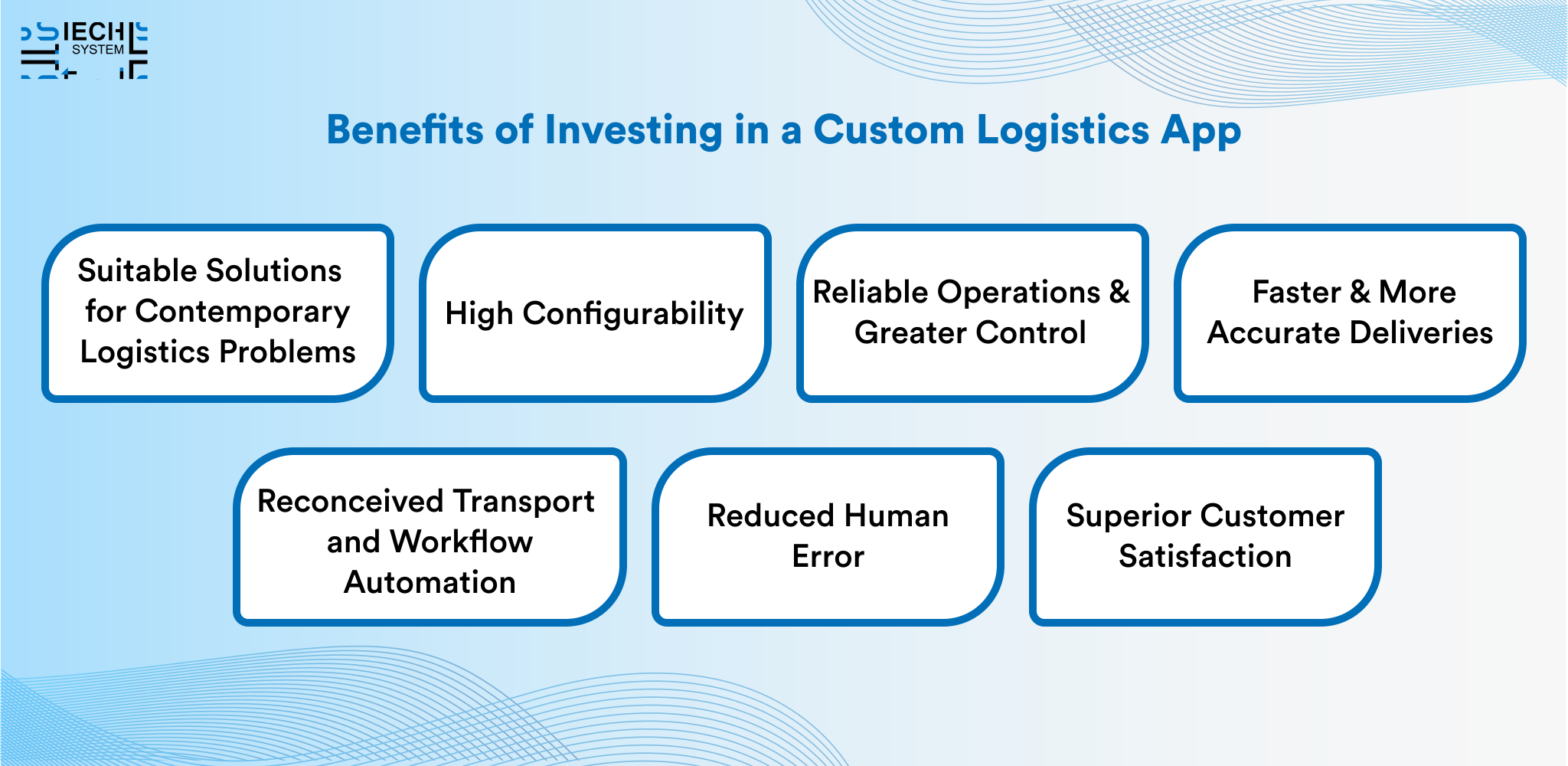
Logistics do not just require a digital tool to ease their day-to-day needs, it requires a strategic asset that changes the very nature of their operations, scaling, and value delivery in the form of a logistics app built exclusively for them.
Logistics app development services are becoming a staple for modern businesses that want to optimize operational efficiencies, enhance customer trust, and maintain a competitive edge in a fast-paced supply chain landscape.
Following are some of the key benefits in brief available expanded to emphasis the necessity for a business to invest in the bespoke Logistics development services.
A. Suitable Solutions for Contemporary Logistics Problems
Each logistics company has its own set of workflows, fleet sizes, warehouse processes, order pipelines, and even expectations from customers. A tailor-made logistics application meets all these needs perfectly. Logistics solutions development does not fit your business into a box but creates an ecosystem that would match your operational nuances to the words. This results in enhanced performance, better collaboration, and a tool created solely for your sustainability in the long-term.
B. High Configurability
Logistics custom made software application development is 100% configurable. From newer dispatch rules, additional warehouse modules, dashboard customization, multi-region of operation, your logistics app evolves as your business evolves. Such flexibility is relevant for any companies seeking to grow quickly and need dynamic systems in place to sustain a growing number of teams, vehicles, and service zones.
C. Reliable Operations & Greater Control
Logistics are built on the backbone of reliability. Having a strong, tailor-made platform built around the logistics software and app development services gives businesses a comprehensive view of the fleet movements, warehouse operations, internal inventory cycles and customer-based order fulfillment. Its rapid nature helps in taking the right decisions, removing uncertainty, and decreasing downtime. Dependable systems can also help in meeting industry standards and safety regulations.
D. Faster & More Accurate Deliveries
Speed is everything in transportation. Logistics apps offer AI-based routing, automated dispatching as well as real-time tracking which ensures speedy deliveries along with optimum performance from the drivers. Modern Logistics & Transportation application development gives companies a prominent edge in terms of lesser fuel consumption, lesser bottlenecks, lesser idle time, and a consistent delivery system.
E. Reconceived Transport & Workflow Automation
Logistics apps revolutionize transportation workflows. The manual coordination is replaced by an automated, one-click process, from allocation of trucks with loads, generating documents to sending an invoice. It results in a digital-enabled system that makes it agile, which is one of the credits of advanced Transport app development services.
F. Reduced Human Error
Manual processes often result in duplicate entries, lost paperwork, incorrect routing and communication gaps. Real-time digital workflows replace these inefficiencies with Custom Logistics app development solutions. With automated data collection and barcode scanners integrated into the process and updates provided by system functionality, operational errors are dramatically reduced, resulting in cleaner data and seamless execution.
G. Superior Customer Satisfaction
All in all, customers are looking for visibility, realistic timeframes, and the ability to communicate. Logistics apps today enhance customer contentment by offering them order tracking facilities, instant notifications, digital PODs, and easy payment methods. Your reputation is reinforced with these features and this naturally translates into long-term customer loyalty, this is one of the biggest benefits of logistics software.
How Much Does Logistics App Development Cost?
In fact, the cost of building a logistics app depends on multiple factors such as app features, technology stack, business goals, and so on. So, businesses looking for authentic Logistics app development services must know the crucial cost-driving factors to prepare a budget accordingly. Below is a complete breakdown.
A. Factors Affecting Cost
Application Complexity (Basic, Medium, Advance)
– They include simple tracking, notifications, and user login as features.
– Medium apps incorporate route optimizations, shipment management, and driver allocation.
– Some of the advanced apps tend to incorporate Internet of Things (IoT) scanners, AI-based analytical engines, multi-warehouse features, and a multi-part backend system.
– Greater complexity means more design hours and more APIs, databases, and development effort, and therefore costs.
Tech Stack (Native vs. Cross-platform)
– Native apps (Swift, Kotlin) are the best choice because of their high performance, which is most ideal for enterprise-grade Logistics app development
– Cross-platform (Flutter, React Native) making faster development and cost-effective.
– Type of tech stacks you pick will eventually affect how fast the development speeds up, how scalable the architectures can be, and how maintainable the project is in the long run.
Types of Integration (ERP, WMS, CRM, TMS)
Working with third-party systems (SAP, Oracle, Zoho, Netsuite, Warehouse systems, etc.) means the development hours may become longer. This is a great deal where premium Quality Logistics and large-scale implementations fall into place.
Team Location (Ranges by Region)
Development rates differ globally:
– US, UK, Germany: Offers higher pricing models
– India: Affordable options with world-class developers
– Australia & Canada: Moderate to higher pricing options
It takes a toll on your overall budget margin of working on Logistics development services.
B. Estimated Cost Breakdown (Based on Complexity)
Below are general market estimates for Logistics App Development Services across complexity tiers:
| App Type | Estimated Cost Range |
|---|---|
| Simple App (Basic Tracking/Notifications) | $15,000 – $40,000 |
| Medium Complexity App (Route Optimization, User Management) | $30,000 – $125,000 |
| Advanced App (IoT/AI, Multi-Warehouse, Analytics) | $125,000 – $250,000+ |
These ranges may vary based on feature volume, integrations, platform choices, and team expertise.
C. Estimated Cost Breakdown (Based on Country)
Below is a country-wise cost comparison based on average hourly rates and overall project costs. This table helps businesses understand global variations and choose the right development region for their Logistics app development services.
| Country | Estimated Development Cost (USD) | Development Characteristics |
|---|---|---|
| India | $15,000 – $120,000 | Cost-effective, skilled teams, full-stack capabilities, ideal for startups & enterprises |
| United States (US) | $75,000 – $250,000+ | High labor cost, premium engineering, suitable for enterprise-grade local builds |
| Canada | $60,000 – $225,000 | Strong engineering quality, moderately high cost |
| Germany | $80,000 – $260,000+ | Precision-focused development with high compliance standards |
| United Kingdom (UK) | $70,000 – $240,000+ | High-quality development, similar to US market pricing |
| Australia | $65,000 – $230,000+ | Reliable teams, medium-to-high pricing, strong enterprise market |
Choosing the Right Tech Stack and Development Process
Choosing a technology stack is amongst the most pivotal steps while developing a scalable, secure, and efficient logistics application. The tech stack plays a vital role in many areas like performance & flexibility of the app, long-term maintenance, and the success of your logistics app development services project. When building a fleet monitoring system, warehouse management platform, or last-mile delivery app, the tools you choose are what make your digital ecosystem future-ready.
A. Tech Decisions Summary (Tech Stack)
Modern Logistics development services include a mixture of frontend development, backend development, database, mapping systems attached, and cloud infrastructure. All these decisions determine how reliable, how fast and how flexible the application becomes.
Frontend (Native vs. Cross-Platform)
Native or cross-platform, your choice will have an impact on your app performance, cost and the speed at which you can develop the app.
– Swift (iOS) and Kotlin (Android) for Native Development: Best for enterprise-scale applications that require the highest performance, direct access to the device, and long-term growth. Native builds mean faster apps and better UX, essential when tracking logistics in real time.
– Flutter or React Native for Cross-Platform Development: Ideal, if you want to quickly hit the market at lower cost. They are one of the best frameworks for startups and companies that want to run quick Logistics development projects as they enable single codebase for Android and IOS.
Backend Technologies
Stability, high data throughput, and advanced integrations lie on a strong backend. Logistics apps generally depend on a backend that can handle real-time interaction, constant GPS updates, automated workflows and millions of transactions.
– Node.js, ideal for live GPS updates and scalable cloud output
– Python, best suited for analytical route planning using AI
– Java, stable workhorse for enterprise Logistics app development solutions that require thick security and heavy logic
Integrations like ERP, WMS, TMS, and CRM need a strong backend support which makes the development of advanced Logistics solutions possible.
Databases
Logistics activities produced enormous amounts of data, both structured, and unstructured. Choosing right database guarantees quick response, right reporting and protected storage.
– PostgreSQL is for structured logistic data such as orders, shipments and routes
– Using MongoDB for flexible storage of logs, IoT data, POD images, and driver updates
Both databases are widely used in Software application development for logistics and offer strong scalability.
Mapping & Location Services
Logistics & transportation application development is powered by real-time geolocation precision.
Common choices include:
– Google Maps Platform: The most popular navigation & live traffic
– Apple Maps: Best iOS-first logistics solutions
– Here Maps/Mapbox /TomTom APIs: Advanced Routing, offline features and geofencing
The mapping systems guarantee accuracy in ETA, and remote tracking of drivers. Besides routing, which is a very important aspect of any Logistics app development solution.
B. The Development Process
With an effective development process, your logistics app will be ready on time, according to the needs of the business, and built in a suitable way that performs best. The workflow used by most of the best Logistics software and app development services providers is mentioned below.
Discovery & Planning
Competitor analysis, feature definition, user flow and MVP Finalization come under this stage. It makes sure that your investment is aligned with the requirements of the market and planned strategically.
UI/UX Design
When it comes to usability for drivers and warehouse operators, not to mention customers, design is everything. An interface that is clean, navigation that nicely flows and workflows that are intuitive can drastically increase adoption. This is where user journeys and interface prototypes are created.
Development Using Agile Methodology
Agile allows iterative development with continuous client feedback. Features are built in sprints, ensuring transparency and flexibility throughout the entire Logistics app development lifecycle.
Testing & Deployment
Q&A teams test the app for performance, security, speed, and usability. Smooth functioning in all use cases is ensured with load testing, GPS accuracy, payment integration verification, and warehouse module validation. CI/CD pipelines deploy the final build into Play Store, App Store and cloud servers.
Post-Launch Support & Maintenance
When the app gets live, regular maintenance is very important. Such as resets styles, bug fixes, feature additions, API changes, server scaling, and improvements, etc. Reputable logistics development services guarantee the stability of the product for a long time and are its constant optimization.
Future-Proofing: Integrating Advanced Technologies
The logistics industry is evolving rapidly, and in order to stay competitive, companies need more than a standard tracking app. Incorporating these emerging technologies enables businesses to develop seamless structures that are intelligent, future-ready systems that set new benchmarks of efficiency and customer satisfaction. AI, IoT, and Blockchain-powered advanced features make your logistics system scalable, predictive, and highly secure, the traits of next-gen transport app development services.
A. AI & ML (Artificial Intelligence & Machine Learning)
The artificial intelligence and machine learning has risen as the backbone of world-class logistics application. They increase the efficiency of decision-making, save expenses, and increase the precision.
Key applications include:
– Predictive Maintenance: By sifting through engine data, driver patterns, temperature changes and sensors, AI can anticipate breakdowns before they occur.
– Dynamic Route Pricing: ML demonstrates optimal pricing strategies for logistics companies, as it calculates prices according to several traffic conditions, peak hours, load type, delivery urgency, and historical patterns.
Transforming data to a level that leads fellow business owners to appreciate Logistics app development solution soars the value of the features offered.
B. IoT (Internet of Things)
IoT is changing the face of transportation and supply chain visibility. It improves logistics app development solutions by providing access to real-time data from physical assets.
Examples include:
– Temperature Sensors: Essential in pharma and food logistics
– Fuel Monitoring Sensors: Aid in curbing fuel thefts and enhance fuel consumption
– Vibration Sensors: Suited for fragile or expensive cargo
– RFID/Barcode Scanners: An essential part of warehouse automation
IoT-enabled fleet systems monitor fuel usage, vehicle health, compliance documentation, and maintenance schedules. These are must-have features when hiring a professional Logistics app developer.
C. Blockchain for Transparency and Security
Logistics systems are based on trust, and blockchain offers a new way of thinking about it.
Core benefits include:
– Immutable Records: Timestamped and tamper-proof information about every transaction, pickup, dispatch, delivery, invoice.
– Smart Contracts: Automate swift carrier payments and vendor settlements and SLA compliance.
– End-to-End Supply Chain Visibility: This means that both businesses and customers get visibility across multiple checkpoints.
Blockchain integration keeps the structure secure, resistant to fraud and compliant with regulatory requirements, a critical benefit in the development of any modern Logistics solution.
Continuous monitoring of all the transportation and logistics tasks can be tiring. Fast and better delivery services have become the top-most priority for the logistics industry. Thus, using the logistics on-demand application across all the activities for fleet management increases the improvement and productivity in business operations. With a top-notch custom software solution for transportation improving the supply chain ensuring transparency and better warehouse management.
Conclusion
Logistics is no longer merely moving goods, it’s about a seamless, intelligent and customer-centric supply chain. Investing in advanced Logistics App Development Services will help you empower your business with capabilities such as real-time visibility and predictive analytics, faster deliveries, less inefficiencies, and greater resiliency. Of course, if designed well, a logistics app will serve as the sinews of a modern supply chain ecosystem covering everything from warehouse automation to last-mile delivery optimization.
To remain competitive, meeting demands at every touchpoint with an exceptional quality service remains a requirement for most companies, and custom-built logistics applications allow them to do just that. The demand for integrated digital logistics is only set to increase, which makes investing in future-ready Logistics development services capable of scaling as your business grows, a perfect choice.
SSTech System can make it possible if you are willing to enhance efficiency, automate operations, and provide better customer experiences. We are one of the best Logistic app development solutions providers in the marketplace providing feature-rich and secure solutions for fleet management, warehouse automation, tracking via IoT enabled devices, and AI optimization.

Book a free consultation with us today and let’s start discussing how we can help you develop smart, scalable and enterprise-grade digital logistics solutions!
Frequently Asked Questions
What is included in modern Logistics App Development Services?
Fleet management, warehouse automation, real-time tracking, route optimization, order management, invoicing, customer portals, etc., all the Modern Logistics App Development Services under one roof. Additional third-party integrations such ERP, CRM, WMS and IoT devices are also supported by these systems. Centralized control, little manual work, and enhanced precision in delivery.
How long does it take to develop a logistics mobile app?
This period varies depending on the project size, features, and complexity.
- For basic logistics applications, 6–10 weeks are sufficient.
- Medium-level apps take 3–5 months.
- Engaging apps that incorporate IOT, AI, or multi-hub logistics workflows or custom analytics may take 6–12 months.
Agile assures a quick delivery, which is why logistics development services are offered with utmost expertise by seasoned teams.
Which technologies are the best for logistics and transportation app development?
For cross platform apps, majority of companies use flutter or react native, native apps majorly use swift or Kotlin, for Node.js or Python for the backend (running in real-time), PostgreSQL or MongoDB for data storage.
Mapping APIs such as Google Maps, Here Maps, Mapbox, etc are also important. This is why these technologies are highly used in professional Logistics & transportation app development due to being reliable, fast, and scalable.
How much does it cost to build a logistics app?
The logistics app cost mainly depends on the requirement of features, number of integrations and the type of apps - simpler or complex.
- Simple apps: $15,000–$40,000
- Medium complexity apps: $30,000–$125,000
- Advanced enterprise apps: $125,000–$250,000+
Additionally, the costs vary by region as one can avail high-quality Transport app development services in India at reasonable costs, while the cost would be higher in US, UK, and Germany.
Why should companies invest in custom logistics app development instead of ready-made software?
Custom apps built through expert Logistics software and app development services give businesses full control over workflows, integrations, branding, and scalability. Unlike general apps, custom solutions grow with your processes, can support the most complex of logistics operations, and, due to the automation, accuracy, and transparency you can provide to your customers, are a competitive advantage. They remove the added functionalities and look only for what your business needs.
Related Article