


In the past, developers considered web application development simple, using basic HTML, CSS, and JavaScript to create colorful, functional websites. Nowadays there are many web app development agencies that build any kind of web application across all industries. Businesses never miss the opportunity that is beneficial for their business growth. The power of web, mobile application development is to target a large base of audiences and earn huge revenue out of it. The web apps are built by combining both client-side and server-side scripts.
The introduction of Ajax has completely changed the entire web application development services. You can build more powerful and dynamic web app development pages. Now every business company from start-ups to big enterprises has its mobile web application development. Two core things that attract many people to the mobile application are the individual experience and simplicity of utilization. Top web application development examples like Gmail, Google docs, Netflix, Notion, Evernote, Mail chimp, Social Networking sites have web-based apps to give users unique, customized experiences from the browsers directly to native apps.
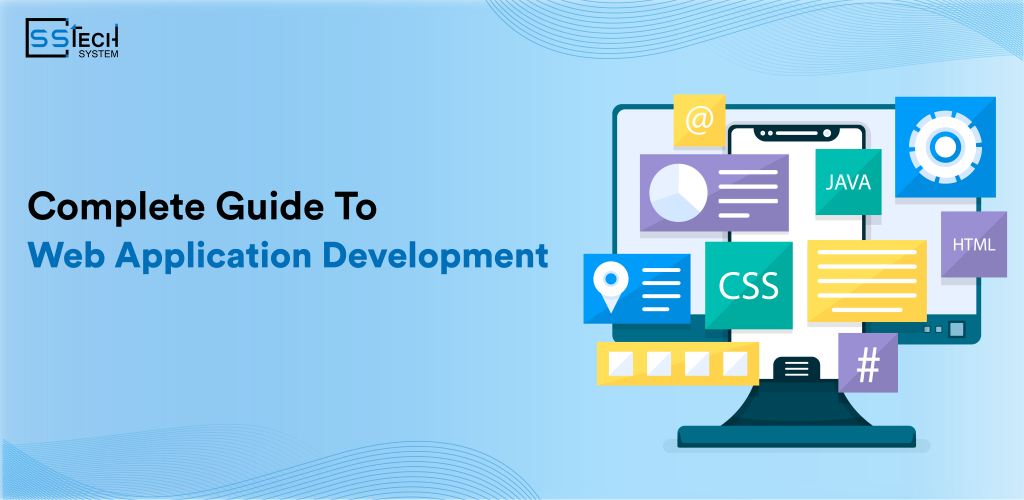
What is Web Application Development?
Custom Web Application Development focuses on building tailored web apps that align with your business goals and user needs. These applications run directly in a browser, require no device storage, and work seamlessly across platforms, making them cost-effective and highly accessible.
Businesses use custom web apps to showcase their product portfolio, strengthen brand identity, and engage customers on desktop and mobile devices. The development process follows a structured approach, idea validation, UI/UX wireframing, technology selection, development, testing, and deployment, to ensure performance, security, and scalability.
Unlike mobile apps designed for iOS or Android, web applications offer instant access without downloads. By investing in custom web application development, businesses boost visibility, improve customer interaction, and gain a competitive edge in their target market.

Types of web Applications
Single Page Applications (SPAs):
These browser-based apps directly interact with the user without loading again to show the data. Single-page app architecture is based upon two layers client-side and server-side. They both interact through AJAX by sending API requests. The client-side manages the user interface with the help of the browser and the server-side manages the database including third-party services. Single-Page Applications (SPAs) utilize a tiered architecture where the browser implements the entire presentation layer. When a user requests data, the system triggers an API request to apply the necessary logic. The business layer then processes all data changes, ensuring a seamless and fast user experience. Then the data layer will exchange the data, and the server-side will send a response to the browser in the form of a JSON file to display at the presentation layer. There are many examples of single-page apps like Twitter, Google Drive, Netflix, Facebook, Gmail, etc.
Progressive Web Apps (PWAs):
This kind of web application framework is more than just a simple web app. They perform and behave like mobile apps. They apply varied tactics and use additional technology stacks such as manifests, real-time notifications, service workers, and others. PWAs act like a live website that you can save to your home screen without any downloads and access with a single click whenever you want. It takes the benefits of a large ecosystem of plugins, web technologies, and APIs. They provide easier faster and less expensive compared to the best native apps. Businesses can pick PWAs to add improvement to the standard web app architecture via caching to provide offline features. Apps like Telegram, Pinterest, Google Maps, etc. are the best examples of PWAs.
Static Web Applications:
This kind of app lacks flexibility because of the static web app nature, they present the same information for every visitor as a collection of static web pages. Static web apps utilize HTML, CSS, and jQuery to deliver fast, consistent content. Since developers pre-render these pages on the server, the apps do not offer real-time personalization or direct user interaction. It is very hard to modify and update static web application pages. If you want to show up any changes, you would have to load the page again. Some companies which only need a low-key website that provides key business information and requires no user input could utilize a static web application. This type of web app can be developed for quick and economical results by implementing personal portfolios, business contact pages, and some company information pages.
Dynamic Web Applications:
Dynamic web apps are interactive, both on the server and the client-side. They have complex structure than static web apps. This type of app uses the database to load the data and it updates the content each time a user accesses the app. You can create a user profile, search some particular data, post comments, or interact in any other way. They are preferred by businesses as these apps don’t need any permit from the server to display the changes. These apps do the content modification as per the user’s request with the help of the central admin panel. There are varied programming languages such as ASP .Net, PHP for building dynamic web apps. Databases, servers, and web hosting are required for these applications. Blogs, eCommerce sites, calendars, and multiple to-do sites are used as dynamic web apps.
CMS Web Apps:
To manage the entire website content CMS web apps are used. Even non-technical users can create, alter, update content online with the help of a content management system. Deep knowledge and expertise in any programming language are not needed. A CMS enables users to keep track of all their assets from a simple blog to a more extensive website. Web pages can be corrected by the admin including pre-built tools and WordPress. It has many themes and plugins like Drupal, Joomla, and WordPress to provide a unique experience to users.
eCommerce Web Apps:
Ecommerce web apps are the right choice if you are planning to sell or buy anything online. It can process orders and payments. This kind of web app involves much more programming right from maintaining a product database to managing orders, offers and transactions. eBay, Amazon, Flipkart, etc., are popular as large-scale online marketplaces and have a well-built structure with multiple pages attached. These are dynamic multi-page apps and consist of advanced features such as wish lists, online payment, real-time parcel delivery, and others. eCommerce web applications need to attract more customers and they experience a personalized journey of your web app.
Web Application Development Frameworks
Front-end web application Framework
It is a client-side application development and presents information to the users through a web browser.
In front-end development, there is a use of HTML, CSS, JavaScript, and many different frameworks. The frameworks that exist in the JS world are Angular, React, and Vue. You have to make sure when developing the front end part, that it is suitable for responsiveness and all device compatible
Application development tools make your potential customers interact with your web application, you need to stick with these three main JavaScript libraries.
React:
it is considered the most popular and powerful among the other JavaScript frameworks. Facebook developed it with a mindset of developing and assisting scaled applications that enterprise companies love to implement. It has more than 90 thousand featured repositories on Github, and more than 70% of vendors in the IT market are looking for React developers. It is an amazing programming language easy to learn, simple, and gives a universal solution for any given digital product.
Vue:
As the youngest and smallest JavaScript framework, this tool is easy to learn and scales for any project size. It is exceptionally user-friendly, offering key benefits such as eliminating the need for default compilers. The ability to transition from library to framework, manage advanced SPAs, and an excellent balance of readability, maintainability, and code writing.
Angular:
Google developed Angular to build consistent, dynamic web applications. It seamlessly integrates with HTML for static pages, making it an ideal framework for medium and large-scale projects.
Django:
Python is used as a replacement for PHP today. It is chosen primarily because it is very advanced, easier to learn. It can provide all backend web application functionalities without any issues.
Backend web application framework
Backend development manages the “behind-the-scenes” components, databases, servers, and business logic—that are invisible to users. These tools process data storage, handle database requests, and execute dynamic web application actions. During backend development, these tools actively process frontend requests. When users log in, the backend manages authentication and authorization while performing essential operations like creating, reading, and updating data. These functions form the core framework of backend development.
Node.js:
Developers rank this as a top choice for building robust backend systems. Its design ensures your web applications stay fast, responsive, and incredibly lightweight. Netflix, Paypal, and LinkedIn are some of the notable and worth mentioning web apps. The web apps that directly work with input/output and streaming use this technology. It can run software across multiple hosts and create fast servers.
Laravel:
As a leading PHP framework, it offers elegant, expressive syntax that is easy to master. Equipped with intuitive tools and built-in CRUD resources, it streamlines development for a diverse range of web applications.
Ruby:
It has a very active and energy-driven community, that can help you get through with any kind of error you might encounter. Coding in Ruby is very simple with large varieties of open source repositories along with top-notch documentation. You can raise CRUD resources that include security, functionality, and unit testing with pre-configured databases.
Databases:
Developers favor MySQL as a leading web application tool for its simplicity and versatile features. PostgreSQL serves as a powerful alternative, offering similar capabilities and seamless integration with UNIX-based servers. If you want to develop something big, Mongo DB is highly beneficial, as it allows you to handle large volumes of data and take advantage of cloud technologies.

Top Web Application Development Examples
These are some of the famous examples of web applications
Gmail: It is the most popular web app, regularly used to send and receive emails, attachments through a secure connection. You can run this web app with the help of any device.
Google Docs: The users can edit the word document, with suggestions about the appropriate words and grammar. The users can access it offline and save the document automatically.
Netflix: It is a streaming service that offers several varieties of award-winning movies, TV shows, documentaries, animation, etc.
Notion: This web app fulfills multiple purposes such as a to-do list, notepad, calendar, etc. The users can easily alter and insert by using any browser.
Evernote: It is built for note-taking, task management, organizing, and archiving. It allows users to create notes, drawings, audio, photographs, text, or save the web content.
Mailchimp: For years, this popular marketing web application has empowered users to send automated bulk emails with ease. Businesses leverage its powerful tools to generate leads and scale their ventures rapidly. Plus, the intuitive UI ensures you can launch and manage high-performing marketing campaigns with maximum efficiency.
Social Networking Sites: We regularly browse the social media apps like Instagram, Twitter, and Facebook. They are accessible through any of our preferable browsers.
Conclusion
In 2026, businesses and users prefer web application and portal development services because they deliver high-performance features, robust functionality, and seamless interaction. Web app development is an emerging trend that has bright future scope, so you need to have an assistance of a trustworthy web development company; SSTech System is one of them that can provide you with full-time support and expertise at different development stages.
Build scalable, feature-packed web apps with our expert team. We have quite an experienced design and development team having expertise in furnishing eCommerce sites, dynamic CMS, enterprise web portals.Reach out to us today!

Frequently Asked Questions
What is web application development?
Web application development is the process of creating interactive software programs that reside on remote servers and are delivered to users via the internet through a web browser. Unlike traditional websites, web apps focus on user interaction and performing specific tasks.
What is the difference between a web application and a website?
A website is primarily informational and consists of static content, while a web application is highly interactive, allowing users to manipulate data, create accounts, and perform complex functions.
Is my web application data secure?
Security is a top priority. Robust web apps implement SSL/TLS encryption, multi-factor authentication (MFA), secure API integrations, and regular security audits to protect sensitive user data.
How much does web application development cost?
Costs depend on features, complexity, and the chosen tech stack. Custom solutions are typically priced based on a fixed project fee or an hourly model for dedicated development teams.
Related Article