


If you’re in the logistics industry, you already know that it is more dynamic and challenging than ever before. Increasing customer expectations, worldwide logistics interruptions, and the demand for real-time tracking are changing the way teams like yours work. No matter if you are overseeing a local delivery fleet, a sprawling warehouse network or end-to-end supply chain operation, bottlenecks hold an entire operation back.
These bottlenecks, including outdated manual systems and broken communication links, not only act as traffic obstructions slowing down your workflow. They jack up costs, hobble deliveries, aggravate customers and ding your bottom line. And if you’re using a one-size-fits-all, out-of-the-box logistics platform, chances are these frustrations may be even sharper.
The reality is that canned products rarely are able to solve the problems that your business faces on a daily basis. That’s why businesses ahead of the curve are using Custom software for logistics companies to streamline supply chain management, increase visibility, and make sure they‘re prepared for what lies ahead.
Understanding Bottlenecks in Logistics
Let’s unpack it: What exactly are logistics bottlenecks?
In simple terms, the bottlenecks are painpoints in logistics where the flow of goods, information and decision making slows down or gets stuck. Such disruptions are like a kink in your supply hose: Everything behind that place will accumulate, and you won’t be able to produce as much.
These are among the more familiar culprits:
Push-Button-Put-In and Disparate Systems
If you are still juggling delivery schedules in Excel or adjusting warehouse counts by hand, you may be setting yourself up for delays, mistakes and miscommunication.
Lack of Real-Time Visibility
With no live information about where carriers are, whether deliveries have been made or how much inventory remains, you’re flying blind.
Inefficient Warehouse Management
Wasteful slotting practices, mispositioned stock, and of course suboptimal pick routes clog up warehouse productivity.
Broken Communication Between Stakeholders
Discrepancy in your transporters, warehouse operators and customers cause unwanted waiting time and chaos to operations.
And you’re in good company, recent research from McKinsey found that logistics inefficiency is responsible for a 15-20% loss of productivity in mid-sized logistics businesses. That is time and money you just cannot afford to squander.
The Role of Technology in Modern Logistics

The good news? You’re working in a time period where logistics is being reimagined with technology.
Here’s what’s changing the game:
- Artificial Intelligence (AI): From optimizing routes to predicting maintenance, AI helps you in being more intelligent and agile with decision-making.
- Internet of Things (IoT): Real-time info on vehicle health, package condition and delivery timing from IoT devices means you can respond in time.
- Automation Tools: Labels, sorting and even order fulfilment can be done automatically thanks to supply chain automation, which are cutting down on human errors and costs.
- Advanced Data Analytics: With the proper dashboards, you will be able to identify your bottlenecks, predict demand and optimize your operations.
Yet with all this tech, integration is what counts. If your systems can’t talk to each other, if, say, your WMS development doesn’t communicate with a transport management system (TMS) or last-mile delivery app, you’re still burdened with inefficiencies.
It’s the reason the global logistics management software market is thriving. By 2030, according to Allied Market Research, it’s projected to exceed $18 billion, thanks in no small part (pardon the pun) to companies like yours that invest in smarter solutions.
Why Custom Software Is the Solution
Now you may be asking: “Why not just pick a popular logistics software off the shelf?”
Here’s why Software Development Company like SSTech System can give you the edge:
Off-the-Shelf Software: The One-Size-Fits-All Myth
Ready made solutions get you up and running fast, but they hardly ever fit your business like a glove. You have to change your processes for the software, not the other way around. And as your business grows and changes, you could encounter walls in the form of feature limitations, integration obstacles or hidden costs to upgrade or add functionality.
Custom Software: Designed Around You
Everything about it is designed to work for your business as a custom solution. Whether it’s matching real-time inventory with shipping availability or putting your delivery personnel online, the system grows with your business.
Here’s what you gain:
- Scalability & Flexibility: Your company isn’t stuck on someone else’s roadmap anymore. Layer in features, scale your users and pivot on workflows as you expand.
- Process Automation & Efficiency: Automate scheduling, scan barcodes, generate smart notifications and updates on the fly to eliminate manual effort.
- Unified Data & Visibility: Combine your WMS, TMS, and Last-Mile Delivery Platform to a single integrated ecosystem.
- Real-Time Reporting: Access dashboards and reports for your KPIs, whether that means cost-per-kilometer, on-time delivery rate, or warehouse pick accuracy.
- Competitive Advantage: With Smart Logistics for your business, you can provide better customer experiences, such as live tracking, automated notifications and painless returns.

Key Aspects in Which Tailored Software Rids Off Bottlenecks
Warehouse Management: From Accusation to Accountability
Your logistics chain is bound to suffer if you run a messy warehouse. It allows to have end-to-end visibility and complete control over your inventory in real-time with custom Warehouse Management Software. No more stockouts, no more lost product and definitely no more running into a frenzy during an audit.
Intelligent Inventory Traceability & Real-Time Transparency
You can track your inbound, backlog and outbound items in real time, down to the actual shelf. And with our barcoding/RFID scanning and cloud-sync solutions your warehouse team will be in sync.
AI-Driven Demand Forecasting
Intelligent algorithms study your historical patterns, seasonality, SKU performance and forecast every deal to predict stock requirements. It allows you to keep the optimal amount of inventory on hand, neither overstocking nor losing out on sales from stock-out.
Transportation Management: Make Every Mile Count
Routing and freet dispatching and coordination can become quite a mess when you don’t have the tools. Central control over all logistics flow with custom TMS With your own Transportation Management System (TMS), you have central control over the entire logistics process: from order entry, transport planning and execution to logging in delivery status.
Live Traffic-Based Route Planning and Fuel Not Disposed on Accurate
TMS software revolves around real-time traffic, driver location and delivery urgency all supports fuel efficiency. That would increase directness, speed delivery times and reduce fuel costs.
Automated Scheduling & Dispatching
Automatize route allocation, timeframe plans or vehicle dispatching and reduce the dependence on human busywork. You will minimize errors, increase operations speed and enable your team to concentrate on service quality.
Track Orders and Deliveries: Stay Ahead of Your Customer Base
You can’t let customers wonder. Your brand will give that to them with custom last-mile delivery software, complete visibility over when their order is and where it’ll show up.
Live Updates To Your Customers – ETA’s!
There are SMS and app-based alerts from pick-up to the doorstep about estimated arrival times, delivery status or delays. That translates into fewer support calls and more customer satisfaction.
IoT and GPS Integration
Advanced Telematics Connect your cars to custom-built platform using GPS and IoT sensors. You will know exactly where each and every one of your shipments is, if it’s been tampered with or if it got delayed in seconds.
Data & Analytics: Make Smarter Decisions
Data is worthless if you can’t act on it. This is where a personalized analytics dashboard becomes your BFF (best friend forever).
Centralized Dashboards for Decision-Making
Track your main logistics KPIs in one place: inventory turnover, delivery period, loading efficiency, fuel consumption and others.
Anticipatory Insights for Planning & Risk Assessment
Your software can tell you in advance that a certain route will soon become inefficient or that stock has fallen too low. You’ll have everything you need to plan ahead, minimizing downtime, avoiding standstills, and keeping pace with disruptions.

Integrating Out-of-the-box Software with Existing Systems
You may be asking yourself: “But we already have an ERP and CRM, can a customized logistics software be integrated with them?”
Yes, and it absolutely should.
Research-Backed Best Practices in Integration
As per a logistics report from Deloitte, organizations that integrate their logistics software with existing ERP, CRM and IoT platforms have up to 30% quicker decision-making ability and 20% fewer duplicate workflows. That’s not just optimization, it’s transformation.
API-Driven Architecture & Modular Design
The custom logistics systems made by SSTech System follow an API-first approach to provide a plug-and-play user experience that don’t disrupt your current tooling, creating a better match for their current business processes and workflows. No matter whether you are working with SAP, Oracle, Salesforce or were running your own custom-built legacy systems, your new solution will speak to them effortlessly.
Modular architecture also means you can build just what you need when you need it; whether that’s a delivery module, warehouse interface, or suite of analytics.
Integration = Elimination of Delays & Data Silos
If you do integration right, you’ll remove:
- Double data entry in two or more systems
- Delays caused by manual updates
- Communication issues between logistics, sales and customer service squads
In brief, you’re moving from siloed chaos to centralised control.
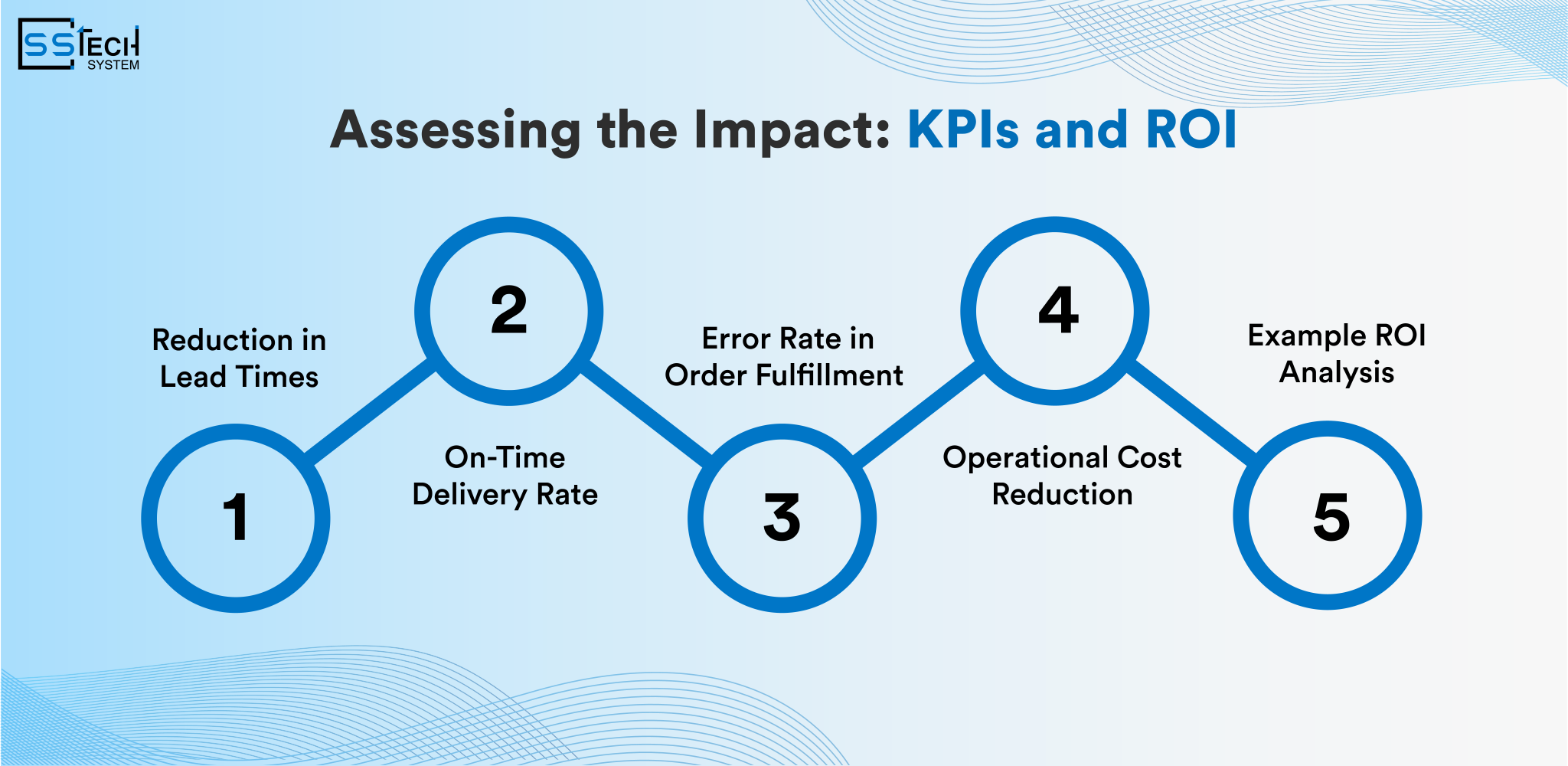
Assessing the Impact: KPIs and ROI
Launching custom logistics software is more than just a tech upgrade, it’s a business choice. And, as with any investment, you do need to track how it’s doing.
Here’s how to measure it:
Key Metrics to Watch
Reduction in Lead Times
Chart how swiftly merchandise travels from supplier to shelf or customer. The shorter the lead times = the more efficient things are.
On-Time Delivery Rate
Track how many shipments arrive within promised windows. A recovery here improves customer satisfaction directly.
Operational Cost Reduction
Quantify savings from lower fuel costs, reduced manual hours on the clock, decreased returns and smarter inventory.
Error Rate in Order Fulfillment
Fewer wrong deliveries, fewer complaints. We see a decrease in human error translate into the accuracy of your software.
Example ROI Analysis
Suppose your logistics company handles 10,000 orders a month. Before you had software doing that job, the accuracy of 92%, and each error cost ₹500. After implementing a custom solution, your accuracy rises to 98%, slashing monthly error costs by ₹300,000.
Mix in savings on fuel after optimizing routes, quicker warehouse picking and fewer customer service calls, you could see a return on investment (ROI) in your custom software of over 250% in year one.
Challenges and Considerations
Before you start down the path of creating your own logistics software, it’s essential to recognize some of the very real-world challenges that can arise. But have no fear, SSTech System already expects to hit these roadblocks on behalf of our partners and guide you on how to overcome them efficiently and with the most effective footing.
Challenges of Implementation: Cost, Training, Data Migration
The Challenge:
Developing custom software may appear to be an expensive proposition on the surface. There’s the potential cost; the time spent training your team and the hassle of migrating existing legacy data into a new system.
How SSTech System Helps You:
We structure the implementation around staged, manageable milestones so you don’t have to throw everything out and start from scratch. Our agile methodology provides you visibility and value quicker, with a focus on those most crucial (like order tracking or warehouse automation) modules first.
With regard to education, we offer onboarding sessions, comprehensive user’s guide and live support for your office.
And when it comes to data migration, our specialists employ ETL standards and automated tools to facilitate clean, precise and simple transfer of required information from old systems.

Logistics Software and Cybersecurity with a Side of Compliance
The Challenge:
Dealing with real-time shipment data, customer details and inventory can make your logistics software a point of vulnerability. And you need to satisfy regulations such as GDPR, ISO standards or industry-specific protocols.
How SSTech System Helps You:
We build industrial-grade security into every level of your solution, secure login, user-role-based access all the way to encrypted data at rest and audit trails.
We’re here to help and perform vulnerability assessments on an ongoing basis as well as ensure that your system meets these international standards. From PCI-DSS for transactions to GDPR for user data privacy, your logistics platform will be intrinsically compliant.
Choosing the Right Development Partner
The Challenge:
Not all software partners can appreciate the nuances of your (logistics) business. Choose wrong, and you could end up with a terrible UX, missed deadlines, and software that doesn’t grow with your business.
How SSTech System Helps You:
We are a logistics tech solutions company operating with distribution networks, fleet management solutions, fleet operators and warehousing companies across the world. Our domain expertise means we speak your language, feel your pain and know our goals.
Our logistics solutions are designed around a focused requirement discovery, workflow analysis and iterations which will guarantee that you receive something that aligns with your needs, not just a copy-paste product from another industry.
And because it is priced per user, you can also invest in logistics mobile app development, so you can stay in the drivers’ seat all the way from an idea to deployment of your project.
Future Outlook
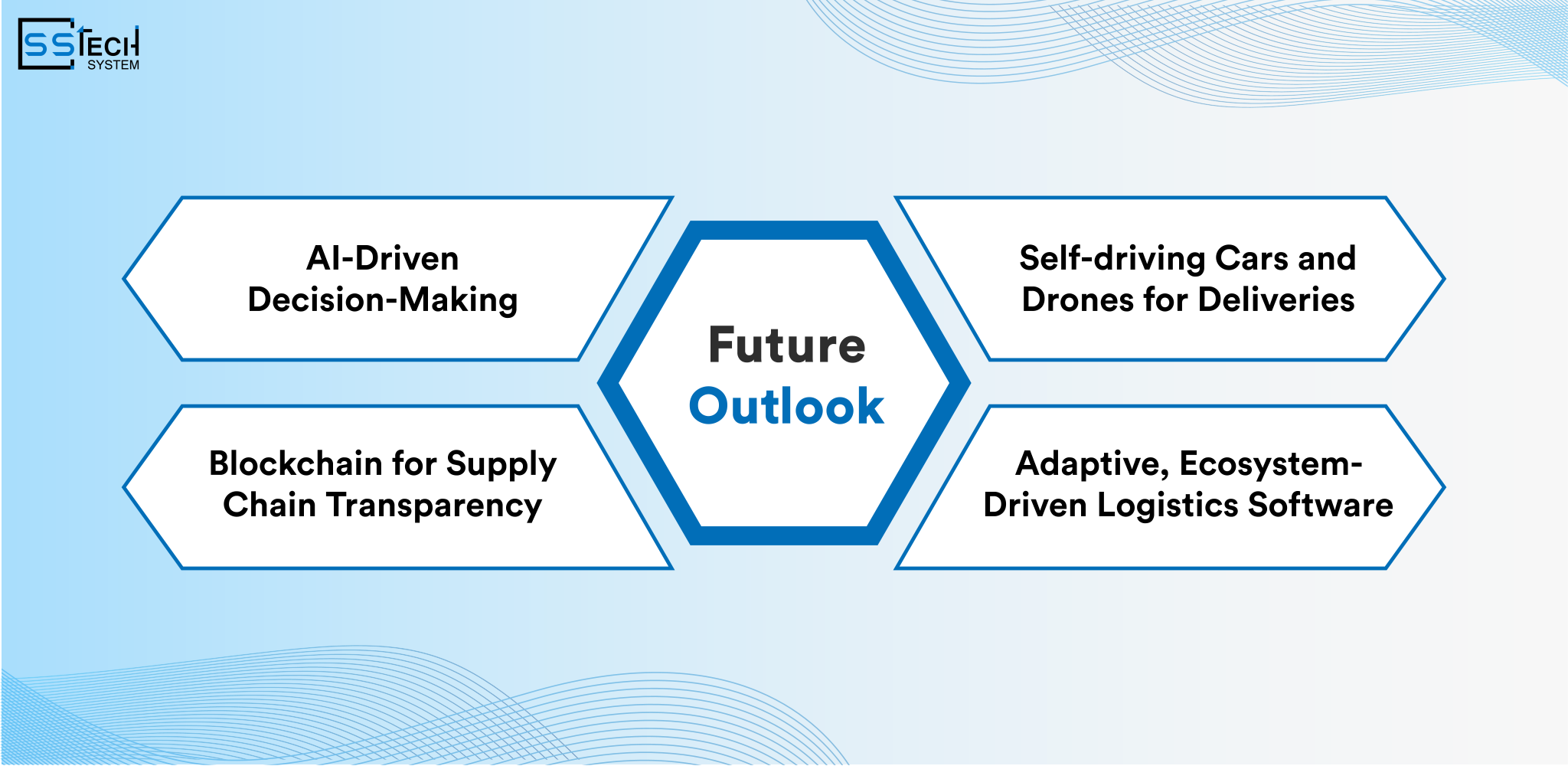
It’s not just the logistics industry that is transforming, it’s changing at a breakneck pace. You need to ready yourself fOor the trends that are going to drive the future of logistics software, in order to remain competitive.
AI-Driven Decision-Making
AI driven predictive analytics will soon be the their hallmark. Soon your software will be able to predict flight delays, suggest a detour or forecast out-of-stock inventory, live. Use custom AI models trained on your historical data and make decisions quickly and intelligently.
SSTech System is already assisting customers to onboard AI modules for demand forecasting, dynamic pricing and logistics process optimization.
Blockchain for Supply Chain Transparency
For supply chains, trust and traceability are increasingly important. The blockchain is able to track goods from its source through to the end customer and provides an immutable trail for traceability meaning less fraud, more accountability at all points in a supply chain.
Custom logistics software with blockchain compatibility can offer your clients and stakeholders a transparent depiction of sourcing, handling, and delivery actions, enhancing credibility as well as compliance.
Self-driving Cars and Drones for Deliveries
It is an emerging field, but autonomous logistics is no longer science fiction. From forklifts in warehouses to drone-based last-mile delivery, the future will require logistics software that can connect with AV systems, drones and automated loading equipment.
Your software will have to interpret sensor data, know the location of your drones, manage refueling or maintenance, and probably interface with aviation/ road transport authorities so as not to generate too much trouble.
SSTech System is capable of building robust and adaptive platforms to keep you prepared for those integrations, ahead your competitors.
Adaptive, Ecosystem-Driven Logistics Software
The age of inflexible, monolithic platforms is now a thing of the past. The future is modular, API-driven logistics ecosystems in which your WMS, TMS, CRM, customer app and analytics dashboard are communicating with each other in real time.
There will not just be one-off development. It will be a scalable digital backbone that adjusts with your network as you grow or new technologies develop or the market changes.
Conclusion
It’s clear now that bottlenecks are more than just little hiccups, they’re the silent assassins of productivity, profit and customer satisfaction. But with custom software designed for your specialized operations, those bottlenecks can become amazing opportunities for increased efficiency, automation and growth.
Whether it’s perfecting your warehouse and transport flows, providing in-the-moment experiences for your customers or delivering invaluable data-powered insights, SSTech System provides you with a logistics solution that works with you, rather than against you.

So, if you’re looking to cut delays, save both time and money and future-proof your operations then it’s time for you to say goodbye to generic solutions.
Partner with SSTech System, and turn your logistics pains into gains.
Related Article