


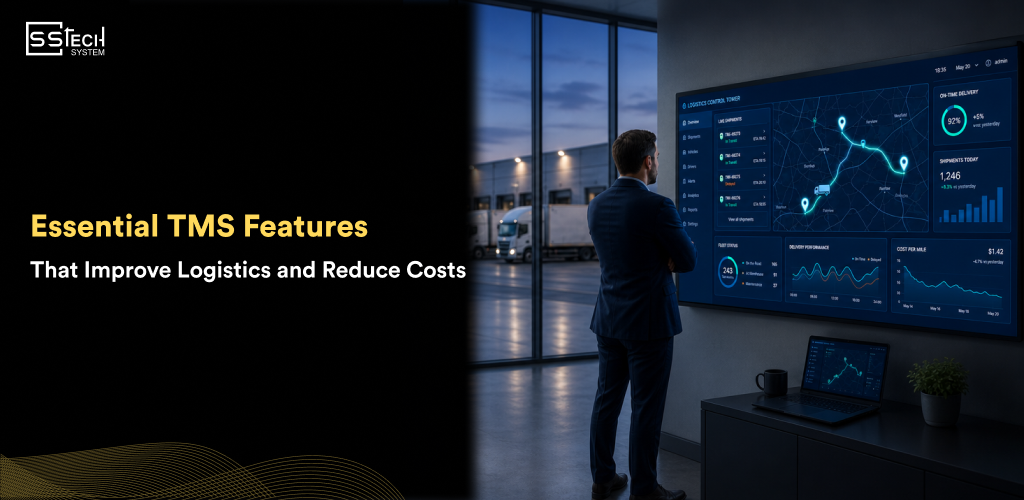
The logistics sector is constantly battling to make quicker deliveries, reduce costs, and match the increasing customer demands. Transportation Management System Features help businesses streamline operations, improve shipment visibility, and optimize transportation processes. Transportation management has never been more difficult than it is today due to rising fuel prices, complicated supply chains, and rising shipment volumes.
Traditional transportation methods usually lead to slow delivery, lack of visibility of shipments, and increased operational expenses. This is the reason why companies are turning towards TMS solutions to automate transportation processes and optimize the supply chain.
Modern transportation management software assists businesses in planning shipments, route optimization, carrier management, monitoring freight in real time, as well as transportation performance analysis all through a single platform. The article examines the most important aspects of a transport management system, the role of AI, and the effectiveness of the correct solution to cut the cost of logistics.
What Is a Transportation Management System (TMS)?
A transportation management system is software that assists businesses in planning, executing, tracking, and optimizing the transport of goods within the supply chain. It also deals with transport-related activities from order creation and carrier selection to shipment tracking and delivery confirmation.
The transportation management system market is forecasted to reach USD 37.04 billion by 2030, up from USD 18.50 billion in 2025, with a CAGR of 14.9%. Modern TMS software is linked to the ERP system, warehouses, carriers, and customer platforms to automate processes and enhance visibility. Being a full-fledged transportation management solution, it also uses automation, capable of employing AI and analytics to help enhance planning and reduce transportation expenses.
Why Businesses Need Modern TMS Solutions
The cost of transportation keeps on increasing and customers are demanding quicker delivery and instant updates. The manual process of handling such expectations usually causes delays, communication breakdowns and unwarranted costs.
North America accounted for approximately 36% of the global TMS market in 2025 due to high adoption of digital logistics technologies. A modern logistics management software platform will automate transportation planning, enhance collaboration of carriers and shipment analysis.
When integrated with a warehouse management system, fleet management software, and last-mile delivery software, it creates a connected logistics ecosystem. Having begun as a tool to bolster the growth capacities of businesses, custom TMS software solutions enhance the efficiency of operations, cut down on manual work and lead to customer satisfaction.
Cloud-Based vs On-Premise TMS
Businesses choosing a transportation management platform usually have the option of cloud-based and on-premise deployment.
-
Cloud-Based TMS
Cloud-based TMS accounted for over 61% of the global TMS market in 2025, highlighting the industry’s shift toward cloud deployments. Cloud-based transportation management software is hosted online and accessed through the internet.
It provides a quicker deployment, automatic updates, remote/access, scalability, and reduced infrastructure costs. These cloud-based transportation management software benefits make it an excellent choice for growing businesses.
-
On-Premise TMS
On-premises transportation management system software is developed and installed on servers within a company giving a company more control over the infrastructure and data. It is however more expensive to upgrade or maintain and therefore more appropriate in organisations that have stringent compliance or custom infrastructure requirements.
Essential TMS Features That Improve Logistics and Reduce Costs
-
Route Planning and Optimisation
The modern transportation planning software determines the most effective routes with respect to traffic, vehicle capacity and delivery schedule. Transportation optimization software with AI route optimization minimizes fuel expenses, delivery delays, and unnecessary mileage.
-
Real-Time Shipment Tracking
A shipment management system with real-time shipment tracking enables the business and customers to track the shipments throughout the transportation process. Integrated freight tracking software and a shipment visibility platform can enhance visibility and allow quicker responses to disruptions.
-
Automated Carrier Selection
A carrier management system is used to compare the carriers based on price, performance, transit times, and capacity. This assists companies in selecting the most appropriate carrier in addition to minimizing the freight expenses and enhancing quality of the services.
-
Freight Cost Management
The freight management software monitors costs in transportation, compares freight rates and automates freight audits. This gives a more effective cost control and makes informed transportation decisions.
-
Load Planning and Consolidation
Integrated load planning software maximises vehicle capacity by consolidating shipments that are compatible. This improves load utilisation, thereby reducing the cost of transportation and enhancing fleet efficiency.
-
Order Management Integration
Integrating a TMS with order management systems allows processing orders faster and more efficiently, as well as better transportation planning. There is also automated information sharing which minimizes on manual error and delays in delivery.
-
Warehouse and ERP Integration
Chain visibility software market was valued at USD 3.3 billion in 2025 and is estimated to grow at a CAGR of 13.4% to reach USD 10.9 billion by 2035. It integrates perfectly with a warehouse management system, ERP software, and supply chain transportation software to enhance inventory accuracy and enhance the logistics processes. This facilitates effective end-to-end logistics management.
Read more: Why Pharmaceutical Companies Need Advanced Warehouse Management Systems?
-
Real-Time Analytics and Reporting
Modern transportation analytics software provides a transportation reporting dashboard to monitor transportation costs, delivery performance, carrier efficiency and fleet utilization. These insights guide companies to keep on streamlining their operations.
-
Automated Documentation
The use of manual paperwork slows down logistics operations and boosts errors. A TMS automates shipping labels, freight documents, invoices, and compliance paperwork in order to enhance efficiency and accuracy.
-
Customer Notifications and Delivery Updates
Customers are reminded with automatic updates about their shipment, delivery times, and receive a record of delivery. This enhances customer satisfaction and minimizes support enquiries.
AI and Automation in Modern TMS
An AI transportation management system combines predictive logistics analytics, machine learning in logistics, and intelligent transportation software to enhance planning and make decisions automatically. These attributes, paired with AI-powered dispatch software, help to streamline routes, minimize delays, and enable efficient automated freight management.

How Transportation Management System Features Help Reduce Logistics Costs
Reduced transportation costs are one of the largest benefits of implementing TMS solutions. A modern transportation management system enhances route mapping, carrier choice, shipment tracking, and use of resources to eliminate inefficiencies during operations.
Optimized routes make use of less fuel and load planning empowers the most out of vehicle capacity and minimizes empty miles. Automated carrier selection assists business to acquire competitive freight rates without interfering with the quality of service.
The ability to track shipments in real-time enables the logistics team to respond to any delay swiftly to minimize penalties and enhance customer satisfaction. Automation also reduces manual work as far as dispatching, documentation, invoicing and reporting are concerned.
These Transportation Management System Features, in combination with logistics automation software and distribution management software, generate long-term savings throughout the supply chain.
Transportation Management System ROI
Implementing a Transportation Management Solution (TMS) helps businesses streamline logistics operations, improve efficiency, reduce transportation costs, and gain better visibility across the supply chain. This enables faster decision-making, optimized route planning, and a more reliable delivery experience for customers.
Businesses typically achieve ROI through:
- Reduced freight and fuel costs.
- Reduced manual work through automation.
- Improved fleet utilisation.
- Reduced delivery lags with real-time visibility.
- Faster invoicing using digital proof of delivery.
An enterprise transportation management system also gives insights based on performance that can be utilized in ongoing improvements in the operations of the business as they expand.
Common Challenges Solved by TMS
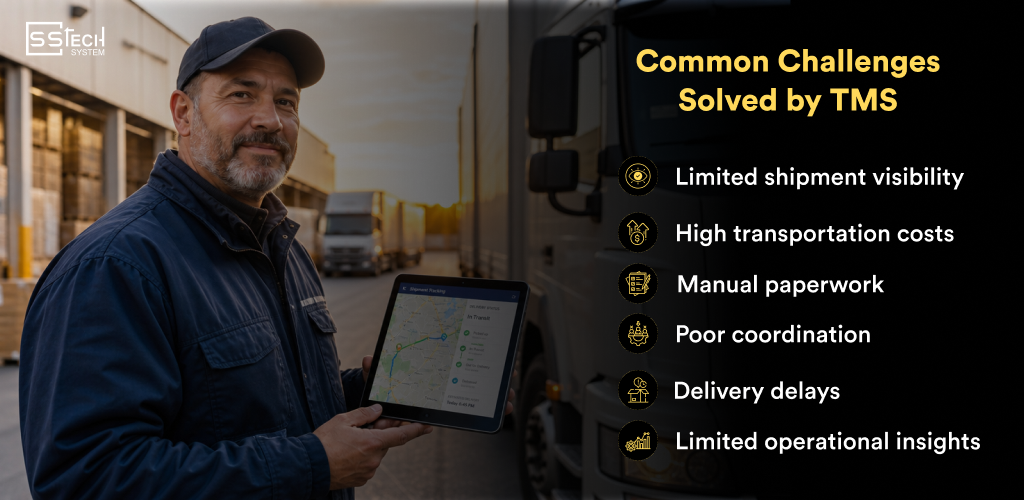
A modern transport management system will assist in solving a number of transportation difficulties including:
- Limited shipment visibility through real-time tracking.
- High transportation costs with route optimization and carrier selection.
- Manual paperwork through automated documentation.
- Poor coordination by integrating warehouse, ERP, and order management systems.
- Delivery delays using AI-powered planning and dispatch.
- Limited operational insights through real-time reporting dashboards.
Industries That Benefit Most from Advanced TMS Solutions
A modern transportation management platform caters to companies in various sectors.
- Manufacturing: Improves transportation planning and reduces freight costs.
- Retail and eCommerce: TMS for eCommerce logistics enhances shipment tracking, delivery scheduling, and customer communication.
- Third-Party Logistics (3PL): TMS for 3PL companies will streamline management of carriers, freight planning and customer reporting.
- Freight Brokerage: TMS for freight brokers improves load matching, shipment visibility, and carrier selection.
- Wholesale and Distribution: Supply chain transportation software eases coordination and transportation planning of the warehouses.
- Healthcare and Pharmaceuticals: Real-time shipment monitoring ensures timely and compliant delivery of sensitive products.
Read more: AI Transportation Management Software for Freight Companies
Key Factors to Consider When Choosing a TMS
To select appropriate transportation management software, one must take into consideration the present and future business requirements.
Consider the following factors:
- Easy-to-use interface.
- Integration with ERP and warehouse management system platforms.
- Multi-carrier and multi-mode transportation support.
- Real-time shipment visibility.
- AI-powered optimization of routes and analytics.
- Strong security, compliance, and reporting capabilities.
- Experience in custom software development services and ongoing support.
Collaboration with a proven company in the development of transportation management software also allows companies to develop their own custom TMS software solutions that best suit their business.
Scalability and Future Growth Support
With the changing nature of transportation needs, companies should have software that expands with their needs. Scalable TMS enables organizations to add users, warehouses, carriers, and transportation routes without disrupting operations.
The long-term flexibility is guaranteed by integration with fleet management software, route optimization software, and AI software development solutions. The Cloud-based platforms also support future growth and help businesses to adapt to the evolving customer demands.
Conclusion
Transportation is an important area of operation that needs to be managed in order to minimize costs and enhance customer satisfaction. Modern TMS solutions enable companies with tools to plan, optimize their routes, manage carriers, track deliveries, and enhance the efficiency of their logistics.
Such features like real-time shipment management, freight cost management, AI-based optimization, warehouse connectivity, and analytics allow organizations to optimize operations and enhance the efficiency of supply chains. By investing in the right transportation management software, businesses can create a scalable and future-ready logistics network supporting sustainable development.

Frequently Asked Questions
What features should a TMS have?
A modern transportation management system must encompass shipment tracking, route optimization, carrier management, freight cost management, load planning, warehouse management, analytics, automated documentation, customer notifications, and AI-powered automation.
How does TMS improve supply chain efficiency?
A TMS enhances efficiency in the supply chain through automated planning of transportation and shipment routes, improving shipment visibility, integrating with warehouse and ERP applications, and reducing manual work.
How does transportation management software reduce logistics costs?
Transportation management software helps to cut costs based on optimization of the route, improved load utilization, structural selection of carriers, fuel consumption, reduced paperwork, and transportation analytics.
What are the benefits of cloud-based transportation management software?
Cloud-based transportation management software offers lower infrastructure costs, automatic updates, remote accessibility, easy scalability, and seamless integration with existing business systems.
Which businesses benefit most from TMS solutions?
TMS solutions help manufacturers, retailers, distributors, freight brokers, logistics providers, eCommerce companies and third-party logistics companies to enhance their transportation efficiency and cost-effectiveness as well as customer service.
Related Article