


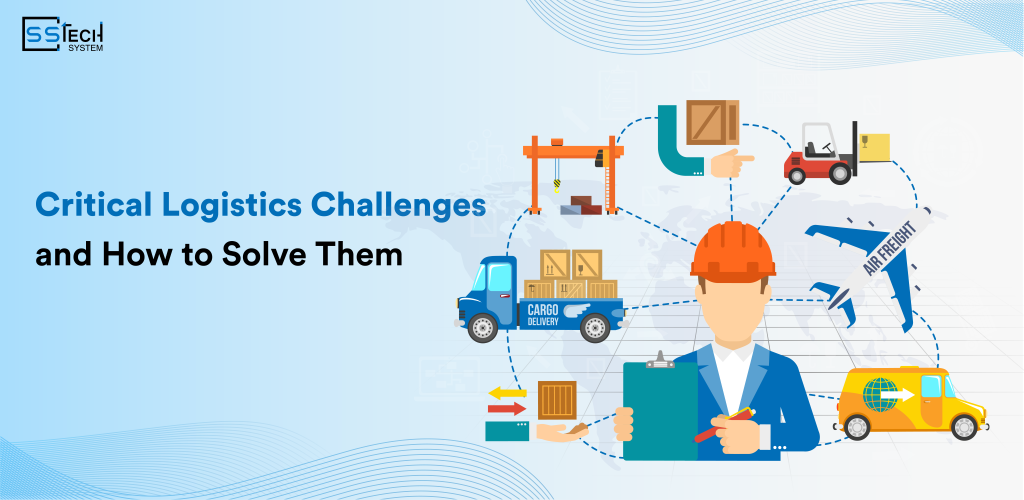
Logistics looks straightforward on paper, yet the real world adds layers of complexity at every step. Deliveries depend on multiple teams, tight timelines, accurate data, and constant coordination across locations. But a small delay in one area often creates a ripple effect across the entire chain. That ripple shows up as higher costs, missed deadlines, frustrated customers, or unexpected pressure on your team.
Many logistics companies face these issues daily, but the challenges for logistics companies are not always visible at first glance. Some problems sit deep inside processes. Others emerge when demand changes, routes shift, or technology falls behind.
So, understanding these challenges clearly helps you respond with confidence instead of reacting under stress.
In this blog, you will explore 12 critical logistics challenges companies face that continue to shape logistics operations today. Each challenge highlights what makes it difficult and what can be done to overcome it.
The goal is simple: give you clear, practical insights that support smoother operations, stronger visibility, and better customer experience.
Let’s get started by understanding the complexity of the logistics industry!
Complicity of Logistics Industries
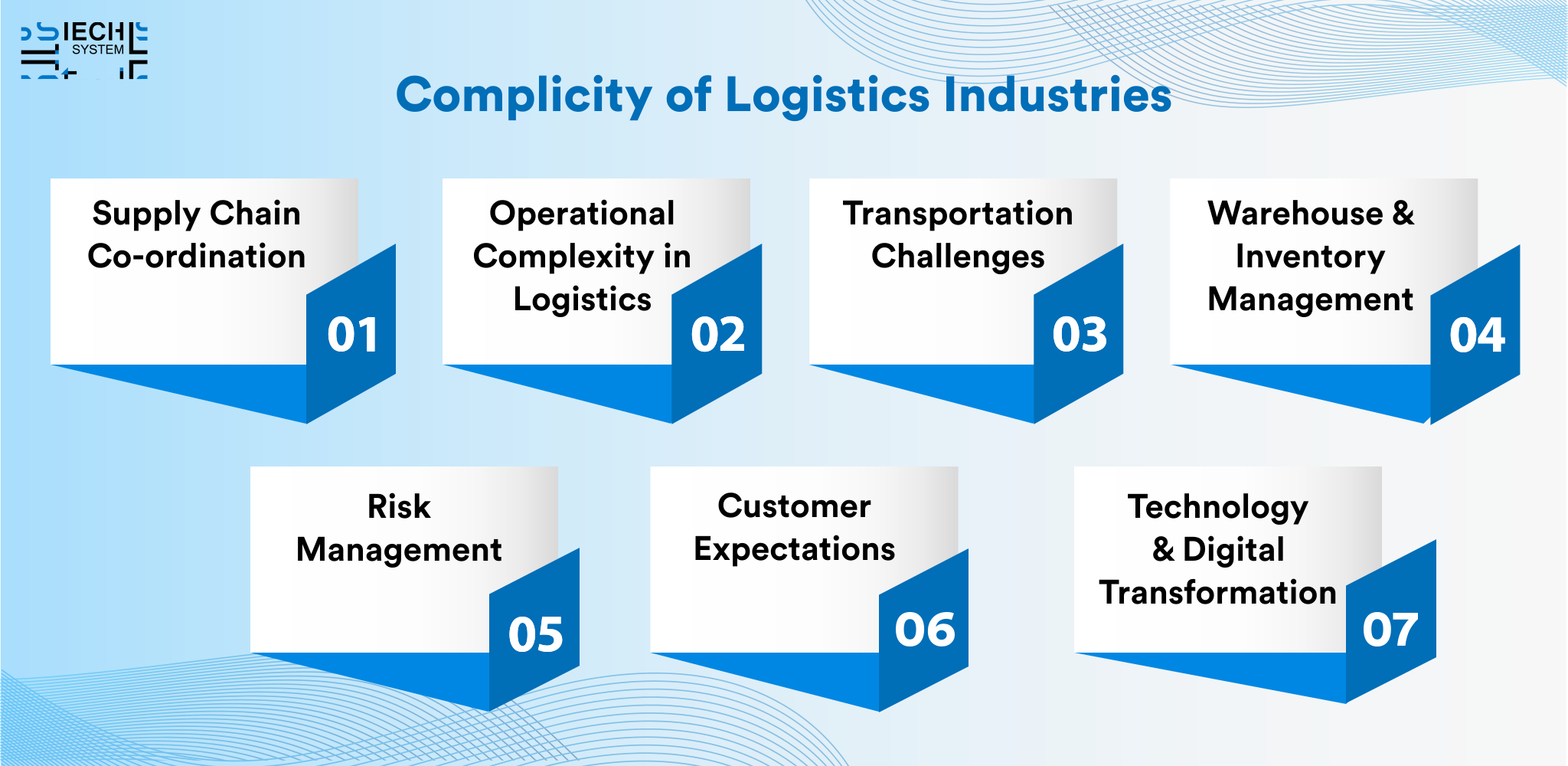
Logistics sits at the center of global trade. That means your world is full of moving parts. Transportation, warehousing, inventory, carriers, technology partners, and customers all demand your attention. And one mismatch, one delay, or one missed update can throw everything off balance.
Below are the core elements that fuel this complexity:
Operational Complexity in Logistics
Your operations run across different teams and systems. And each team holds part of the process.
- When data does not match, accuracy drops.
- When workflows are manual, errors multiply.
Because of this, you see the impact in the form of higher costs, slower delivery, and inconsistent performance.
However, you can solve a big part of this complexity with standard processes.
- A unified workflow helps your teams follow the same playbook
- Automation reduces repetitive work, and
- Clear KPIs help you measure performance
When you focus on throughput instead of tasks, you see true capacity and bottlenecks.
Supply Chain Coordination
Coordination breaks down when partners use different tools.
A warehouse uses one system. A carrier uses another. And your customer wants updates that neither system provides correctly. This mismatch creates delays, confusion, and frustrated teams.
This can be fixed with shared visibility. Plus, you can standardize integrations with APIs. And you can use event-driven updates to keep everyone aligned.
When every partner sees the same data, coordination becomes smoother and faster. Small improvements here lead to big logistics efficiency gains.
Transportation Challenges
Transportation eats a large part of your budget. Fuel, carriers, route planning, vehicle conditions, and driver availability push your costs up. Due to this, even one inefficient route turns into thousands of wasted miles by the end of the month.
To overcome this problem, you need accurate route planning and flexible contracts.
The goal is simple:
- Reduce empty miles
- Consolidate loads, and
- Improve delivery windows
When your transportation plan becomes smarter, your costs drop without compromising speed.
Warehouse and Inventory Management
Warehousing mistakes can hurt your business reputation fast.
- You lose orders when items go missing
- You spend more when inventory counts are wrong, and
- Your team wastes hours fixing problems that automation could have prevented
On the contrary:
- Barcode or RFID scanning gives you accuracy
- Cycle counts catch issues before they spread
- Integrated systems reduce manual entry, and
- You also avoid costly overstock and stockouts
A disciplined warehouse management and inventory plan is one of the strongest advantages in logistics.
Risk Management
Operational risk sits everywhere in logistics. A single delay can interrupt your schedule, a border issue can block high-value shipments, and cyber risks can stop your systems overnight.
And you cannot prevent every risk. You can, however, prepare for them.
You start with documentation. Then define liability clearly, prepare contingency plans for common supply chain issues, and train teams to react calmly when something breaks.
This way, good risk management protects your customers and your margins.
Customer Expectations
Customers expect speed, accuracy, and visibility. So, they compare your service to the biggest players in the market.
They want same-day delivery, real-time tracking, and proactive communication when something goes wrong.
You can meet these expectations with transparent updates and flexible delivery options. Plus, you can use precise ETAs and give customers ways to control delivery preferences.
Clear communication reduces pressure on your support teams and improves loyalty.
Technology and Digital Transformation
Digital transformation elevates logistics. The right tools can simplify planning, tracking, and delivery. And the wrong tools add confusion and extra work.
Many companies still operate with legacy systems that cannot scale. That leads to repeated errors and slow processes.
The best approach to overcome this is modular technology.
First, you start with the biggest bottlenecks, like a TMS for transportation, a WMS for warehouses, and a tracking tool for visibility.
Then, you roll out systems in phases, like training the teams and then measuring the adoption. Because when technology works for your people, operations become stronger.
Read more: How Technology Transforming the Future of Supply Chains
Challenges in the Logistics Industry
There are numerous challenges logistics businesses face. However, there are 12 real challenges logistics companies face today.
Overcoming logistics challenges in 2026 affects cost, performance, and customer experience. You will also see quick logistics solutions after each challenge.
1. Driver Shortage and Retention
The shortage of skilled drivers continues to be a major pain.
- High turnover forces you to hire often.
- New drivers require training.
- Unhappy drivers leave without notice.
- Every departure disrupts your schedule.
Solution:
- Offer predictable shifts.
- Improve transparency in payouts.
- Provide a modern driver app to simplify tasks.
- Recognize top drivers.
- Offer safety and customer-service training.
Bottom line: Logistics technology solutions help drivers stay longer. And retention is cheaper than constant hiring.
2. Driver Retention and Training Gaps
Lack of training leads to safety risks. It also leads to inconsistent service. Drivers who do not understand procedures create issues at handoff points.
Solution:
- Standardize training modules.
- Use micro-learning videos.
- Track progress with digital dashboards.
- Coach drivers on handling and documentation.
Impact: Training improves performance and reduces claims.
3. Cross-Border Compliance Maze
Every country demands different documentation. And missing one form can trap your shipment at customs. Plus, tariff changes surprise your team and impact cost.
Solution:
- Use automated trade-compliance tools.
- Keep regulation databases updated.
- Train staff on route-specific requirements.
- Partner with corridor experts.
A strong compliance process prevents expensive border delays.
4. Geopolitical Instability and Natural Disasters
Events like storms, strikes, border conflicts, or port closures disrupt your deliveries. You cannot predict them, but you can prepare for them.
Solution:
- Build alternative routes.
- Maintain secondary carriers.
- Hold buffer stock for essential products.
- Conduct quarterly scenario planning.
Such preparedness for unanticipated disasters reduces panic and downtime.
5. Reverse Logistics Headaches
When the returns come, they drain resources. Plus, they require special handling, new labels, extra checks, and planned routes. And without proper structure, returns can turn chaotic affair.
Solution:
- Create local return hubs.
- Consolidate return pickups.
- Use route optimization for return legs.
- Track return reasons to reduce repeat issues.
Reverse logistics becomes a strength when you design it well.
6. Visibility Across the Supply Chain
Visibility is one of the biggest gaps in logistics. This lack of visibility affects planning, tracking, communication, and customer confidence.
Solution:
- Use a real-time tracking solution for fleets.
- Integrate WMS, TMS, and telematics.
- Share live dashboards with teams and customers.
- Trigger alerts for exceptions.
The impact: You gain control when you see everything in one place and in real time.
Read more: Challenges and Solutions in Logistics Digital Transformation
7. Insurance and Liability Disputes
Insurance and liability disputes usually increase when there is no clear record of how a shipment was handled at each stage.
Missing signatures, incomplete handoff details, or a lack of condition photos make it difficult to confirm whether the shipment was handed over correctly, transported safely, or damaged before delivery.
Solution:
- Capture digital signatures at pickup and delivery.
- Take timestamped photos of the shipment’s condition before loading and after unloading.
- Record chain-of-custody events: who handled the shipment, when, and where.
- Define liability in contracts.
These steps create a complete trail of evidence that protects your company, speeds up claim resolution, and reduces unnecessary disputes.
8. Fuel Price Volatility
Fuel is one of the largest and most unpredictable expenses in logistics. Prices rise and fall without much warning, and those fluctuations immediately impact your operating costs.
When fuel becomes expensive, every mile driven costs more. And when prices drop, the savings are often lost if routes, vehicle loads, or dispatch plans are inefficient.
Solution:
- Reduce empty miles by planning routes that maximize loaded trips and avoid unnecessary travel.
- Consolidate shipments so vehicles carry full loads whenever possible.
- Use route-optimization tools that select fuel-efficient paths based on distance, traffic, and road conditions.
- Negotiate contracts that include fuel-adjustment clauses to protect your margins during price spikes.
- Track fuel consumption per vehicle and per trip to identify patterns, waste, or inefficient driving behaviour.
These actions give you control over fuel-related costs even when market prices change suddenly.
9. Pressure on Rates
Your customers expect faster delivery at a lower cost, even when operational expenses like fuel, labour, compliance, and technology continue to rise. This creates a gap between what customers want to pay and what it actually costs to run efficient, reliable operations.
Solution:
- Offer bundled services such as warehousing, last-mile delivery, tracking, or reverse logistics.
- Provide premium delivery windows for customers who need guaranteed time slots or faster service.
- Show total landed cost instead of unit cost.
- Use performance data to justify pricing.
These steps shift the conversation from “lowest rate” to “best overall value,” which helps protect profitability while still meeting customer expectations.
10. Last-Mile Delivery Paradox
Last-mile delivery issues are the most expensive stage in logistics because it involves short distances, frequent stops, variable traffic conditions, and direct customer interaction.
Yet customers expect this final stage to be fast, flexible, and often free. That creates a paradox: expectations increase while profit margins shrink.
Solution:
- Use local carriers for dense areas to shorten travel distance and improve delivery speed.
- Offer scheduled deliveries to reduce missed attempts and help drivers follow predictable routes.
- Provide pick-up options for customers who prefer flexible collection instead of home delivery.
- Use optimization tools to improve route density.
Well-planned last-mile delivery boosts customer satisfaction and reduces cost, and transforms a traditionally unprofitable stage into a more efficient and predictable part of your delivery network.
11. Poor Communication Between Customer and Courier
Communication breaks down when customers do not receive timely or accurate updates about their deliveries. Customers call support for answers, couriers lose time resolving issues on the road, and failed attempts increase operational cost.
Solution:
- Automate delivery updates for every key delivery stage
- Send real-time notifications.
- Allow detail changes before dispatch, such as delivery time, instructions, or address.
- Offer self-service delivery controls.
Good communication builds trust, reduces friction, improves delivery accuracy, and lowers call-center volumes.
12. Goods Sustaining Damage During Transit
Damage during transit usually occurs when goods are packed incorrectly, handled poorly, or stored in conditions that do not match the product’s requirements. Each of these issues leads to lost revenue, replacement costs, delayed deliveries, and customer dissatisfaction.
Solution:
- Use route-specific packaging standards.
- Train handlers on careful loading.
- Inspect packaging before dispatch.
- Review data on damage patterns monthly.
Better packaging reduces the chances of damaged goods, cuts claim-related costs, and improves customer confidence in your delivery quality.
Strategies to Overcome Logistics Challenges
The logistics challenges discussed earlier cannot be solved with one tool or one process. Each challenge needs a focused strategy that strengthens your operations and gives your teams more control.
The top key strategies to overcome logistic challenges include:
Optimize Transportation Costs
Transportation costs rise when routes are inefficient, vehicles run half-empty, or delays force drivers to take longer paths. Costs also spike when fuel prices fluctuate or when shipments are planned without real-time data.
Actions to take:
- Use route optimization to reduce miles.
- Consolidate shipments.
- Promote backhauls.
- Track fuel cost per trip.
- Negotiate flexible carrier contracts.
When you optimize transportation and every trip carries the right load on the most efficient route, your per-delivery cost drops and margins improve.
Tackle Workforce Shortage
Driver shortages and high turnover disrupt schedules and increase overtime costs. Workload imbalance and outdated processes also push drivers to leave, thereby making recruitment a constant burden.
Actions to take:
- Offer predictable schedules.
- Use staff augmentation during peaks.
- Provide digital tools that simplify tasks.
- Offer recognition and rewards.
- Train drivers regularly.
When drivers feel supported and equipped, retention improves, and recruitment pressure decreases.
Gain End-to-End Visibility
Visibility gaps occur when systems do not talk to each other, tracking data is delayed, or teams rely on outdated information. These gaps create slow decisions and missed delivery commitments.
Actions to take:
- Integrate telematics, WMS, and TMS.
- Use dashboards to track exceptions.
- Share real-time status with customers.
- Add IoT sensors for sensitive goods.
With visibility, you prevent delays instead of reacting to them.
Invest in Scalable Technology
Outdated systems increase errors, force manual work, and limit your ability to grow. When tools cannot scale with volume or integrate with partners, operations become fragmented.
Actions to take:
- Choose modular platforms.
- Start with critical systems like TMS and WMS.
- Run pilot rollouts.
- Train teams before scaling.
- Track adoption metrics.
When your tech stack supports your future needs, performance improves across all departments.
Meet Escalating Customer Expectations
Customers want accurate ETAs, fast delivery, flexible options, and continuous updates. When expectations are not met, complaints rise, and loyalty falls.
Actions to take:
- Offer accurate ETAs.
- Give self-service controls.
- Send automatic status alerts.
- Offer premium delivery slots.
When customers stay informed and empowered, delivery issues decrease and satisfaction increases.
Drive Environmental Sustainability
Environmental pressure grows every year, and inefficient operations increase your carbon footprint and fuel costs. Customers and partners now look at sustainability as a decision factor.
Actions to take:
- Electrify fleets where possible.
- Reduce miles with optimization tools.
- Use recyclable materials.
- Consolidate shipments.
Green operations also strengthen brand perception, lower operational costs, while improving brand reputation, sustainability in logistics, and compliance with emerging regulations.
Prevent Inventory Errors
Inventory errors happen when counts rely on manual entry, products are scanned incorrectly, or systems are not integrated. These errors cause stockouts, overstock, order delays, and unhappy customers.
Actions to take:
- Use barcode or RFID scanning.
- Automate replenishment rules.
- Conduct frequent cycle counts.
- Integrate inventory with sales.
Learn more: Logistic App Integration
Reduce Damage and Claims
Damage happens when packaging is weak, items shift inside vehicles, or loading procedures are inconsistent. Claims cost time and money, and they weaken customer trust.
Actions to take:
- Standardize packaging.
- Capture delivery photos.
- Train teams on handling rules.
- Create a damage pattern report monthly.
Better packaging equals fewer headaches. When you fix the root cause, claims decrease and delivery reliability increases.
Improve Reverse Logistics
Returns require dedicated routes, inspections, processing, and storage. When this process is unplanned, it becomes expensive and chaotic.
Actions to take:
- Create regional return hubs.
- Use consolidated pickups.
- Route returns based on the condition.
- Track returns to identify product issues.
Structured returns save time and cost. And good reverse logistics protects revenue and reduces waste.
Secure Your Data
Logistics systems handle sensitive customer and shipment data. Weak data security in logistics exposes your business to breaches, ransomware, and operational downtime. And cyber threats target logistics due to valuable data
Actions to take:
- Enforce MFA.
- Segment networks.
- Encrypt sensitive data.
- Conduct periodic audits.
- Run regular vulnerability tests
Strong security protects your operations and strengthens customer trust.
Make KPIs Work for You
KPIs lose value when they are too broad, too many, or not reviewed regularly. Without clear metrics, teams focus on tasks rather than outcomes.
So, you should track:
- On-time delivery rate.
- Order accuracy.
- Cost per delivered order.
- Average delivery time.
- First-time delivery success rate.
Use weekly reviews to detect patterns and guide operational improvements.
Conclusion
Logistics challenges will never disappear. You will always face pressure from customers, partners, and the market. You can, however, stay ahead with strong systems, real-time data, scalable technology, and a trained workforce.
And every challenge turns manageable when you break it down and apply a structured solution.
Start with visibility. Then, fix your biggest bottleneck, train your teams, adopt technology that supports growth, and measure everything.
The goal is not perfection. The goal is progress that compounds.
The good news is that your logistics operation can become a competitive advantage. One smart change each month builds momentum. And when you commit to improvement, the results speak for themselves.
A proactive approach helps you stay ahead of challenges and build a logistics operation that grows with confidence. With a partner like SSTech System, you can strengthen your systems early and scale smoothly as your business expands.

Related Article