



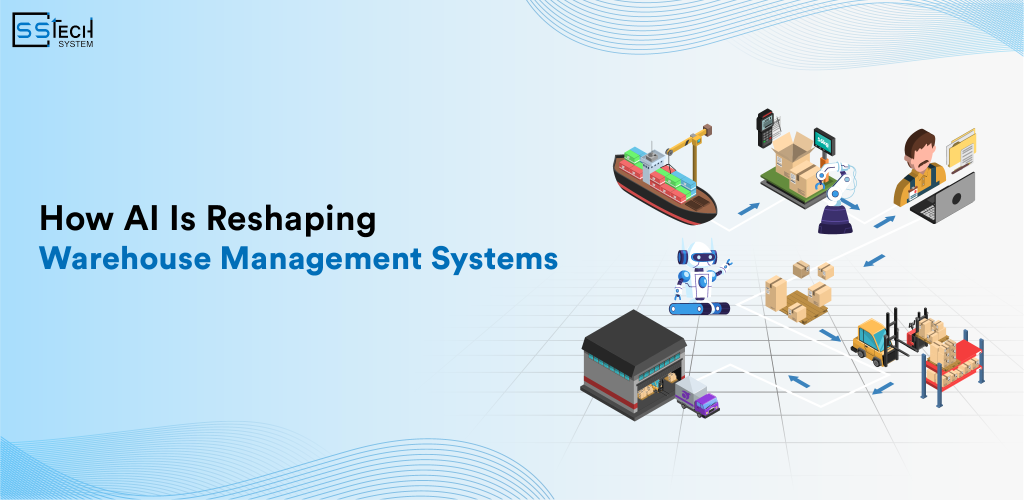
Warehouse automation is no longer only a buzzword in the high-speed world of transportation and supply chain management. The businesses that want to be at the top need to use it. As the use of artificial intelligence has become widespread and has been used in many areas such as storage and warehouse processes, the changes in the warehouse processes have been quite big.
This article delves into warehouse automation, examining its types, benefits, current trends, and the pivotal role AI will play in shaping the future of warehousing.
What is Warehouse Automation?
Warehouse automation involves using technology and machinery to carry out tasks previously performed by humans. When you employ technology and machines to expedite inventory management, order processing, and warehouse operations, you are “automating” the warehouse. It encompasses various automatic systems and technologies designed to decrease human labor, enhance warehouse efficiency, and improve accuracy. In essence, warehouse automation is the utilization of machines and technology to execute tasks typically undertaken by human workers in the warehouse.
Types of Warehouse Automation
Some of the types of Warehouse Automation Systems include:
Robotics:
The rise of warehouse robotics, including autonomous mobile robots (AMRs) and robotic arms, is streamlining tasks like moving goods, picking, packing, and palletizing. These self-moving robots enhance warehouse efficiency, optimizing picking routes and reducing trip times.
Autonomous Storage and Retrieval Systems (AS/RS):
These systems employ robots to automatically store and recover the items from the defined storage areas. These systems utilize the store area to its maximum and also accelerate order processing by elimination of the need to pick the items off the shelves by hand.
Warehouse Management Systems (WMS):
Warehouse Management Systems (WMS) play a vital role in automating warehouses by overseeing tasks like supply management, order processing, and worker assignments. Advanced WMS utilizes AI to forecast demand, optimize stocking levels, and maximize resource utilization.
What will be the next thing for Automated Warehouses?
The future of the warehouse industry with automation is getting brighter as the technology keeps on improving. Furthermore, the latest technologies, such as machine learning, the Internet of Things (IoT), and blockchain, will transform warehouse operations even further. They will enable monitoring in real-time, repairing problems before they occur, and seamlessly connecting across supply chain networks.
The plus of warehouse automation solutions is that it will make the work of the employees easier and more efficient.
Increased productivity:
Automation reduces the need for physical labor and monotonous, repetitive work. This enables warehouse workers to be more focused on the critical work which in turn increases the total productivity.
Better accuracy:
AI systems’ precision minimizes errors in order selection, item packaging, and inventory management.
Better visibility of inventory:
Warehouse control systems allow managers to supervise the movement of inventory in real-time, thus giving them a clearer picture of where and how much stock they have.
Faster order fulfillment:
Automated systems simplify dealing with and completing orders, reducing waiting times and thereby satisfying customers.
Saves on costs:
Spending a lot of money on warehouse technology may seem expensive at first, but the long-term savings on labor costs, faster speed, and fewer mistakes make it worth it.
Scalability:
Since automated systems are by nature scalable, stores can easily adapt to changing demand and business growth without any major problems.

Warehouse Automation in 2026
The pace of warehouse technology development shows no signs of slowing down in 2026. Industry leaders are investing heavily in research and development to create innovative solutions tailored to the evolving needs of modern stores.
AI-powered predictive analytics:
Giant data sets generated by warehouse operations are being scrutinized using the analytics tools that AI is powering. Through the use of prediction algorithms, these systems can foresee the changes in demand, determine the optimal supply quantities, and identify possible issues with equipment or bottlenecks beforehand.
Integration of IoT devices:
The emergence of Internet of Things (IoT) devices such as sensors, RFID tags, and smart cameras enables stores to get real-time data on the movement of the product, the environment, and the performance of the equipment. After that, this data is utilized to make wise choices and boost the efficiency of the task.
Augmented reality (AR) for order picking:
AR technology is put to use to make the order-picking process quicker and more precise. AR headsets or smart glasses aid warehouse workers by providing real-time visual cues and directions, enabling precise item location within the warehouse.
Collective robotics:
Cobots, or collaborative robots, actively engage with people in shared office environments. With advanced safety features and intuitive controls, they enhance tasks by ensuring safety and efficiency, requiring human skill or decision-making.
Blockchain for supply chain transparency:
Researchers are actively exploring the potential of using blockchain technology to streamline and enhance the transparency of supply chains. Blockchain streamlines tracking goods from sellers to customers by securely storing financial data in a decentralized, unchangeable format. This diminishes the chance of fraud and strengthens the trust between all the parties involved.
Role of AI in Enhancing Warehouse Decision-Making
Using real-time intelligence to plan, predict, and respond to operational challenges, AI-Driven Warehouse Automation (WDA) is helping warehouses transform how they operate. Artificial intelligence embedded in warehouse management makes decision-making proactive rather than reactive guesswork, thereby moving the guessing game to the next level.
- AI Warehouse Management processes operational and inventory as well as demand data continuously, allowing data-centric decisions.
- A contemporary WMS employs machine learning algorithms that consider both history and real-time inputs.
- Scope of AI in inventory management improves whole inventory management with demand forecasting and stock optimisation.
- AI Assistant for WMS enables smart labor planning to carry out the right shift allocation and utilize the workforce optimally.
- AI in warehouse reduces the human biases by replacing manual judgments with automated decisions.
AI-Powered Warehouse Safety and Risk Reduction
The integration of AI in warehouse automation also increases safety in the workplace; it allows identifying risks long before they turn into an incident, potentially costing the company time and money. Hence, the management of safety with warehouse automation AI is proactive instead of reactive.
- Deploys AI-enabled computer vision to identify unsafe behaviors and prevent accidents in busy warehouse zones of the facility.
- AI-based predictive maintenance for automated warehouses prevents equipment malfunction and unexpected breakdown.
- The worker movement is monitored continuously and dangerous areas are pinpointed through the warehouse management solution.
- Fewer on-the-job injuries decrease compliance risks while also reinforcing overall operational governance.
- A better safety record carries inordinate weight on cost and operational sustainability over the long run, years later, in terms of insurance costs and operational reliability.
AI and Workforce Transformation in Automated Warehouses
AI for warehouse operations is working on augmenting human capabilities, as opposed to replacing them. At present times, warehouse management solutions utilize AI to offer a secured and satisfying workplace.
- AI-driven warehouse automation augments human effort by automating repetitive tasks while retaining decision-making power.
- Roles are transitioning from manual-based jobs to analytical, supervisory and system-monitoring ones.
- AI-driven solutions in WMS software promote deliberate practice and upskilling of workers in the warehouse.
- Less physical effort is followed by an enhanced level of job satisfaction and decreased employee turnover.
Collaborative robots and deep learning-based automated equipment present the best conditions for an effective human and AI collaboration to boost overall productivity in an AI-Driven Warehouse Automation environment.

Challenges and Limitations of AI in Warehouse Automation
However, as beneficial as they are, AI adoption in warehousing comes with a few unique challenges that organizations need to strategically plan for. The right focus on technology readiness and organisational change can ensure the successful implementation of AI Warehouse Management.
- The huge capital investments required initially makes SMEs wary of any potential ROI in the surroundings of small and mid-sized warehouses.
- One of the biggest limitations of warehouse management system deployments is poor data quality and system integration issues.
- More connected systems increase cybersecurity risk through AI warehouse automation.
- This resistance from employees slows down the process of adoption efforts as well as the training.
With phased implementation, you experience minimum disruption; also, this allows for gradual optimization of your warehouse management software.
Read more: How AI is Revolutionizing App Development for Logistics industry
How Businesses Can Start Adopting AI-Based Warehouse Automation
Warehouse Automation Powered by AI Starts with Clear Operational Maturity and Business Objectives The structured methodology approach guarantees that your warehouse is receiving the measurable value from an artificial intelligence initiative.
- Evaluating warehouse preparedness allows to discern processes that lend themselves best to AI integration.
- Choosing the right warehouse management solution and technology partners is key to achieving long-term success.
- AI solutions that are scalable enable businesses to scale without needing to replace existing inventory management system infrastructure.
- These validate performance & viability before deploying automation for the entire AI warehouse pipeline.
- Sustainable outcomes from AI-Driven Warehouse Automation comes from aligning of AI initiatives with business goals.
Conclusion
AI in warehouse automation revolutionizes transportation and supply chains, enhancing efficiency, flexibility, and competitiveness. Leveraging technologies like robots, AI analytics, and IoT integration, warehouses improve customer experience, cut costs, and streamline operations.
Future advancements promise even greater efficiency and effectiveness. SSTech WMS Solutions offers tailored automation solutions and expert guidance for businesses aiming to automate or optimize their warehouses. Stay ahead in a competitive market with the right blend of technology, strategy, and support. Contact SSTech System for more information.
Frequently Asked Questions
AI for warehousing automation means utilizing intelligent technologies like machine learning, computer vision, and predictive analytics to streamline warehouse functions. Rather than relying on prescriptive logic from a rules-based system, AI can utilize massive amounts of data to make decisions, adjust plans based on demand, and respond to shifting circumstances in real time.
AI enables automated inventory tracking, labour planning, routing and even safety monitoring, which helps warehouses operate faster, smarter and more accurate while minimising human involvement.
By identifying inefficiencies and patterns that may not be obvious to humans, AI enhances the efficiency of warehouses. It improves picking routes, takes demand predictions to the next level, distributes workloads evenly and minimizes machine downtime with predictive maintenance.
AI Warehouse Management solutions learn from operational information through time, which all over again and all over again helps the warehouse to observe synchronized to demand shifts earlier than they occur, cut back blunders, and optimize each day operations. This leads to able fulfil orders faster, optimal usage of space and cost-effectiveness without any sacrifice on accuracy or service levels.
Yes, AI-based warehouse automation is becoming increasingly appropriate for small and mid-sized businesses thanks to scalable and cloud-based solutions. Most providers now have modular tools, so your business can start small and grow from there.
AI can also make a big difference for SMBs looking to enhance inventory accuracy, reduce manual effort, and improve decision-making with warehouse automation without requiring significant up-front investment in infrastructure. Organizations that are growing find it easier to adopt AI faster through pilot deployments, subscription-based models, etc.
Warehouse automation has typically been built on rigid rules, linear processes, and of course, all done through manual coding to handle repetitive work. On the other hand, AI-Driven Warehouse Automation employs learning algorithms that are fine-tuned using historical or real-time data.
With AI, systems can predict demand, dynamically optimize labor, and auto-react to unforeseen disruptions. Traditional automation improves speed and consistency, and more advanced or intelligent automation takes it a step further. It adds intelligence and flexibility, along with built-in capabilities for continuous improvement, sharpening the edge for warehouse operations in increasingly complex and dynamic environments.
AI is transforming warehouse jobs by making them less physically intensive and process-driven, and more analytical and supervisory. Instead of replacing workers, AI technology in the warehouses is helping employees with automating repetitive tasks and decision support systems.
It alleviates the physical demands, enhances workplace safety, and enables upskilling. With the automating of areas like order picking in the warehouse, more and more workers engage with the dashboards, AI recommendations, and automated systems, thereby increasing the job satisfaction and skill levels for warehouse workers.
The challenges of adopting artificial intelligence for warehouse automation include high initial costs, data quality issues and complexity in integration with existing systems. Even if the technology is state of the art, many organizations fall short of proper alignment between the AI tools and existing processes, as well as readiness among staff.
Connected systems come with other big challenges in the form of cybersecurity and change management. Warehouse automation ai is not a small task to embrace, yet, if handled in phases, ensuring data infrastructure, training employees, and every technology investment is aligned with the business goals, this will help ensure your success in the process.
Trends like predictive analytics, computer vision-based safety systems, autonomous robots, and real-time decision engines are driving AI-powered warehouse automation in 2026. AI is being more democratized and scaled with the help of cloud-native platforms and more intelligent warehouse management software. The other key areas of researching being sustainable, energy optimization and human-AI collaboration also became trendier. Trends such as these are pushing shops to become more resilient, adaptative, and data-centric as they process ever-more-complex demands.
Related Article