


Every second matters in the modern logistics world which is rapidly changing. Speed in delivery is the expectation of customers; accuracy in business and efficiency in operations have become the primary source of profit. Whether transporting cargo across continents or packages across cities, logistics organisations require 24-hour notice of the exact locations of their vehicles, products, drivers, containers, and shipments at any given time. Real-time tracking solutions play a transformational role at this point.
As opposed to the traditional systems of tracking, where updates were slow, manual or were based on periodic reporting, real-time monitoring presents real-time and continuous data regarding location, movement, condition, delays and performance. It helps logistics managers make better decisions, detect issues before they arise, react to them in real time, and deliver goods more quickly and efficiently.
With the increasing complexity and competition among global supply chains, real-time tracking is no longer a choice. It has become an essential condition of any company working in the field of logistics, transportation, last-mile delivery, warehousing, or supply chain management. The global transportation & logistics segment is expected to reach USD 10,746.4 million by 2030.
This article explores everything you need to know about real-time tracking in logistics—what it is, how it works, key components, challenges, benefits, cost to build such solutions, role of AI, technologies used, applications, and guidance for selecting the right system.
What Are Real-Time Tracking Solutions?
A real-time tracking solution is a technology system that continuously tracks and reports the location, movements, status, condition, and performance of logistics assets, including vehicles, containers, inventory, drivers, cargo, and equipment.
It is a mix of hardware (GPS trackers, IoT devices), software (mobile apps, dashboards), connectivity (4G/5G, satellite, Wi-Fi), and analytics platforms to deliver real-time and continuous data flow.
The current tracking solutions are not just about updating position anymore, but about becoming a digital nervous system for logistics organisations, integrating all operational aspects into one smart control centre.
Why Real-Time Tracking Matters in Logistics
Live tracking has developed to be no more of a luxury but a competitive requirement. The demand of continuous visibility has become an imperative as the logistics organisations are under pressure to deliver faster, cheaper and more reliable delivery.
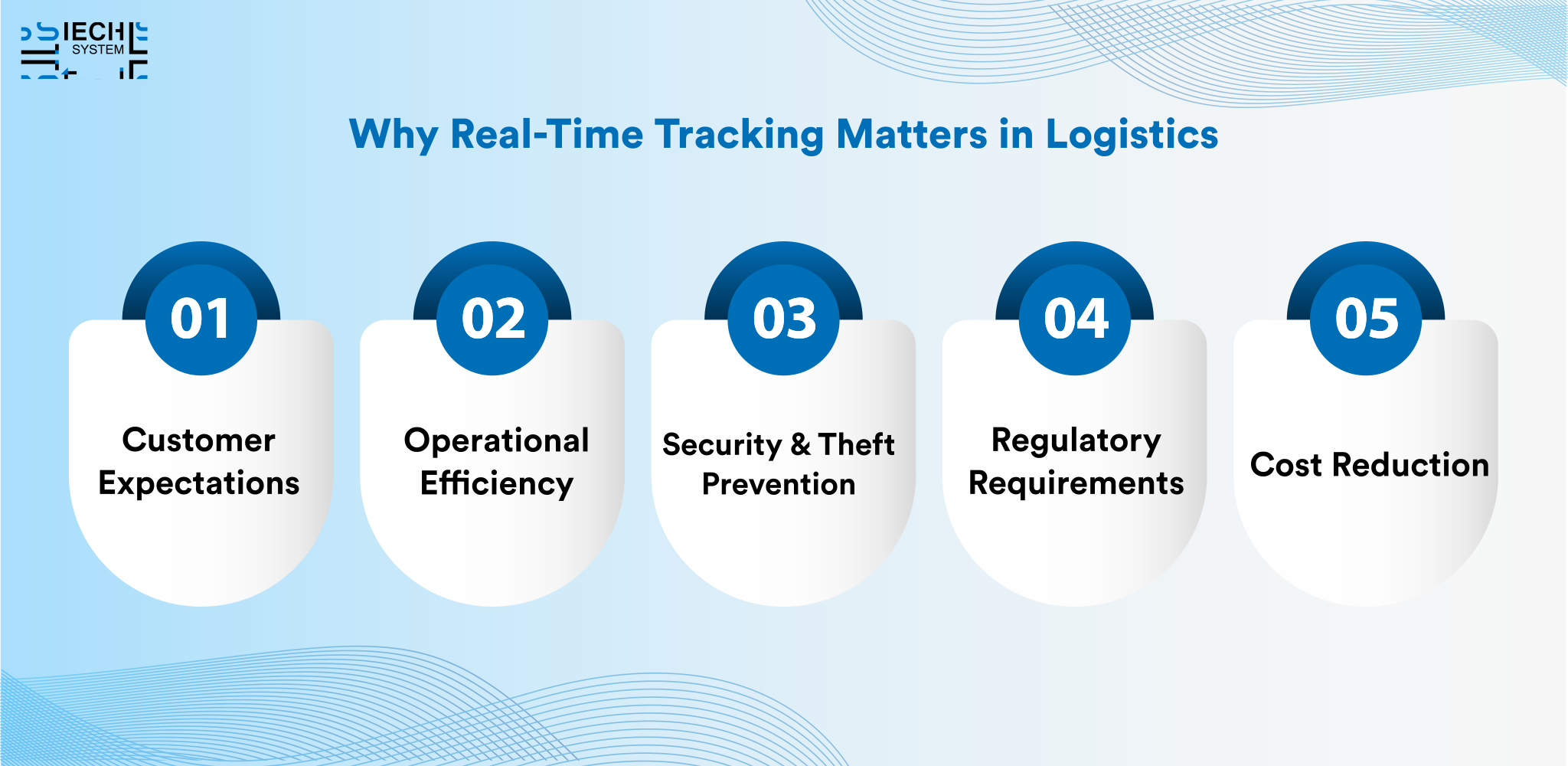
Here are the core reasons why real-time tracking matters:
Customer Expectations
Next-day and same-day delivery needs have to be tracked with accuracy. Customers would like to know when their shipment will be received- and with real time tracking, this is the only way businesses can give accurate ETAs.
Operational Efficiency
None of the route planning, fleet utilisation, scheduling, and resource allocation are grounded on factual information. Tracking does away with guesswork and it substitutes with true data.
Security & Theft Prevention
Businesses incur billions of money because of cargo theft. RTA enables managers to identify suspicious behavior in real-time – route deviations, excessive stops, unauthorised entry or inappropriate location.
Regulatory Requirements
Cold chain, pharmaceuticals, aviation, and food logistics industries demand temperature control and real-time documentation to comply with the quality standards.
Cost Reduction
Unproductive use of fuel, unused time, wasted miles on empty returns, unproductive routing and mismanagement of labour add to the logistics cost. Live fleet monitoring saves money directly.
Key Components of an Effective Real-Time Tracking System
Real-time logistics tracking is based on a set of hardware, software, data analytics and a network of connectivity that operate in collaboration in order to provide real-time, precise visibility.
All these components have individual functions of gathering, transmitting, processing, and analysing movement and cargo information. The following are the four fundamental components of a satisfactory, scalable, and effective real-time tracking solution.
GPS & Satellite-Based Tracking
Most real-time tracking systems rely on GPS. A GPS tracking system mounted on a car receives satellite signals and transmits information about continuous movement and positioning to a cloud server. The use of satellite tracking is particularly useful in remote or high-risk logistics situations like ocean shipping, aircraft, cross-border trucking, mining as well as oil and gas transportation.
IoT Sensors and Connectivity
IoT sensors enhance GPS tracking by monitoring asset condition, driver activity, and cargo environment in real time. IoT spend by logistics is estimated to grow from USD 57.4 million in 2025 to USD 216.5 million by 2035, at a CAGR of 14.1%. Logistics operations frequently use sensors to measure:
- Temperature and humidity
- Pressure and vibration
- Fuel level and consumption
- Door open/close detection
- Cargo load weight
- Engine and equipment health
Connectivity options vary based on operational need and include:
- 4G/5G cellular networks
- Bluetooth
- Wi-Fi
- NFC/RFID tags
- LPWAN networks (LoRaWAN, Sigfox)
- Satellite links
Cloud Platforms and Data Analytics
Cloud platforms act as the central processing engine for real-time tracking systems. Scalability is also facilitated by cloud architecture, as a business can easily monitor tens, hundreds, or thousands of vehicles and deliveries at a time without investing a lot in infrastructure. Real-time data and integrated cloud analytics will enable the logistics managers to make quicker and timely decisions.
Integration with Fleet Management Software
A tracking system delivers maximum operational value when integrated with fleet management software. The IoT device management market in transportation and logistics is projected to reach USD 2,900.8 million by 2030.
This creates a unified platform that supports:
- Driver performance management
- Vehicle health monitoring and maintenance scheduling
- Smart route planning and navigation
- Order assignment and delivery tracking
- Dispatch automation
- Billing and invoicing
- Compliance and regulatory monitoring
Common Challenges & How to Overcome Them
Although real-time tracking solutions offer significant benefits, logistics organisations must overcome practical and technical obstacles during implementation. These are the skills that need to be understood in order to succeed in the long term by not only by devising strategies to counter them.
Cost of Implementation & ROI Considerations
The first issue is the initial investment required for real-time tracking technology. These costs can include GPS devices, IoT sensors, software licensing, cloud storage, integration support, and system maintenance. These expenses are also easily multiplied when the company has to deal with a large number of trucks or warehouses. The biggest challenge is whether the investment will yield a high payoff or not.
The best approach to this challenge is to adopt it progressively. Rather than installing tracking devices throughout the operation simultaneously, companies can begin with the routes or geographical areas of high value and determine the increase or decrease in performance.
Integration Complexities with Legacy Systems
Most logistics firms use outdated transportation management systems (TMS), ERP software, or warehouse databases that were not designed to facilitate API-based data interchange.
Consequently, it may not be easy to incorporate real-time tracking systems into the existing infrastructure. There might be a mismatch of data format, manual procedures may need to be redesigned, and compatibility issues may lead to delays.
Businesses can face these challenges by connecting new and existing platforms through middleware or by developing custom APIs. Centralisation of data in one location of access is also facilitated by the cloud-based software, which makes integration easier.
Data Security Concerns
Sensitive operational information, such as fleet position, driver identity, cargo, customer addresses, and route assignments, is stored in real-time tracking systems. Data loss, shipment risk, or compliance issues could result from a security breach.
The answer to this question is high-quality digital protection measures, which include encryption, access control, multi-factor authentication, firewalls, and cybersecurity audits. The hosting environments are based on international requirements, including ISO 27001, GDPR, and SOC 2, which ensure that data remains uncompromised during data collection, storage, and transfer.
Role of AI in Real-Time Logistics Tracking
AI is redefining how logistics organisations plan, track, deliver, and optimise operations. Traditional tracking tells you what is happening—AI tells you what will happen.
AI-Powered Route Optimization
AI analyses:
- Road conditions
- Weather patterns
- Traffic data
- Fuel cost
- Loading schedules
- Delivery deadlines
It then recommends the best route, reduces fuel usage, cuts distance, and improves delivery timing.
Predictive Delivery Timelines (ETA Prediction)
AI uses historical and real-time signals to predict arrival time with high accuracy. This eliminates guesswork and improves customer transparency.
Demand Forecasting & Resource Planning
AI models predict upcoming delivery load, fleet requirement, inventory turnover, seasonal demand, and resource allocation.
Anomaly Detection (Theft, Delays, Route Deviation)
AI identifies unusual activity instantly:
- Sudden route change
- Cargo door access
- GPS signal loss
- Unplanned stops
This prevents loss and improves safety.
AI-Driven Decision Making
AI dashboards enable logistics managers to:
- Automate dispatch decisions
- Prevent breakdowns through predictive maintenance
- Allocate vehicles dynamically
- Run scenario-based planning
AI elevates tracking from reactive to proactive control.
Top Benefits of Real-Time Tracking Solutions
Real-time tracking solutions significantly enhance the reliability and performance of logistics operations by improving visibility, efficiency, accuracy, and customer experience.
One of the most important advantages is:
Enhanced Visibility and Transparency
With real-time GPS data, fleet managers, warehouse teams, and dispatch departments always know where shipments are located. This visibility reduces uncertainties and ensures faster decision-making. Instead of relying on periodic updates or manual reporting, stakeholders can view live progress on digital dashboards, track delays, and resolve operational issues before they escalate.
Improved Operational Efficiency
Real-time tracking data helps streamline logistics activities by identifying bottlenecks, reducing idle time, and supporting better route planning. If deliveries are stuck in traffic or experiencing delays, managers can quickly reassign resources or redirect vehicles.
Automated alerts and reporting remove manual paperwork, saving time and accelerating productivity. Driver behaviour analytics also improve safety and performance.
Better Inventory and Resource Management
Tracking systems assist in tracking the movement of inventories within the warehouses, hubs, and delivery routes. This eradicates confusion about stock levels, reduces order errors, and prevents asset loss. An improvement in planning translates into improved packing schedules, labour efficiency, and reduced inventory shortages.
Cost Reduction
Economy in fuel, preventive maintenance management, minimization of labour waste, and minimisation of delivery failure are all factors that lead to cost efficiency in the long term. Real-time tracking is also helpful in eliminating theft, route deviation, and vehicle misuse. Companies tend to save in a vast number of fleet miles, delivery hours and vehicle downtimes.
Customer Satisfaction & Trust
Customers demand proper delivery schedules. By tracking in real time, businesses will be in a position to provide live status updates, minimise uncertainty, and provide accurate ETAs. When there is transparency, it develops confidence which in turn results in improved retention of customers and improved brand name.
Real-Time Tracking Across Logistics Use Cases
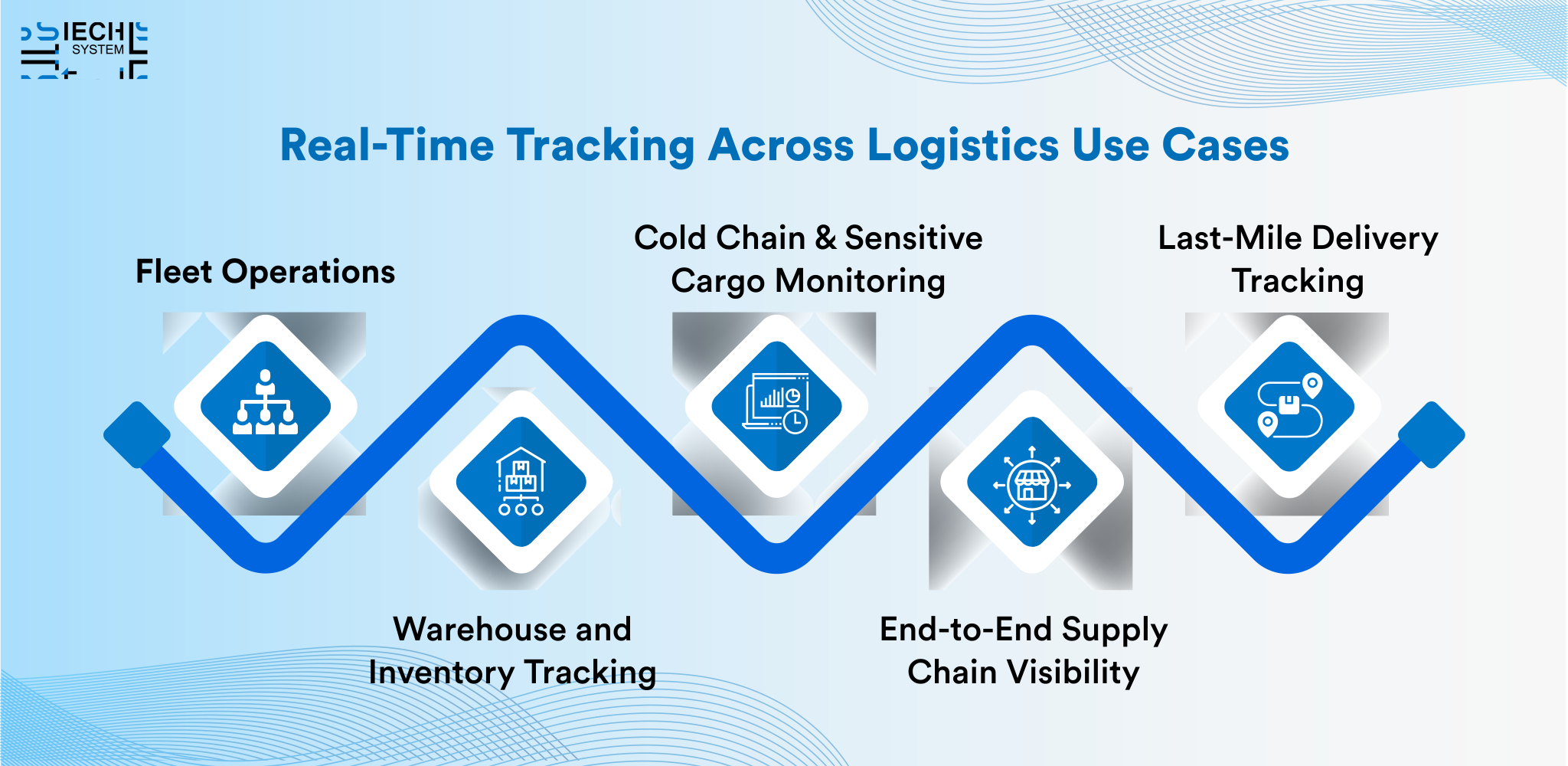
Real-time tracking systems are extremely versatile and support nearly every stage of the logistics journey. They provide meaningful insights that help businesses reduce risk, prevent delays, improve delivery timelines, and create efficient workflows. Below are key use cases demonstrating how tracking transforms daily operations.
Fleet Operations
Real-time visibility allows managers to monitor route progress, speed levels, delivery timing, driver safety, idling duration, and fuel usage. With instant alerts, dispatch teams can intervene quickly if a vehicle takes the wrong route, breaks down, or stops unexpectedly. Data gathered over time also improves route planning, vehicle utilisation, and fleet scheduling.
Warehouse and Inventory Tracking
Within warehouses, IoT devices, RFID labels, and scanning tools make it possible to track every pallet, container, and carton as it moves through the facility. This reduces picking errors, prevents misplaced items, simplifies stock auditing, and accelerates inbound/outbound processing. Inventory transparency also supports demand planning and resource allocation.
Cold Chain & Sensitive Cargo Monitoring
Real-time temperature and humidity sensors ensure that perishable or fragile products remain within safe conditions. Alerts notify teams when the environment becomes unsafe, allowing immediate corrective action. This reduces spoilage risk and strengthens compliance reporting.
End-to-End Supply Chain Visibility
Tracking connects multiple stakeholders — manufacturers, carriers, warehouses, retailers, and customers — into one continuous data flow. Throughout the journey, teams can see where goods are located, when handoffs occur, and whether delays are expected. This prevents communication breakdowns and strengthens planning.
Last-Mile Delivery Tracking
Live delivery status, route progress, and proof-of-delivery tools ensure transparency during the final stage of shipment movement. Customers can follow their packages to the doorstep, reducing delivery failures and improving satisfaction.
Technology Used to Build Real-Time Tracking Solutions
Real-time tracking solutions are built using a combination of hardware, software, connectivity, cloud infrastructure, and intelligent analytics. Each technology layer contributes to data accuracy, security, system performance, and scalability. Together, they create a powerful digital ecosystem that enables real-time monitoring across fleets, warehouses, delivery routes, and supply chains.
GPS hardware and tracking devices
These devices capture live location data using satellite signals and transmit it to cloud platforms. They track movement, speed, direction, distance, and utilisation metrics.
IoT sensors and embedded systems
Sensors monitor physical conditions such as temperature, vibration, fuel level, and cargo security, allowing organisations to track both asset location and health.
Mobile apps (Android / iOS) for drivers
Driver apps support navigation, delivery updates, digital proofs of delivery, communication, and route optimisation.
Backend technologies (APIs, microservices)
Backend systems process high-volume data, support integrations, enable fast communication between services, and ensure reliability at scale.
Cloud platforms (AWS, Azure, Google Cloud)
Cloud environments enable real-time data processing, storage, and analytics. They support multi-device access and provide security, scalability, and global deployment.
Databases (SQL, NoSQL)
Databases store GPS signals, sensor data, route history, and reporting information — enabling fast retrieval and analysis.
AI & Machine Learning models
AI enhances route optimisation, ETA forecasting, anomaly detection, and predictive maintenance, transforming raw data into actionable intelligence.
Mapping and navigation APIs
APIs such as Google Maps, Mapbox, and OpenStreetMap provide real-time road data and routing capabilities.
Cost to Build a Real-Time Tracking Solution
The cost to build a real-time tracking solution varies significantly based on project scope, region, development model, and required features. Hardware expenses, software architecture, cloud infrastructure, sensor types, and security layers all contribute to the total budget. Additionally, businesses must consider maintenance and scalability when planning long-term investment.
Region & Development Cost Comparison
The table below summarises estimated software development costs by region and team model:
| Region/Model | Freelancer Development | Outsourcing Agency | In-House Team (Full Time) |
|---|---|---|---|
| US | $25,000 – $75,000 | $80,000 – $200,000 | $150,000 – $350,000 / year |
| Europe | $20,000 – $60,000 | $60,000 – $150,000 | $120,000 – $300,000 / year |
| Asia | $12,000 – $45,000 | $30,000 – $95,000 | $60,000 – $180,000 / year |
These numbers apply primarily to software platform development, hardware like GPS trackers, IoT sensors, and connectivity devices are additional and scale based on fleet size.
Factors Affecting Cost
- Number of vehicles and hardware units required
- AI and analytics complexity
- Cloud hosting/storage scale
- Integration with ERP, TMS, or WMS
- Security and compliance needs
- Customisation level and UI/UX designs
Approximate Cost Range
- Basic systems: $15,000 – $55,000
- Mid-level systems: $60,000 – $150,000
- Advanced AI-driven solutions: $200,000 – $500,000+
Ongoing Costs
After launch, businesses must budget for:
- Cloud storage and bandwidth
- Maintenance and bug fixing
- Software licensing
- API usage fees
- Hardware replacement
- Technical support and upgrades
Annual operational costs typically equal 15%–30% of the original investment.
ROI Considerations for Logistics Businesses
Live tracking produces high value in the long-term. Lower fuel usage, enhanced routing, less idle time, reduced number of delays, and better utilisation of fleets enable companies to recoup investment easily within a reasonable time span 12-24 months. Better customer satisfaction and reduced cargo theft also boost financial benefits and business stability.
Altogether, the creation of a tracking system is not only a technological cost – it is a business investment that contributes to profitability and scalability of logistics in the long term.
Choosing the Right Logistics Tracking System
To choose an appropriate logistics tracking solution, it is essential to know the operational requirements, the needs in technologies and the business orientation in the perspective of its long-term aim. The process should start with establishing the goal of tracking and what consequences should be of the highest priority.
Define Your Tracking Goals
Real-time fleet visibility is important to some organisations, whereas others are interested in inventory movement, cold chain monitoring, route optimization, or customer delivery updates. Setting of clear objectives will make it possible to ensure that the solution selected is in line with business priorities and that it adds value that is measurable.
Tech Compatibility & Integration
The powerful tracking system should be closely connected with the available systems, ERP, WMS, CRM, and fleet management software. Anticompatibility of APIs, ability to create a custom integration and flexibility of data sharing are crucial to avoiding operational silo.
Scalability & Maintenance
As the fleet size, warehouse capacity, or delivery volume grows, the tracking system must also scale and should not experience any performance issues. Expansion is facilitated by a cloud platform, and stability, swift upgrade, and reduced downtime are guaranteed by good maintenance support.
Security & Data Reliability
Sensitive logistics data is managed by tracking systems. Strong encryption, secure authentication, compliance certification, and reliable cloud hosting safeguard information and maintain the system’s stability.
Conclusion
Real-time tracking solutions have gained the centre stage in modern logistics with the provision of visibility, automation, efficiency, and customer trust. Logistics operations have never been more predictable, secure, and cost-effective thanks to technologies such as GPS, IoT sensors, cloud analytics, and AI.
Selecting the appropriate system enables business organisations to be smarter, minimise waste and remain competitive in the fast-changing world of supply chain operations. With the ever-growing global supply chains and increasing customer demands, real-time tracking will become even more significant in the development of operational strategy.
Companies that adopt such solutions are likely to enjoy the benefits of improved delivery accuracy, better resource management, reduced costs, and improved services. Simultaneously, the information that tracking systems produce is the source of long-term planning, continuous improvement, and quicker decision-making. Finally, real-time tracking is not only an instrument but also a platform for digital logistics change and future investment.
Frequently Asked Questions
What are real-time tracking solutions in logistics?
To enhance the visibility and management of logistics, real-time tracking solutions monitor the position, movement, and status of vehicles, cargo, drivers, and inventory in real-time with the help of GPS, IoT sensors, cloud platform, and analytics.
How do real-time tracking systems improve logistics efficiency?
They save time in routes, maximize routes, minimise idle time, enhance fleet usage, and automate alerts, enabling logistics personnel to make quicker choices and streamline their daily routine.
Is real-time tracking useful for small and mid-sized logistics businesses?
Yes, real-time tracking systems can be scaled and assist small and mid-sized businesses to cut fuel expenses, avert theft, enhance delivery precision, and fulfill customer expectations without the need to work hard.
What technologies are used in real-time logistics tracking systems?
Real-time tracking can be done with the help of GPS devices, IoT sensors, mobile applications, cloud services, APIs, machine learning models, artificial intelligence, and artificial intelligence, databases, and mapping tools, such as Google Maps or Mapbox.
How long does it take to see ROI from a real-time tracking solution?
In the majority of logistics companies, the investment is recouped in 12-24 months in terms of fuel savings, theft reduction, improved route planning, reduced downtime, and increased customer satisfaction.
Related Article