


Maintaining profitability and customer happiness in the very competitive corporate environment of today depends on logistical efficiency. Through the simplification of their delivery systems, logistics route optimization is a great instrument that may save time and money for companies.
Companies may greatly improve their logistics operations by using cutting-edge technology such as route optimization programs, cloud-based solutions, and machine learning algorithms. This article investigates the value of logistics route optimization for your company, the need of using these techniques, and the main technologies engaged in this regard.
What’s Route Optimization and its Importance?
Route optimization is the process of selecting, for a fleet of vehicles, the most effective paths. It considers many elements like distance, traffic patterns, delivery windows, and vehicle capacity. Maximizing the number of deliveries delivered within the allocated timeframes is the main goal; minimizing travel time and fuel usage is another.
Importance of logistics route optimization
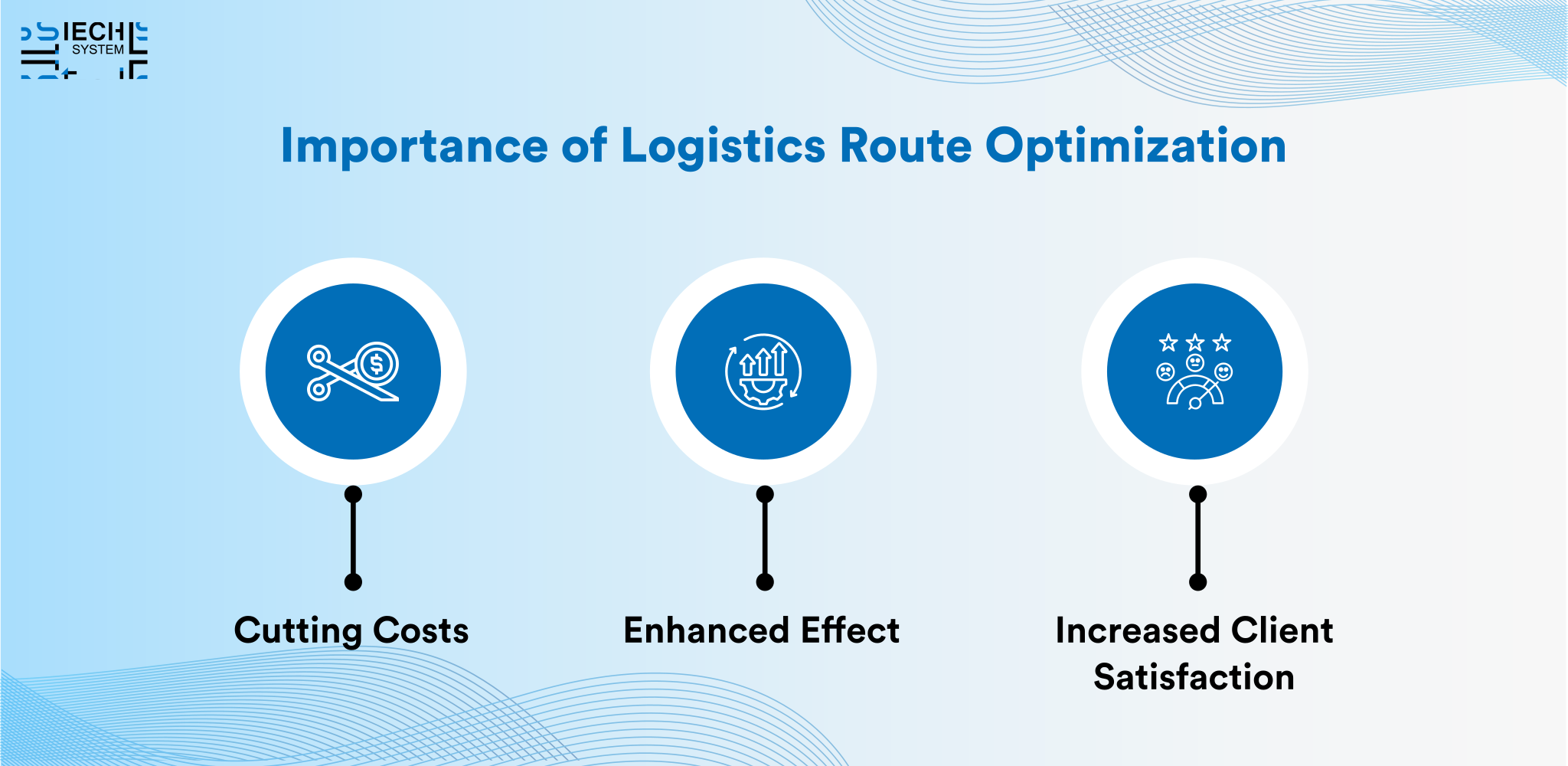
Several factors depend on using Logistics Route Optimization
Cutting costs
Among the biggest outlay in logistics is fuel. Optimizing paths may result in significant fuel savings, therefore immediately lowering running expenses.
Enhanced Effect
Reducing travel time helps companies to finish more deliveries in less time, therefore enhancing general efficiency.
Increased client satisfaction
Customer satisfaction depends much on timely delivery. Perfect paths guarantee on-time delivery of goods, therefore strengthening consumer loyalty.
Advantages of Route Optimization
Optimizing routes allows logistics and shipping companies to save time, reduce the fuel costs, and optimize delivery schedules by determining the most efficient travel/shipment paths. It also enhances customer satisfaction by guaranteeing deliveries are quicker and more reliable with better on‑time delivery, putting less stress on drivers and vehicles.
Lower Operating expenses
The lowered running expenses of Logistics Route Optimization are one of its main advantages. Using route optimization tools and cloud-based solutions helps companies to design the most effective paths, therefore lowering vehicle wear and tear and fuel expenses. By guaranteeing that drivers finish their deliveries within their allocated hours, improved routes may also assist to lower overtime expenses.
More productivity
Logistics Route Optimization helps companies to make less time-consuming deliveries in bigger numbers. Modern technology enables businesses to more effectively plan deliveries, therefore guaranteeing that drivers spend less time on the road and more time delivering enhanced income and better customer satisfaction may follow from this enhanced production.
Improved team management
Combining fleet management systems with route optimization will provide thorough understanding of fleet operations. Using SSTech route optimization and other route optimization systems helps companies watch driver behavior, evaluate vehicle performance, and spot areas for development. More effective fleet management, lower maintenance costs, and longer vehicle lifetime may all follow from this connection.
Enhanced client assistance
Maintaining client happiness depends critically on timely and correct delivery. By guaranteeing timely delivery of goods, logistics route optimization helps to lower the possibility of delays and enhance client loyalty. Accurate delivery windows and real-time tracking help companies to improve customer service and strengthen bonds with their customers.

Why You Need Route Optimization Now More Than 2026
In the age of next-hour deliveries, fuel price marked ups and customer expectations rising through the roof, route optimization is not just a cool logistics tool, it’s a business need. In what was once a linear route from A to B, it now exists as a complex, multi-variable problem that includes congestion and pollution in real time, or changes the delivery windows.
Two-way commerce is booming and supply chains are more complex than ever before, making the smart management of your logistics routing vital as we move into 2026. If you’re business is still using manual scheduling, static maps and simple GPS technology then not only are you slowing down, but you are falling behind.
Limitations of Traditional Routing Methods
However, the fact remains that many traditional logistical operations continue to favor out of date processes that just can’t keep up:
- Manual Scheduling: The old days of Manual scheduling Deliveries with pen and paper or spreadsheets is prone to human mistakes, ineffectiveness and doesn’t respond in real-time.
- Static Maps: Regular GPS solutions are unable to adjust for dynamic traffic patterns, weather disruptions and last minute customer changes.
- A Lack of Live Data: Without real-time insight into road status, vehicle health, or drop-off sites, everything becomes reactive rather than proactive.
With the evolution of logistics, the tools and mindset must follow. That’s where AI-driven route optimization comes in.
Why the Pressure Is Mounting in 2026
Let’s take a look at why route optimization is crucial right now:
- Rise of eCommerce: Now that consumers are expecting a same or next day delivery experience, there’s no room for inefficiencies.
- Multiple-Stop Complexity: It’s not just line segments anymore. Deliveries frequently have multiple stops, timed while-you-wait windows and reverse logistics.
- Heterogeneous Vehicular Traffic: Traffic jams, accustomed road closures, varying weather conditions require dynamic and adaptive in-situ trajectory rerouting.
- Goals for Sustainability: As companies experience pressure by reducing emissions and gas consumption, the importance of an optimized route becomes more necessary to stay compliant.
- Customer Experience: Reputation, retention, and reviews can be easily damaged by waits, mishaps or, worst case scenario, failed deliveries.
How AI and Automation Solve These Logistics Challenges
Today’s logistics optimization solutions are much more than just routing tech. Instead, they rely on live data, predictive know-how and automated decisions to run everything that moves. Here’s how:
- AI & Machine Learning: These are algorithms using historical delivery patterns, traffic predictions, and driver behavior to propose a smarter route.
- Automation: Dispatch teams are no longer the ones rerouting manually; intelligent systems do it for them in real time.
- Smart Prioritization: AI sorts deliveries optimally based on urgency, location, and constraints, juggling efficiency with business rules.
- Scalable: AI scales easily as you scale your delivery network and minimizes the risk of routing chaos.
Key Technologies and Their Role in the Development of Logistics Route Optimization in 2026
Route optimization software
Software for route optimization is meant to map the most effective paths for a fleet of cars. It chooses the best paths considering many elements like traffic patterns, delivery windows, and vehicle capacity. By greatly lowering travel time and fuel consumption, this program may help to save money and increase efficiency.
Cloud-based route optimization solutions
One of the numerous benefits of cloud-based route optimization tools over conventional software is These technologies provide real-time information, which lets companies change paths depending on various variables like present traffic flow. Furthermore offering a complete solution for route optimization are cloud-based solutions, which are scalable and readily linked with other logistics systems.
Algorithms in machine learning
Logistics route optimization depends much on machine learning techniques. Using past data, these systems forecast traffic patterns, delivery times, and other factors. Machine learning algorithms may provide more precise route optimization by means of constant learning and refinement, therefore enabling greater cost reductions and efficiency gains.
Global positioning systems technology
Real-time tracking and navigation are needed for GPS technology. Combining GPS with route optimization tools allows companies to track truck positions, provide exact delivery windows, and change paths depending on current traffic circumstances. This connection raises client happiness and helps the logistics operation run more generally efficiently.
Cooperation with systems of fleet management
Including route optimization in fleet management systems offers a complete answer for handling logistics. By means of this connectivity, companies may watch driver behavior, assess vehicle performance, and pinpoint areas needing development. Combining route optimization with fleet management can help businesses to save a lot of costs and increase efficiency.
Development of mobile applications
Logistics Route Optimization depends much on the creation of mobile application development. Mobile applications let drivers discover the best routes, get real-time information, and provide comments on deliveries. Using mobile technology can help companies guarantee timely delivery, increase route optimization, and better contact with drivers.
Development of logistically AI
Logistics AI Development is the use of it to enhance logistical processes. By use of pattern and trend identification derived from massive data analysis, artificial intelligence offers ideas on how to maximize paths and increase effectiveness. Using artificial intelligence allows companies to improve their logistical processes and save major expenses.
On-road integrated optimization
Real-time route changes depending on current traffic conditions and other elements constitute on-road integrated optimization. Integration of route optimization with real-time data helps companies to guarantee the timely and most effective delivery of their products. Significant cost reductions and higher customer satisfaction may follow from this combination.
AI & Machine Learning
Predicts the optimal routes for deliveries using historical data, live traffic and driver behavior information. Automatically adjusts for weather, rush-hour and road closures.
IoT & Telematics
Vehicles’ sensors feed real-time data like location, fuel consumption and engine health, including temperature control, key to ensuring perishable or sensitive goods arrive intact.
Cloud-Based Logistics Platforms
Facilitate instantaneous communication among warehouse staff, dispatchers, and drivers. Cloud integration and the capability to access via mobile device also enabling Field Service teams.
Geofencing & Smart Alerts
Draw virtual fences around areas of interest to create alerts for when locations have been entered or left (either on time or late) and their compliance status. Guarantee punctuality, say good-bye to manual tracking.
Challenges & common mistakes you are making with route optimization
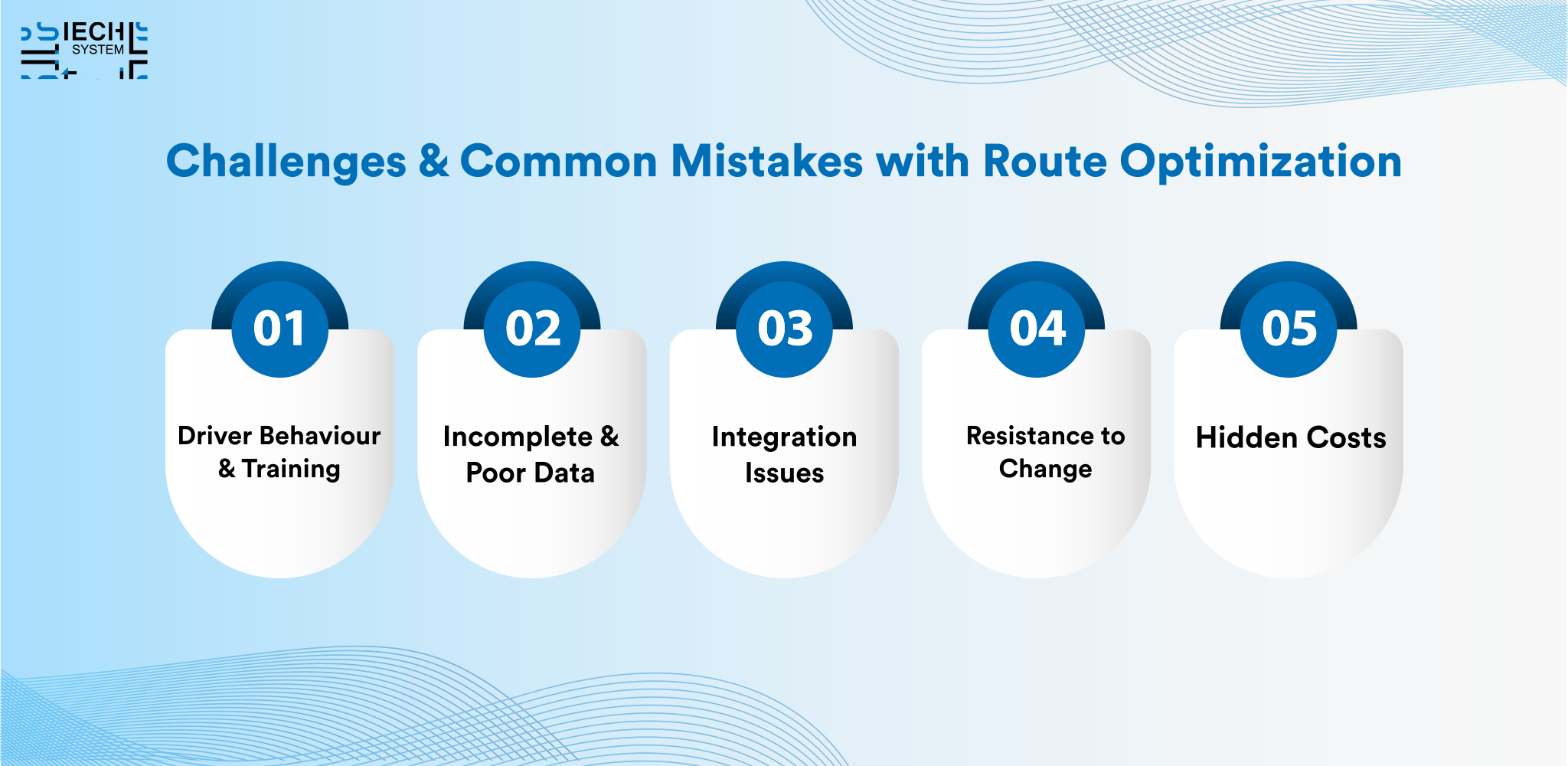
Without data, integration and user adoption, even the most sophisticated route optimization solutions can struggle. From erratic driver behavior, to dislocated systems and hidden operational costs, failed infrastructure can leak away efficiency and ROI unnoticed.
Driver Behaviour & Training
The Challenge: The best route is moot if the drivers avoid it, idle more than necessary, or refuse to follow a system-generated plan.
Our technology includes driver behavior analytics that guess deviations while they are occurring. Paired with intuitive mobile app interfaces and gamified dashboards, we make onboarding easy and keep drivers engaged.
Incomplete / Poor Data
The Challenge: If delivery windows are inaccurate, vehicle specs are missing or traffic data is out of date, expertise can not be exploited into optimization.
We integrate with live traffic feeds, TMS platforms, and client-side CRMs to ensure data is always current. Our proprietary validation tools catch missing delivery constraints before route planning even begins.
Integration Issues
The Challenge: Numerous companies have problems getting their down-on-the-street GPS and mobile app information synchronized with TMS systems and warehouse management systems, creating fragmented data and mistakes.
We have plug-and-play integrations to most systems and custom APIs allowing you to link in even your legacy infrastructure! Our cloud-based platform allows data to flow freely between dispatch, driver apps, and those ever-so-critical analytics dashboards.
Resistance to Change / Process Inertia
The Challenge: Legacy crews can be reluctant to accept new routing mechanisms, concerned by automation or it may seem too problematic.
We provide Change Management Workshops, hands-on training to your team, and post-deployment support so you get nothing but “smooth sailing” going forward. Utilize our intuitive UI for on boarding new users to the platform without breaking a sweat.
Hidden Costs
The Challenge: A lot of route optimization solutions have a lot of downsides, like hidden implementation fees, long onboarding periods and the inflexibility that comes from the subscription plans.
We provide clear pricing, customized on-boarding programs and modular deployment alternatives. You only pay for the features you actually use.
Using logistics route optimization
With logistics route optimization, businesses can simply plan, adjust and execute delivery routes with an ease that is impossible to achieve when operating in real time traffic, unreliably delays / multi-stops complexities. It shifts your logistics from reactive to proactive, saving fuel, cutting delivery times and upping customer satisfaction on every run.
Evaluating present operations
Assessing present operations comes first in applying logistics route optimization. Examining present paths, delivery plans, and vehicle performance falls under this category. Understanding the present level of operations helps companies to find areas that need work and choose the best way to apply route optimization.
Selecting the appropriate instruments
Effective Logistics Route Optimization depends on the correct instruments being used. When choosing route optimization software and cloud-based route optimization solutions, companies should give scalability, integration capabilities, and real-time updates top importance. Companies can guarantee that they maximize the advantages from route optimization by using appropriate technologies.
Implementing and training
The success of Logistics Route Optimization depends on correct implementation and training. Drivers and logistics employees should get thorough instructions on how to use the latest tools and technology by companies. Companies should also create a thorough implementation strategy to guarantee a flawless change to the new system.
Tracking and enhancement
Companies should constantly examine and enhance their operations after Logistics Route Optimization is underway. Analyzing important performance metrics, getting comments from consumers and drivers, and adjusting as necessary constitute part of this. Companies may achieve long-term cost reductions and efficiency gains by constantly enhancing their logistics operations.
Your Step-by-Step Route Optimization Implementation Guide
It’s not only about putting in place a new system (even though that is the case with logistics route optimization), rather, its all about revolutionizing and changing your business completely, from start to finish. Below is a field-tested 5-step process to execute and succeed at route optimization for your logistics company.
Audit Current Operations
Begin with where you are. Plot your existing vehicle routes, delivery frequency intervals, idling times, driver habits and fuel cost. Identify hotspots, from overdue deliveries to overlapping routes and underutilised vehicles.
SSTech System System provides biomechanical diagnostic tools to generate heatmaps of route inefficiencies and historical trip analytics -enabling audits that are quick, as well as data driven.
Define Objectives & KPIs
Clarity is key. Define what success looks like. Are you hoping to cut fuel expense by 15%, improve on-time deliveries to 98% or save 20% on last-mile delivery time? KPIs may include:
- Delivery punctuality
- Cost per kilometre
- Driver idle time
- Route deviation percentage
SSTech System enables businesses to custom KPIs to fleet type, region and delivery model – which will make sure that the metrics show progress.
Choose the Right Tool & Partner
Search for a route optimization software that provides:
- AI-powered recommendations
- TMS, ERP, WMS Integration
- Real-time tracking & alerts
- Scalability for growing fleets
- Local customer support
SSTech System’s solution seamlessly connects to your setup while providing multilingual mobile apps, cloud dashboards and local support during execution.
Pilot & Train
Don’t roll out over your whole fleet at once. Choose a few routes, and/or an area to pilot. Teach your drivers and dispatchers how to effectively use the platform. During the pilot:
- Rate delivery speed, driver satisfaction and tech adoption
- Find out where data or ways of working are missing
- Refine alerting mechanisms and rerouting logic
SSTech System enables gradual deployment of the tool, accompanied by practical onboarding and gamified driver training to speed up user adoption.
Rollout, Monitor and Continuous Improvement
Scale to the fleet after a successful pilot. Monitor KPIs, gather ground team feedback, and find areas for improvement with instant dashboards. Configure proactive notifications, per schedule reports and monthly reviews to receive appear tuning your performance.
SSTech System’s AI will learn from each delivery cycle, providing smarter route advice and bottleneck predictions with time.
Applications in the Real World – Logistics & Delivery
Optimizing your routes is not a one size fits all type of solution, it creates value across various industries and supply chain levels. Here are four of the coolest apps that will be driving the 2026 logistics:
Last Mile Delivery Optimisation for E-commerce
It’s a high-volume, quick-timeline, scattered-address problem for these e-commerce players. AI-assisted routing ensures:
- Live updates in response to traffic and cancelled orders
- Optimal batching of deliveries
- Shortest-time-to-door algorithms
SSTech System’s last-mile module is built for eCommerce fleets, cutting down on failed deliveries and allowing for dynamic rescheduling.
Cold-Chain Logistics
In food and in pharma, temperature-controlled routes need to be fast and efficient as well as compliant. Optimization supports:
- Shorter path in order to minimize risks of decaying
- Reefer temperature and status tracking
- Live notifications for route delays or door openings
SSTech System Integrates with IoT and Shows Cold Chain Sensor Data Ensuring visibility of temperature, humidity, delivery windows.
Urban Freight & Smart Cities
- Cities are clamping down on emissions and congestion. Route optimization helps:
- Avoid restricted area or rush to peak traffic time period
- Zone or fuel efficient club deliveries
- Minimize carbon footprint
SSTech System is teaming up with smart city platforms to offer eco-routing options and ESG-friendly delivery logs.
Long route Fleet Operations (Ex: India)
Indian logistics companies coordinating multi-city deliveries are challenging – multiple drop-off points, state borders & road types. AI helps:
- Include state taxes, tolls and rest-stops
- Strategize refuel and overnight stops appropriate.
- Warehouse hours for deliveries and syncing the two
SSTech System has helped intercity multi-modal transporters and on their Delhi-Mumbai, Surat-Pune and Chennai-Hyderabad corridors reduce route overlaps and improve vehicle utilisation.
Important KPIs To Measure Route Optimization Success

Once you’ve built your system, it becomes critical to monitor the appropriate KPIs for indications of success as well as opportunity for further optimization. These are the key logistics KPIs every team should measure:
On-Time Delivery Rate (OTD)
An essential efficiency and customer satisfaction metric. High OTD is also a good sign that your system is accounting well for time windows, traffic and disruptions.
Average Deliver Time for a Route
This helps determine if optimizing is cutting down on the number of routes and driver hours, particularly for high-frequency or long-distance deliveries.
Fuel Consumption per Kilometer
A key measure of controlling costs and sustainability. Over time, smart routing will help lower fuel consumption per delivery.
Vehicle Utilization Rate
Monitors the frequency and efficiency with which each vehicle is used. A low value may suggest overlapping route or poor capacity planning.
Cost per Delivery
Assist in evaluating if your more optimal routes are providing a better financial return. Track this through time to confirm your ROI.
Driver Productivity & Satisfaction
Although it is frequently ignored, a happy driver gets better compliance, commits fewer mistakes and can show more consistent performance. Measure: Use driver app feedback, delivery volume and idle time.
All such KPI’s (Key Performance Indicators) are tracked & monitored on the analytics dashboard of SSTech in real-time with drill down report features available for each driver, route or/and city to help you act fast and smart.
Best Practices You Can Follow to Maximize Results
Even the most advanced routing software will require disciplined teams, data cleanliness and continuous improvement to maximize potential. Here are some tried and true best practices to help you keep things running at optimal levels:
Clean Your Data Regularly
Keep customer addresses, time brackets, vehicle definitions, and delivery areas up to date at all times to prevent mistakes in planning.
Consistently Train Your Drivers & Staff
Conduct onboarding sessions, refresher workshops and Q&A-style forums to keep your teams aligned with the way you’ve set up your route strategy and technology.
Integrate With Your Systems
Integrate routing optimization software with your WMS, TMS and ERP to generate, dispatch, and reconcile jobs automatically.
Conduct Quarterly Route Reviews
“Benchmark route performance every quarter, what has changed, how long did it have to change, and what drivers and customers say about it,” said Randy Windle, an expert who keeps you honest on logistics.
SSTech System supplies automated reports and scheduled performance reviews in our managed optimization services so you’re never out of the loop.
How to Get a Smarter Optimization Solution with SSTech System?
At SSTech System, we’re more than a software provider, we provide an alliance that enables your business to grow logistics smart. Whether you run a small delivery fleet or a nationwide operation, we deliver your routes in an easy to use application that combines with AI-powered route planning and cloud-based dispatching so you get the most dynamic, powerful capabilities.
Why Partner with SSTech System?
- AI & Machine Learning Expertise to dynamically improve routing accuracy over time
- Get real-time GPS Tracking throughout your entire fleet with geofence alerts
- Easy integration with TMS,ERP,WMS and mobile driver apps with Plug-and-play solution
- Consulting for end to end route optimization from planning to execution
- Hands-on support teams supporting both implementation, training, and ongoing performance tuning
- Schedule Free Consultation Today
Contact now SSTech Systems to enter the world of smarter, faster and more profitable logistics network.
Conclusion
Through the simplification of their delivery systems, logistics route optimization is a potent instrument that may save companies time and money. Companies may greatly improve their logistics operations by using modern technology such as route optimization software, cloud-based route optimization systems, and machine learning algorithms. Route optimization has advantages for operating expenses, productivity, fleet management, customer service, and environmental sustainability.

Frequently Asked Questions
How does route optimization integrate with a Warehouse Management System (WMS)?
With the help of route optimization software, it can connect with your WMS to make order management and scheduling picking, packing, and dispatching easier. This allows deliveries to follow optimal routes, cutting back on warehouse delays and supercharging outbound logistics.
What role route optimization play in Transportation Management System?
A TMS integrates with route optimization equipment, to control how planning carriers, loads disposition and transportation is tracked for delivery performance. Combined, they offers full line-of-sight of your transportation network.
How will last-mile logistics be impacted by route optimization?
Yes, route optimization is one of the main factors in successful last mile delivery services. It also allows dynamic rerouting, on-the-fly traffic changes and multi-stop planning to make deliveries to your doorstep faster, timely and at a lower cost.
Why it is essential to integrate your route optimization tool with WMS and TMS solutions?
Integrating route optimization with WMS and TMS systems allows data to flow seamlessly across order management, inventory, dispatch and delivery. Such an incorporation prevents manual mistakes as well improving delivery precision and supply chain technology.
How does SSTech System integrate with WMS, TMS and last mile delivery?
Plug and play APIs Our product suite integrates seamlessly with your existing Warehouse Management System, Transportation Management System and last mile delivery apps. Our application guarantees full synchronization and overall performance efficiency on all levels of logistics.
Related Article