


Competitiveness is now more than ever before in the delivery industry. Customers nowadays expect quick deliveries, updates and quality services. To realize these expectations, businesses need to be able to observe everything they are doing in delivery. In this context, driver management software and driver tracking are very important.
Many companies focus only on tracking drivers in real time. Others invest only in driver administration and scheduling. However, relying on one without the other often creates operational gaps.
Companies that have achieved success in delivering businesses have been able to integrate driver management software and driver tracking software to enhance efficiency, cost reduction and provide a customer experience that is more fulfilled.
We will discover the distinction between driver management and tracking in this article, the reasons why delivery businesses should have both, and what features to consider when selecting one.
What Is Driver Management?
Driver management is the process of planning, managing and optimizing drivers during their work lifecycle. A driver management system enables businesses to manage scheduling, attendance, performance evaluation, compliance and communication at a single centralized platform.
Modern delivery driver management solutions enable businesses to:
- Assign drivers efficiently
- Manage driver schedules and shifts
- Monitor attendance
- Track driver productivity
- Evaluate performance metrics
- Improve workforce utilization
With the amount of deliveries that have been growing day by day, companies have been utilizing fleet driver management tools in order to make sure that a correct driver is given a correct delivery at appropriate time.
What Is Driver Tracking?
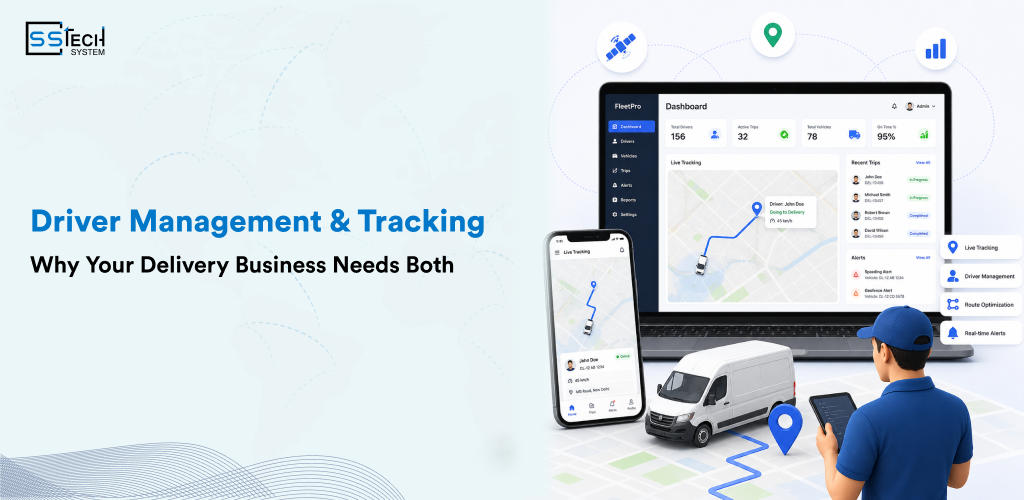
Driver tracking focuses on monitoring the real-time location and movement of drivers during delivery operations. A driver tracking system uses GPS technology to provide live visibility into driver locations and delivery progress.
A modern driver tracking software solution allows businesses to:
- Monitor driver locations in real time
- Track delivery progress
- Improve route visibility
- Respond quickly to delays
- Provide accurate delivery updates to customers
These capabilities, including GPS driver tracking, live tracking on the position of drivers and real time tracking of deliveries enable business organizations to track their businesses and improve communication with their customers.
Driver Management vs. Driver Tracking: Understanding the Difference
Although they work together, driver management and driver tracking serve different purposes.
Driver Management vs Driver Tracking
Focuses on driver administration and workforce optimization Focuses on location monitoring and delivery visibility.
- Manages schedules, attendance, and performance tracks driver movement in real time
- Helps allocate resources effectively Helps monitor delivery progress
- Supports driver productivity management Supports delivery transparency
- Improves workforce planning Improves route visibility
Simply put, driver management vs driver tracking is not a choice between two solutions. Driver management gives control on operations on the back side, and driver tracking gives real-time insight on delivering benchmarks.
Why Delivery Businesses Need Driver Management and Driver Tracking Together
Improved Operational Efficiency
A seamless workflow is formed by combining driver management with tracking. Drivers can be assigned or monitored, and make adjustments from a single platform. A delivery management system combined with a business could remove all the manual processes and enhance operational performance.
Enhanced Driver Productivity
The management of driver productivity begins with knowledge on how drivers perform during the day. A driver monitoring system could assist managers in determining idle time, missed routes, excessive stops and trends in productivity. This enables businesses to optimize workloads and enhance performance.
Better Delivery Performance
On-time visibility assists dispatchers in being proactive in resolving delays and disruptions. When integrated with route optimization software, businesses are able to spend less time on traveling and have higher rates of delivery.
Greater Driver Accountability
Driver responsibility is enhanced when businesses integrate driver attendance tracking, scheduling, and real-time monitoring. Managers will get to be able to see clear information such as driver activities, deliveries made, attendance and route adherence.
Improved Customer Experience
Customers want transparency. The real-time shipment tracking system and the delivery driver tracking make the customers track their deliveries and get the right ETAs.This reduces uncertainty and improves satisfaction.
Reduced Operational Costs
Fuel expenses, overtime costs, and inefficient routes can significantly impact profitability. An integrated driver control software, delivery route control and tracking systems assist companies to cut fuel usage and maximize the use of resources.
Data-Driven Decision Making
Modern mobile workforce management platforms generate insights on operations. It allows businesses to track trends in the delivery process, the metrics of driver performance tracking, the performance of the routes and customer service level to make well-informed decision.
Common Problems Businesses Face Without Driver Management Software and Tracking
Lack of Real-Time Visibility
Lack of live tracking of their drivers means that businesses cannot properly track deliveries or respond quickly to issues.
Inefficient Driver Scheduling
Manual scheduling can give rise to unequally distributed workloads and problems of resource allocation. Driver scheduling software assists businesses in assigning drivers in a better manner.
Poor Route Optimization
Drivers can also use longer routes, which can slow down delivery times and increase fuel consumption, without monitoring data and optimization tools.
Increased Delivery Delays
Lack of visibility renders reasons why it is hard to detect delays before they affect customers.
Difficulty Monitoring Driver Performance
In the absence of driver performance tracking, the managers are not able to effectively analyze the efficiency of the drivers and identify improvement opportunities.
Higher Fuel and Operating Costs
They may lead to unnecessary costs due to poor routing and ineffective dispatch planning.
Growing Customer Complaints
Customers expect accurate updates and reliable delivery windows. Without visibility and communication tools, complaints can increase significantly.
Key Features to Look for in a Driver Management and Tracking Solution

Driver Scheduling and Dispatch Management
An effective solution should include driver scheduling software and dispatch management software capabilities to streamline assignments and reduce manual work.
Look for features such as:
- GPS driver tracking
- Real-time driver tracking
- Live location tracking for drivers
Vehicle tracking and driver monitoring
These capabilities provide complete operational visibility.
Route Optimization
Integration with route optimization software assists the companies to decrease traveling distances, boosting the effectiveness of delivery and lowering the expenses.
Driver Performance Monitoring
A strong driver monitoring system should provide detailed insights into driver behavior, productivity, and delivery success rates.
Attendance and Shift Management
Built-in driver attendance tracking helps businesses manage shifts, working hours, and workforce availability.
Geofencing Capabilities
Geofencing allows automatic notifications on entering or leaving a defined area by the drivers.
Proof of Delivery (POD)
An electronic proof of delivery system enables the drivers to capture signatures, photos, and confirmation of deliveries.
Mobile App for Drivers
Driver mobile applications improve communication, navigation, task management, and delivery updates.
Analytics and Reporting Dashboard
Qualitative reporting tools assist companies in tracking KPIs and see where improvements can be achieved.
Read more: Curious how these features come together in a real last-mile delivery system?
How Different Industries Benefit from Driver Management and Tracking
Several industries rely on driver management software and tracking solutions to improve delivery operations.
E-Commerce
E-commerce businesses use last-mile delivery management and delivery management software to handle high delivery volumes efficiently.
Courier and Parcel Services
Companies leverage courier management software and tracking solutions to provide accurate shipment updates and improve delivery success rates.
Retail Distribution
Fleet operations software is used by retail organizations to make deliveries to multiple locations.
Food and Grocery Delivery
Live tracking from route tracking software can help any business deliver live updates of the delivery and approximate times of arrival to customers.
Manufacturing and Logistics
Manufacturers and logistics providers integrate driver management with transportation management software, warehouse management systems and broader supply chain management platforms.
Field Service Businesses
Organizations with mobile workers benefit from field staff tracking software and workforce optimization tools.
Future Trends in Driver Management and Driver Tracking
Technology and AI software development continues to transform delivery operations.
AI-Powered Driver Management
Companies are using AI-based driver management solutions for scheduling, workload balance, and performance analysis.
Smart Driver Tracking Systems
A smart driver tracking system can use predictive analytics to identify potential delays and recommend corrective actions.
Logistics Automation
The rise of logistics automation software is reducing manual intervention and improving operational efficiency.
AI Fleet Management
Advanced AI fleet management software employ machine learning to optimize routes and predict maintenance required and improve fleet utilization.
Read more: Want a deeper look at how AI is reshaping fleet and transportation software?
IoT Integration
Organizations are leveraging IoT application development to connect vehicles, sensors, and tracking systems for better operational visibility.
Advanced Software Ecosystems
Future delivery operations will increasingly integrate last-mile delivery software, fleet management software, and logistics software development solutions into a single connected ecosystem. Many businesses are also exploring AI software development initiatives to create customized logistics solutions.
Conclusion
Modern delivery operations require more than just knowing where drivers are. Businesses would require full control over scheduling, performance, attendance, dispatching and delivering tasks. This is how driver management and driver tracking work best together. Although driver management enhances efficiency and accountability of the workforce, driver tracking offers real-time visibility and transparency in delivery.
Companies that integrate both functions are able to boost more productivity, lower their operational expenses, heighten customer satisfaction, and create a more effective delivery operation. Due to the ongoing increased demand of delivery, there is a need to invest in integrated driver management software and a tracking solution.

Frequently Asked Questions
Can driver tracking work without driver management?
Yes, but it is not so effective. Whereas driver tracking displays the location of the drivers, driver management assists in scheduling, monitoring and optimizing the performance of the drivers. Combining both solutions leads to business success.
How does driver management improve efficiency?
The driver management system simplifies the process of scheduling, attendance tracking, dispatching, performance tracking and allocation of the workforce. This enhances productivity and efficiency in operations.
Why do logistics companies need driver management systems?
Integration of the two solutions provides better visibility, offer greater driver accountability, better route optimization, offer greater customer experience, lower costs and provide greater operational control.
What features should a driver tracking system have?
Driver tracking offers a real time view of the deliveries. It assists companies to keep track of shipments, minimize delays, and enhance communication and customer satisfaction by providing the correct shipment information.
How do these solutions improve customer satisfaction?
Customers are informed on their deliveries, real-time tracking information, and much reliable delivery schedule. This enhances transparency, trust and the overall service quality.
Related Article