


The dispersion of people to different corners of the world has intensified the necessity for transporting goods from one place to another. The on-demand delivery service market has become very different; you can get food, shopping, errand running, maid, dog walkers, and B2B logistics on-demand. A need to send little parcels to your near and dear ones is always there.
People are now moving towards the digital medium, for courier services, as you can send your parcel through mobile phone as well. Courier delivery app development automates the entire process and gives the customer the benefit of tracking their shipment. It allows users to check the complete tracking details in just a few taps.
The courier industry is quickly moving into the app zipper now driven by fastness, transparency along with automated using thirds, fourths, etc. This guide will help businesses on the importance of investing in courier delivery app development to stay ahead in a digitally-first market-space.
What is a Courier Delivery Application and its types?
Courier delivery application is a mobile and web-based application that allows the user to book, track and manage parcel deliveries in real-time. Courier apps differ from generic logistics software in their focus on delivering last-mile, instant bookings and real-time notifications among consumers, drives, and admins.
Developing a courier delivery app has become a strategic investment for businesses looking to upgrade their logistics operations and cater to the growing customer expectations. With same-day and real-time delivery fast becoming the rule, the digital courier platform is not a luxury but a necessity.
Types of Courier Delivery Application
The global courier and logistics market still seems to grow, thanks to cross-border trade, eCommerce, and hyperlocal delivery services. Modern courier businesses are starting to standardise digital adoption, AI-powered routing and mobile-first platforms.
Mobile Apps Taking Over Citizen Behavior
The rising customer trend to book a courier via mobile app, track the parcel, or receive an instant delivery update on the app has prompted developers to create mobile applications for delivery management. Things such as real-time visibility, digital payments and app-based notifications are not seen as premium features anymore but instead, base expectations.
Courier Delivery Business Models
Courier delivery apps can be built on different business models depending on scale and target audience. In essence, the choice of the model has a direct effect on revenue streams, scalability, and long-term profitability.
Single-Carrier App
A single-carrier app is designed for one courier firm to operate with its own fleet as well as customers. This model gives a storefront total control over operations, branding, pricing, and customer experience.
Marketplace / Aggregator Model
Aggregator business models bring various courier partners and customers together on a platform. Allowing for a more rapid scale, greater reach and the opportunity to diversify its revenue via commissions and service fees.
Hybrid Models
These hybrid courier apps consist of both a fleet that the company owns as well as third-party delivery partners. This model ensures operational keeping with control with scalability, Cost optimization during peak demand periods.
B2B vs B2C
B2B courier apps are designed for enterprise deliveries, bulk shipments and contract-based logistics. B2C platforms are all about immediate bookings, single-user, and convenience and on-demand delivery.
Why Businesses are Investing in Courier Delivery Apps?
If you own a business that relies on delivery services, investing in an app to help with this process will automate your operations and eliminate the need to rely on human force. It also allows service requests to be expedited and enhances the customer experience.
A Growing Need for Same-Day & Instant Delivery
Today across industries, customers expect instant or at the very least same-day delivery. Courier apps enable you to deliver on these expectations thanks to optimized routing and real-time dispatching.
Operational Efficiency & Cost Optimization
Manual error, paper-based paperwork, and back-and-forth coordination delays are reduced with the use of automation. Benefits of courier delivery app: Help Courier Delivery companies to utilize the fleet better, save fuel costs, improve success in delivery.
Real-Time Visibility & Transparency
Customers, drivers, and admins can take advantage of apps for real-time tracking. This level of transparency fosters trust, lowers the number of customer support tickets and lets you hold delivery accountable.

The challenges associated with Courier Delivery and how to overcome them?
Real-Time Tracking Accuracy
This can lead to a loss of customer goodwill and increased support ticketing as people inquire as to the status of their orders. An express delivery application leverages GPS integration, status updates, and automated notifications to offer visibility in real-time, ensuring all stakeholders have accurate updates.
Handling Peak Demand
Manual systems simply cannot cope with the sudden spikes in orders that occur regularly during sales, festivals, or even during peak hours. Automated dispatching, load balancing, and applying surge pricing come into play for managing seasons of high demand for package delivery app.
Balancing Costs with Customer Expectations
It is expensive to make deliveries quickly and cheap, and customers are expecting deliveries to be both. To keep expenses in check along with the quality of service, courier apps practice dynamic pricing, route optimization, and data-driven cost analysis.
Ensuring Driver Availability
Delivery delays and SLA violations due to driver shortages or poor allocation. Availability: Courier delivery apps increase availability by providing the local and real-time matching of driver availability, by providing the incentives to increase active driver availability and by providing intelligent schedule positioning to the active drivers who are available.
Technical Scalability
If delivery volumes increase, systems may become overwhelmed with traffic and data processing. Parcel delivery apps based in the cloud have immense scalability because they provide extra resources according to demand without affecting the ongoing processes.
Core Benefits of Building a Courier Delivery App

There is a great demand for the development of the on-demand courier delivery app. Many investors have already invested in this field. If you are an investor. It could be a great choice for you. All you require is a complete solution for the package delivery app development, and then you can make money easily, as courier service is a service that is valuable to everyone.
Fast Delivery
On-time and express delivery every time.
Secure Service
Smooth accessible, reliable payment option
Worldwide Shipping
We go extra mile for domestic and global shipping
Package Tracking
You require only one app to track your packages. It keeps the data from all of your packages in one place. You will get updates with its delivery status through the app.
Key App Features & Functional Requirements
On-Demand Courier Delivery App Features
Live Tracking
Real-time tracking for the admin, company, retailers, and customers to keep track of parcel delivery activities. The customer will receive 24*7 updates, notifications and track their package at any time. It has a dedicated GPS tracker that would help your customers locate the order delivery vehicles.
Registration/Login
Easy registration of the company, user, retailer instead of a lengthy registration process.
Secure Payment Method
Secure payment options and protection of sensitive information.
Admin Panel
Get the bigger picture of your delivery business with the admin panel or dashboard and manage the overall functionality of your app.
Push Notification
Push notifications to reach out to customers with just a tap and give timely updates of the parcel delivery status. Your customers can stay updated regarding booking status, parcel, and driver’s location among others.
Navigation
The driver is able to use the app to navigate the pick-up and drop off location.
Review and Ratings
The driver feels valued and helps customers to rate and review their experience. It is a great way to garner feedback as a company and find out areas that need improvement.
Customer-Friendly UI/UX Design
A great-looking app speaks volumes about your business. So during courier delivery app development, we make sure to incorporate a stunning design that attracts customers. It is easily navigable and appeals to your target audience. The app can be loaded fast and is without any glitches.
Faster Delivery Option
This app offers express delivery to customers who need fast service. Schedule delivery.
Retailer/Customer Panel
Customer/Retailer Registration
Customers and retailer can easily register and can make all their courier delivery bookings at their own convenience.
Profile
The personal profile of the retailer app includes all the necessary details required to be filled during registration.
Pushed Notifications
The retailer app has pushed notifications for providing regular updates. This is a strong engagement tool for on-demand apps and entails a fantastic customer experience.
Versatile Payment Option
A hassle-free wallet payment gateway system, with razor pay, stripe configuration.
Ratings and Review Section
Customers can provide their feedback, rating, and reviews on the services received. It also helps to make improvements and make the user experience more enjoyable.
Package Tracking Feature
GPS tracking feature ensures that your customers get to track their packages in real-time using location-based services.
Driver Panel
It enables the driver to regulates the orders and maintains it accordingly.
Accept/Decline
It helps a driver to accept or decline the job depending on his availability or workload. The managers can remain updated and handover the parcel to some other driver who is available at a short notice.
Job-Status
Through the package delivery service, drivers can send regular updates about their job status. It helps managers to send notifications about delivery without overloading any single or particular driver.
Driver Job History
Drivers get a complete job history of their trips for the entire day. It helps them to calculate their payments and get complete feedback from the managers.
Parcel Details
The driver will get complete information about the type of package that has to be delivered. It will help the driver to manage their trips as per their need.
Digital Signature
On-demand courier app has a digital signing feature. This involves less paperwork for the drivers as they can sign the purchases digitally and can alert the trip manager after delivery.
Track Earnings
The account earning a feature in the apps helps the driver to keep a complete estimate of their earnings for the day.
Admin Panel
The company admin, retailer manages all the necessary pre-requisites of the app.
Dashboard
It is the landing page of the admin panel. It contains a summary of all information. Managers can analyze any situation and take prompt decisions in reference to the reports available on the dashboard.
Driver Management
It allows company admin and retailer to modify the existing driver details, can keep track of driver’s activities, store all the driver’s information like driver’s licenses and other documents. Admin can also manage commissions, incentives, and earnings.
Freight Management
This module helps the company to handle parcel shipping and handling costs. You can calculate fare charges for each delivery.
Why you should consider a courier delivery app development?
It is unique and is the most favoured by developers due to the following reasons.
- You are allowed to build test apps for free.
- It provides your on-demand delivery app with a secure payment method.
- It offers real-time app analytics to improve your app.
- The app can be published in the play store & app store.
Cost Breakdown & Timeframes
The cost of developing a courier delivery app depends on functionality and technology choices, as well as whether you develop it natively or cross-platform. Knowing the breakdown of costs and the timeline, enables businesses to plan budgets accordingly, and avoid unforeseen overages.
Cost of MVP: $10,000 – $30,000+
An MVP is focused on validation of your idea for the courier business with its primary features such as signing up for users, booking, basic GPS tracking, driver assignment and an admin panel. Such pricing is suitable for startups and regional courier companies before scaling up and testing the market.
Cost of a Basic App: $30,000 – $150,000+
An end-to-end courier service app development has features like GPS tracking, optimal routing, availability of admin analytics, payment gateways, APIs, and enterprise-level security. These platforms are designed for high transaction volumes, metropolitan scale, and supply chain use cases between businesses.
The Cost Factors Affecting Courier App Development Price
Team Location (India vs US/EU)
A competitive hourly rate from other regions such as India makes the overall development costs much lower. Teams from US or EU are close to your time-zone but will typically cost 2–3x as much.
Feature Complexity
Although booking and tracking features are quite low-cost, Price increases for advanced AI-based dispatching, real-time analytics, and automation. With each incremental increase in the intelligence and tailor-made nature of the workflow required, the development effort increases significantly too.
Choice of Platform (iOS + Android OR Cross-Platform).
The cost and timelines are higher since separate native apps need to be built for Android and iOS. Frameworks like Flutter or React Native eliminate redundancy and help accommodate both platforms in less time.
Third-Party Services & Integrations
As we discussed, many of these features don’t exist out of the box (from Google Maps, payment gateways, some SMS/email services, push notifications and even to ERP or CRM systems, everything comes at a cost). Long-term budgeting should also incorporate any ongoing costs, such as API fees.
Revenue Models & Monetization Strategies
Diversified monetization strategies with stable revenue streams assure businesses of their capability to sustain and scale in the long term. Your revenue mix approach will differ depending on factors like your target audience, geographic area where you will serve, and operational model.
Delivery Commission Fees
Platforms receive a fixed commission or percentage based on the commission for every completed delivery. This model naturally scales with the number of orders, and is the one most marketplace-based courier apps implement.
Subscription Plans (For Regular Customers/Corporate Plans)
High-volume shippers can save money and gain priority via subscription plans. This model generates stable, predictable recurring revenues while also reinforcing long-term relationships with clients.
Featured Placement for Partner Businesses
Courier apps might charge partners for better visibility on the app. These featured placements ensure more orders for the courier company or vendor with added revenue for the platform.
Surge Pricing & Fees
Surge pricing during peak hours or periods of high demand raises delivery fees. During high demand operational windows, this strategy ensures demand and supply are balanced while maximizing revenue.
Distance & Duration Based Dynamic Pricing
The delivery price is computed dynamically on the basis of distance, traffic situation, and priority of delivery. This helps to be fair towards customers and safeguard profitability during volatile market situations.
Legal, Security & Compliance Considerations
When it comes to trust in a courier delivery platform, legal and security compliance is the tipping point. Not complying with regulations can result in penalties, and loss of reputation, and can expose an organization to operational risks.
Data Protection & Privacy Policies
Courier apps have to abide by data protection laws like GDPR or regional privacy ones. Having clear privacy policies helps users and drivers know what data of theirs is going to be collected and how it is used.
Compliance with Payment Security Standards (PCI DSS)
Online transactions will ever need secure payment processing, and of course and eCommerce store has to deal with it. Being PCI DSS compliant is protecting sensitive data that is related to payment and enhance confidence of buyer using the platform.
For Users & Delivery Partners: Terms of Service
Specific terms clearly define responsibilities, dispute resolution, and acceptable usage. This indicates fairness for both customers and delivery partners but legally saves the platform’s neck.
Insurance & Liability Best Practices
Courier companies need to have insurance for the parcels being delivered, their drivers and third-party damages. Good liability planning helps avoid financial risks and maintain business continuity.
Marketing & Growth Strategies
It involves acquiring users and scaling courier delivery apps, where it largely depends on marketing for the latter. Brand presence and user acquisition with an established growth plan.
Pre-Launch Buzz (Landing Page, Waitlist)
A landing page with a waitlist can also work as a pre-launch demand validation method. Inspire excitement by finding some eager sign-ups to prepare a user base at launch.
App Store Optimization (ASO)
App Store Optimization (ASO) increases an app’s exposure with the help of keywords, screenshots and reviews. The higher you rank, the more organic downloads you get, and the lower your customer acquisition cost.
Referral & Loyalty Programs
Referral programs reward users for getting people to sign up or register. Customer loyalty programs or rewards systems enhance repeat usage and increased customer lifetime value.
Logistics company or Marketplace Partnerships
Partnerships give companies a greater service footprint and helps in reaching to customers. Working with well-established logistics players fast-tracks access to the market.
Localized Advertising Campaigns
Local ads show ads to users by city, region, or delivery needs. This method enhances conversion rates and regional brand identity.
Future Trends in Courier Delivery Apps
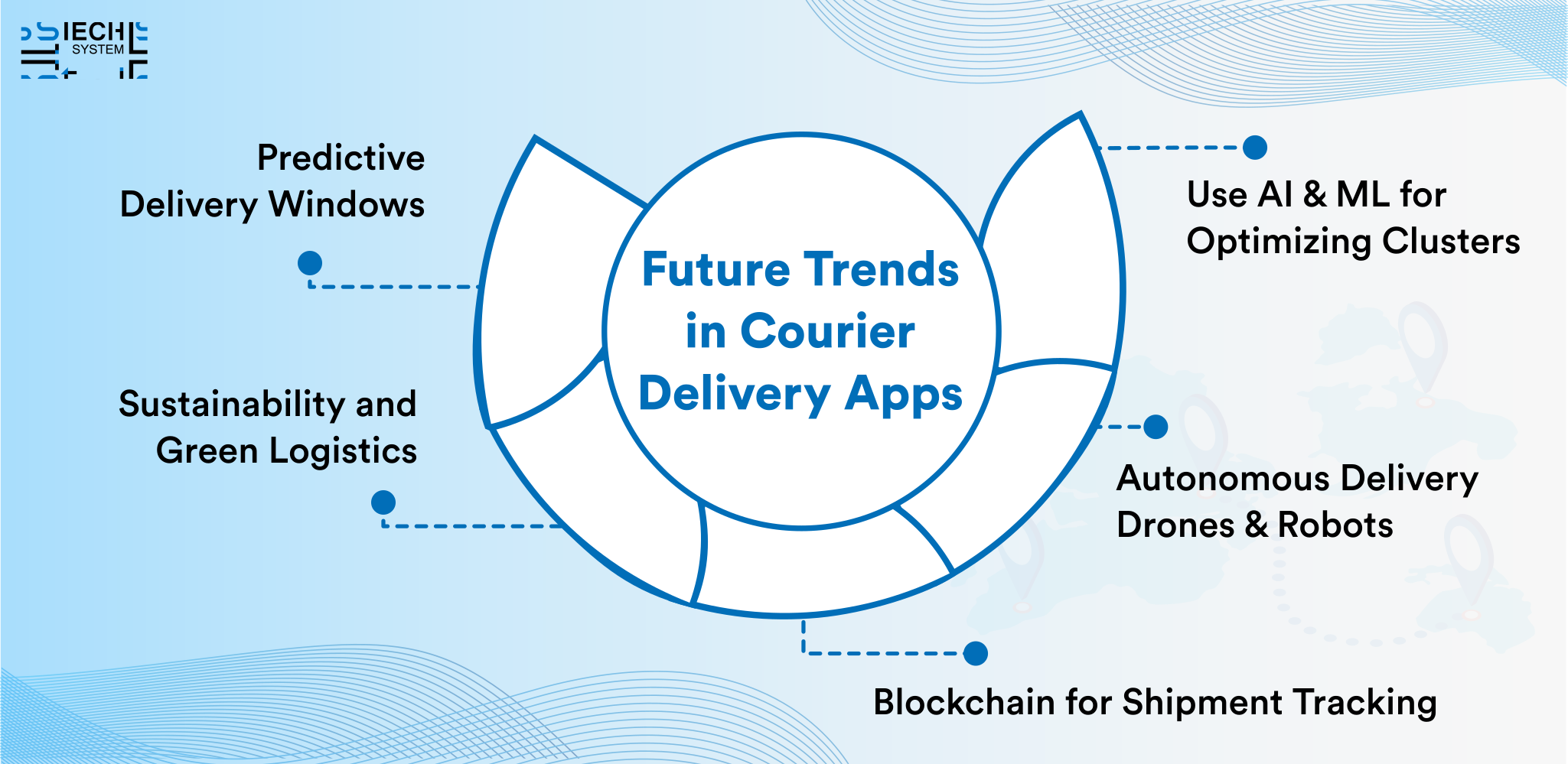
Digital transformation and automation are metamorphosing the courier delivery apps. Such innovations are creating delivery ecosystems around the globe that are faster, smarter, and more sustainable.
Use AI & ML for Optimizing Clusters
Traffic patterns, delivery density, and historical data are dynamically evaluated in real-time using AI and machine learning to ensure the most effective route for the courier. This lowers fuel consumption, delivery time, and operating costs and increases on-time performance.
Autonomous Delivery Drones & Robots
Last milestone deliveries are also changing with the introduction of autonomous drones and ground robots that require minimal human intervention. These techs facilitate quicker deliveries in metropolitan and remote locations with a low operational cost.
Blockchain for Shipment Tracking
Blockchain-based technology provides transparency & tamper-proof shipment tracking that can be easily accessible across all stakeholders It builds confidence through unchangeable logging of parcel transfer, handover and successful delivery.
Predictive Delivery Windows
Predictive analytics analyze real-time and historical data and provide accurate time windows for delivery. This leads to fewer missed deliveries, better expectations and ultimately improved customer satisfaction.
Sustainability & Green Logistics
More courier apps are prioritizing green deliveries, think electric vehicles and routes optimized for energy efficiency. Sustainable logistics not only help minimize the carbon footprints but also enhances the brand image and ensure adherence to the rules and regulations.
Conclusion
With the ever-rising on-demand economy, a reliable courier delivery app development is not a luxury but a necessity for modern businesses to survive. Where the premeditated courier delivery application helps businesses scale up with no hassle and delight overseeing shoppers to drive long term growth within the evolving time of logistics landscape by addressing operational challenges, enabling pro-profit monetization options, and catering to future trends.
Are you looking for a white-label SaaS-based courier app? We at SSTech System have our in-house courier app product Driver007 which is a SaaS-based platform, which provides notable savings, by eliminating the upfront cost of purchase/installation, maintenance, and upgrades. You can save spending a large sum of money on hardware installation.
How does it work?
Driver007 comes with two apps viz driver and retailer and every operation can be managed using our readymade CRM. It offers a convenient way to track your parcel in real-time.
- Download and Install Driver007 Apps
- You need to provide pickup and delivery locations
- You need to provide details about the package like package dimensions, weight, and other details.
- You can request to pick up the parcel from the pickup location.
- The driver can accept/decline the request and pick up the parcel and drop it off at the end customer.
- You can get your parcel at the doorstep.
- Customers ratings and reviews
- The driver gets rewards to point for their delivery service, like silver, gold, or platinum.
- Digital Signature as proof of delivery
- Easy wallet maintaining and earning.
So instead of going to build an app from scratch, we can provide you with a readymade solution that saves your time. You can subscribe to the software on monthly basis. It is scalable, easy to use, comes with enhanced security. You can also check our introductory videos for the Driver and retailer app on our driver product page. Contact us today to schedule a demo for Driver007.
Frequently Asked Questions
The courier delivery app development cost generally starts from $15,000–$25,000 to build an MVP. They include some features like user sign up, order booking, assignments of drivers, tracking, and simple admin control features. Cost is final depends on platforms, integrations and customisation requirements.
Courier delivery apps generate revenue through delivery fees, commission per order, surge pricing, subscriptions for businesses, and premium services. Some platforms also earn via advertisements, priority delivery charges, or white-label solutions offered to logistics companies and enterprise clients.
The Minimum Viable Product (MVP) should have user Onboarding, Courier booking, Real-time Tracking, Fare calculator, In-app Notifications, Digital Payment methods, and a basic Admin Dashboard. Other important functions that help to validate operations and obtain early user feedback are driver management, order status update and proof of delivery.
Native apps are expensive, time-consuming, offer excellent performance, and access to device-level capabilities. For MVPs and early-stage courier startups, mobile app development using Flutter or React Native minimizes cost and time while encompassing Android and iOS cross-platform development.
The time that goes into developing a courier app depends on the features and functionalities but an MVP usually takes between 3 to 5 months to get ready for an MVP which covers design, development, testing, and deployment time as well. Depending on the complexity of the project, complex features such as route optimization, AI-based dispatching, or third-party integrations may stretch timelines to weeks or 6–9 months.
Related Article