


The logistics business is changing at a higher rate than ever. The growth of customer demands, the cost of gasoline, traffic jams in the cities, manpower deficiency, and the need to deliver goods on the same or next day has given the logistics companies a new appearance.
Manual planning, the use of unchanging GPS tools and human intuition is no longer sufficient in this harsh environment. In order to be competitive, scalable, and profitable, the logistics businesses have to implement intelligent digital solutions- and the key point in this change is route optimization software.
Contemporary logistics is no longer a matter of the transportation of goods in one location to another. It is doing it quicker, less expensive, safer and smarter. This involves high level of logistics route planning, real-time decision making, predictive intelligence and smooth integration between the systems.
The global route optimization software market size was estimated at USD 8.51 billion in 2023 and is projected to reach USD 21.46 billion by 2030. AI-based logistics route optimization offers enterprises to analyze large amounts of data, forecast the disruption, and automatically calculate the most efficient delivery paths.
You are running a courier network or have a large fleet, now deliver food or middle-level delivery, or third-party logistics business, and investing in route optimization software is not an option anymore, it is a must to survive and expand.
Together with last-mile delivery software, fleet management systems, logistics IoT applications, and a powerful logistics mobile app, route optimization will become the foundation of the modern logistics processes.
This article will elaborate on the reasons why your logistics company needs to implement route optimization software, how AI can enhance the decision-making process of routing, and how it can be combined with other larger logistics platforms such as supply chain management software, logistics web app platforms, and Logistics mobile app development solutions.
What Is Route Optimization Software in Logistics?
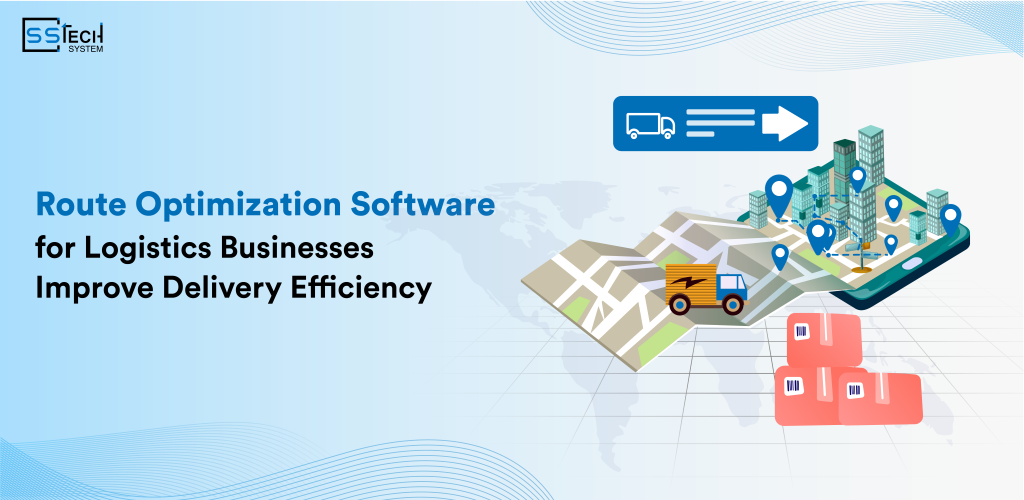
The route optimization software is a technological application that is used to identify the best routes to use by delivery vehicles based on several real-life factors. In contrast to simple tools of navigation that only indicate the minimal route, sophisticated routing applications consider the time, cost, traffic, delivery priorities, capacity of the vehicle, and operating regulations at the same time.
In its simplest form, the logistics route optimization aims at reducing the number of miles covered, fuel used and delivery time and increasing the efficiency of the fleet and customer satisfaction.
The global logistics market size was estimated at USD 3794.4 billion in 2023 and is expected to expand at a CAGR of 7.2% from 2024 to 2030. AI and machine learning-based solutions enable the transformation of the traditional way of logistics route planning into the system, which is dynamic and self-educated.
Current routing platforms are commonly components of an overall logistics AI app ecosystem and may be implemented as:
- Mobile-Based Route Optimization Software for drivers
- Cloud-based Logistics web app solutions for dispatch teams
- API-driven platforms using route optimization APIs for custom workflows
Advanced systems also support Custom Delivery route Software, allowing businesses to tailor routing rules based on their specific operational needs.
Key Challenges Faced by Logistics Businesses Without Route Optimization
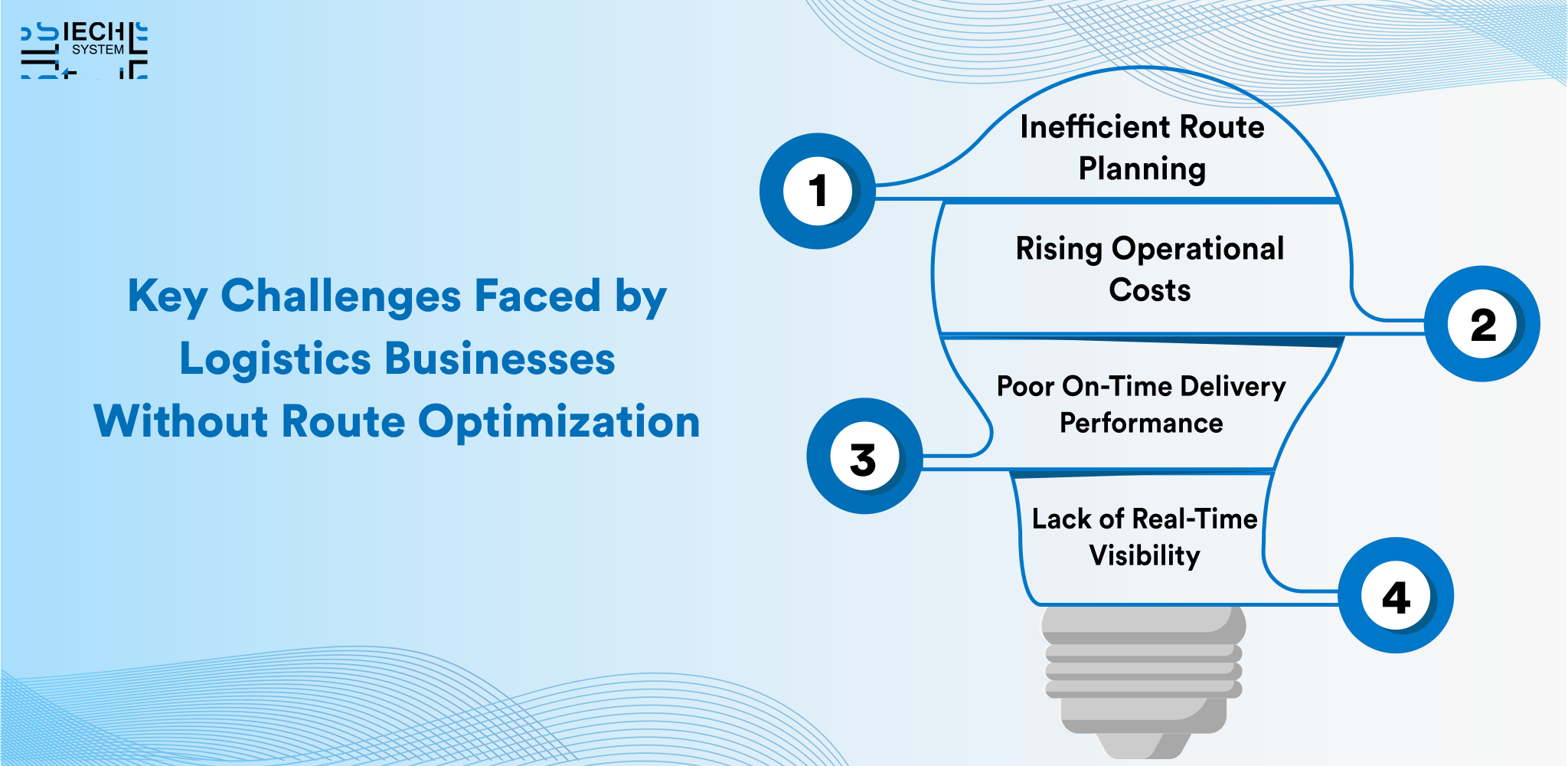
Inefficient Route Planning
In the absence of route optimization software, people usually base route planning on the experience of the driver or use of fixed maps. This strategy does not take into consideration real time traffic, weather and shifting priorities of delivery. Consequently, cars travel higher distances than are required, which leads to longer delivery times and more fuel usage.
Rising Operational Costs
Fuel, vehicle maintenance, and driver overtime are major cost drivers in logistics. Poor logistics route optimization leads to:
- Excess fuel consumption
- Increased wear and tear on vehicles
- Higher labor costs due to inefficient scheduling
Without intelligent routing, even well-managed fleets struggle to control expenses.
Poor On-Time Delivery Performance
Late delivery time hurts customer confidence. Without the help of the routing system assisted by AI, the logistic teams will not be able to react swiftly to traffic congestion, roadblocks, or order alterations at the last moment. This has a direct effect on service reliability and brand name.
Lack of Real-Time Visibility
Businesses without integrated logistics mobile app solutions or logistics IoT applications often lack visibility into fleet movement. Dispatch teams remain unaware of delays until customers complain, making proactive problem-solving impossible.
How Route Optimization Software with AI Solves These Problems
AI transforms traditional routing into an intelligent, adaptive system that continuously learns and improves.
AI-Driven Smart Route Planning Using Multiple Factors
AI-powered route optimization software analyzes hundreds of variables simultaneously, including traffic data, delivery priorities, vehicle load, driver availability, and customer time windows. This enables precise logistics route optimization that manual planning cannot achieve.
Machine learning algorithms refine logistics route planning over time, learning from historical delivery data to improve accuracy and efficiency.
AI-Powered Real-Time Route Adjustment
With real-time data from logistics in IoT and GPS sensors, AI can instantly reroute vehicles when conditions change. Drivers receive updated instructions via a logistics mobile app, ensuring minimal disruption. This capability is critical for last-mile delivery software, where real-time responsiveness determines success.
AI-Enabled Improved Fleet Utilization
AI ensures vehicles are optimally assigned based on capacity, location, and urgency. This improves the effectiveness of fleet management systems, reduces idle time, and increases delivery density per trip.
Also, according the data, the logistics AI market is experiencing rapid growth, increasing from $17.96 billion in 2024 to $26.35 billion in 2025. It is projected to surpass $700 billion by 2034.

Key Features to Look for in Route Optimization Software
When selecting route optimization software, logistics businesses must go beyond basic navigation features. A robust solution should combine AI, real-time data, mobility, and system integration to support complex logistics operations at scale. Below are the most important features that define a powerful and future-ready route optimization system.
Real-Time GPS Tracking
Real-time GPS tracking is a foundational feature of modern route optimization software. It allows logistics managers and dispatch teams to monitor the exact location of every vehicle in the fleet at any given moment. This level of visibility is critical for managing delays, responding to customer inquiries, and ensuring operational control.
Read more: Why GPS Logistics Tracking is Essential for Your Supply Chain?
Traffic-Aware Routing with AI
Traffic-aware routing powered by AI is what separates basic navigation tools from intelligent logistics route optimization solutions. AI algorithms analyze live traffic data, historical congestion patterns, road restrictions, and peak-hour trends to recommend the most efficient routes.
Multi-Stop Route Planning
Multi-stop route planning is essential for businesses handling high-volume deliveries. Instead of planning routes one delivery at a time, route optimization software intelligently sequences multiple stops in a single trip to minimize distance, time, and fuel consumption.
Advanced Analytics and Performance Reporting
Advanced analytics and reporting turn routing data into actionable business insights. Modern Route Optimization Software provides dashboards and reports that track key metrics such as delivery success rates, average delivery time, fuel consumption, route efficiency, and driver performance.
Mobile Driver App Support
A dedicated mobile application is critical for effective route execution on the ground. A robust logistics mobile app allows drivers to access optimized routes, receive real-time updates, confirm deliveries, and report issues instantly.
Route Optimization APIs for Custom Integration
Modern logistics operations rely on multiple digital platforms working together. Route optimization APIs enable seamless integration between routing software and other systems such as logistics web app platforms, ERP systems, CRM tools, and customer-facing portals.
AI-Based Demand Forecasting
AI-based demand forecasting is an advanced feature that adds strategic value to route optimization software. By analyzing historical order data, seasonal trends, and customer behavior, AI predicts future delivery volumes and geographic demand patterns.
Support for Custom Delivery Route Software
No two logistics businesses operate in exactly the same way. Support for custom delivery route software ensures that routing logic aligns with specific business rules, service-level agreements, and operational constraints.
Key Benefits of Route Optimization Software for Logistics Businesses
Implementing route optimization software delivers measurable and long-term benefits for logistics businesses. Between 2023 and 2028, the logistics industry is expected to expand at a compound annual growth rate (CAGR) of 6.3%. From cost control to customer experience and driver well-being, intelligent routing powered by AI transforms daily operations and overall business performance.
Reduced Fuel and Transportation Costs
The first and most evident positive gain of route optimization software is the cutting of fuel, transportation costs. Elimination of redundant pathways, prevention of delays in the traffic flow and the reduction of idle periods by the use of optimized routes greatly decrease the total distance covered by the vehicles.
Faster and More Reliable Delivery
The most important performance Indicator in contemporary logistics is speed and reliability. AI-based logistics route optimization makes sure that delivery routes are designed according to real-time availability of data, past traffic, and delivery priorities. This leads to speedy execution of routes and reduction of delays.
Enhanced Customer Satisfaction
Delivery performance has a strong impact on customer experience. The Real-time delivery tracking, accuracy in estimating the time of arrival (ETA), and proper updates are all made possible with the route optimization software that are necessary in establishing customer trust.
Improved Driver Productivity and Safety
The drivers are the key to the logistics business, and their efficiency directly influences delivery efficiency. Path optimization avoids wasteful commuting, complicated routes, and route modification at the last moment and lets the drivers concentrate on safe and punctual delivery.
Read more: Top Logistics Technology Trends for 2026: AI, Automation, and IoT Explained
Role of Route Optimization in Last-Mile Delivery
Last-mile delivery has been the most acknowledged situation which is the most costly, time-sensitive and operationally challenging phase of the logistics lifecycle. It frequently takes a large part of the overall delivery costs in particular in urban and semi-urban locations. To address these peculiarities of the last delivery phase, the last-mile delivery optimisation is deeply dependent on AI-based route optimization software.
High delivery density is one of the most significant difficulties of last-mile logistics where one vehicle has to make a great number of deliveries with a small geographical range. AI-based routing means that the sequencing of stops is done indirectly to minimize unnecessary trips and enhance the effectiveness of deliveries.
Meanwhile, strict delivery time frames demand accurate scheduling and real-time responsiveness, which cannot be effectively managed by any alternative system other than the automated one.
Cities also complicate last-mile operations: there is traffic jam, roadways with limitations, parking spaces, and unexpected delays. The AI-based logistics route optimization constantly monitors the situation on the roads and manages routes in real-time, performing optimizations to prevent congestions. This makes sure that drivers remain on the most efficient route in the delivery voyage.
Using the last mile delivery software and the mobile based route optimization software, the logistic firms will allow drivers to obtain real time updates of the route straight into their mobile devices. This combination guarantees faster deliveries, less fuel usage, and lower operation costs with having the high service reliability and customer satisfaction.

Integration of Route Optimization with Other Logistics Systems
Fleet Management Systems
With route optimization software and fleet management systems, the logistics businesses will have the full-end visibility of the fleet operations. This integration will enable dispatchers to track the positions of the vehicles, fuel consumption, driver activity, and service plan on the same platform. Routine optimization of routes will guarantee even distribution of vehicles on the road, limit the time of its idleness and will contribute to the planning of preventive maintenance, which will prolong the service life of the vehicles and increase the overall efficiency of the fleet in general.
Delivery Tracking and Customer Notification Tools
The smooth connection with the delivery tracking and customer notification tools improves the transparency of the delivery process. Customers can be updated at each point of the delivery process with real-time updates of the status, precise ETAs, and automated messages. This will help minimize customer service inquiries, enhance the level of communication, and boost the confidence between the logistics service providers and their clients.
Warehouse and Order Management Systems
A combination of route optimization software and warehouse and order management software is a necessary solution to a seamless logistics implementation. Linking it with supply chain management software, the routing systems get real time order information and inventory data, so that the dispatch planning is in line with the operations of the warehouse. This minimises the delays in dispatch, eliminates bottlenecks and accelerates the completion of orders between the warehouse and customer doorstep.
Use Cases Across the Logistics Industry
Courier and Parcel Delivery Services
The environment in which courier and parcel delivery businesses are operated is time-sensitive and high volume where speed and efficiency are essential. AI-powered route planning for courier companies allows the businesses to plan thousands of orders per day with limited resources and vehicles. Rather than using fixed routes, route optimization software is adaptive and can change the delivery routes according to level of orders, traffic conditions, and delivery priorities.
eCommerce Logistics Providers
The eCommerce logistics service providers are under continuous pressure to deliver goods on the same-day basis, and the next-day during the peak seasons and sales. Scalability and adaptability in logistics route optimization is needed in high order volumes, unpredictable demand, and multiple places of delivery.
Food and Grocery Delivery Businesses
The food and grocery delivery business is a time- and freshness-constrained business. Delays may have a direct effect on the quality of products and customer experience. In the case of these businesses, logistics in IoT is necessary.
Third-Party Logistics (3PL) Companies
TPL providers are involved in providing complex logistics networks to multiple clients with various service-level agreements and operational requirements. Such environments depend on flexibility. Custom delivery route software enables 3pl companies to develop routing regulations with regard to priorities, delivery windows, and geographical limitations needed by clients.t-specific priorities, delivery windows, and geographic constraints.
Future of Logistics with Route Optimization Technology
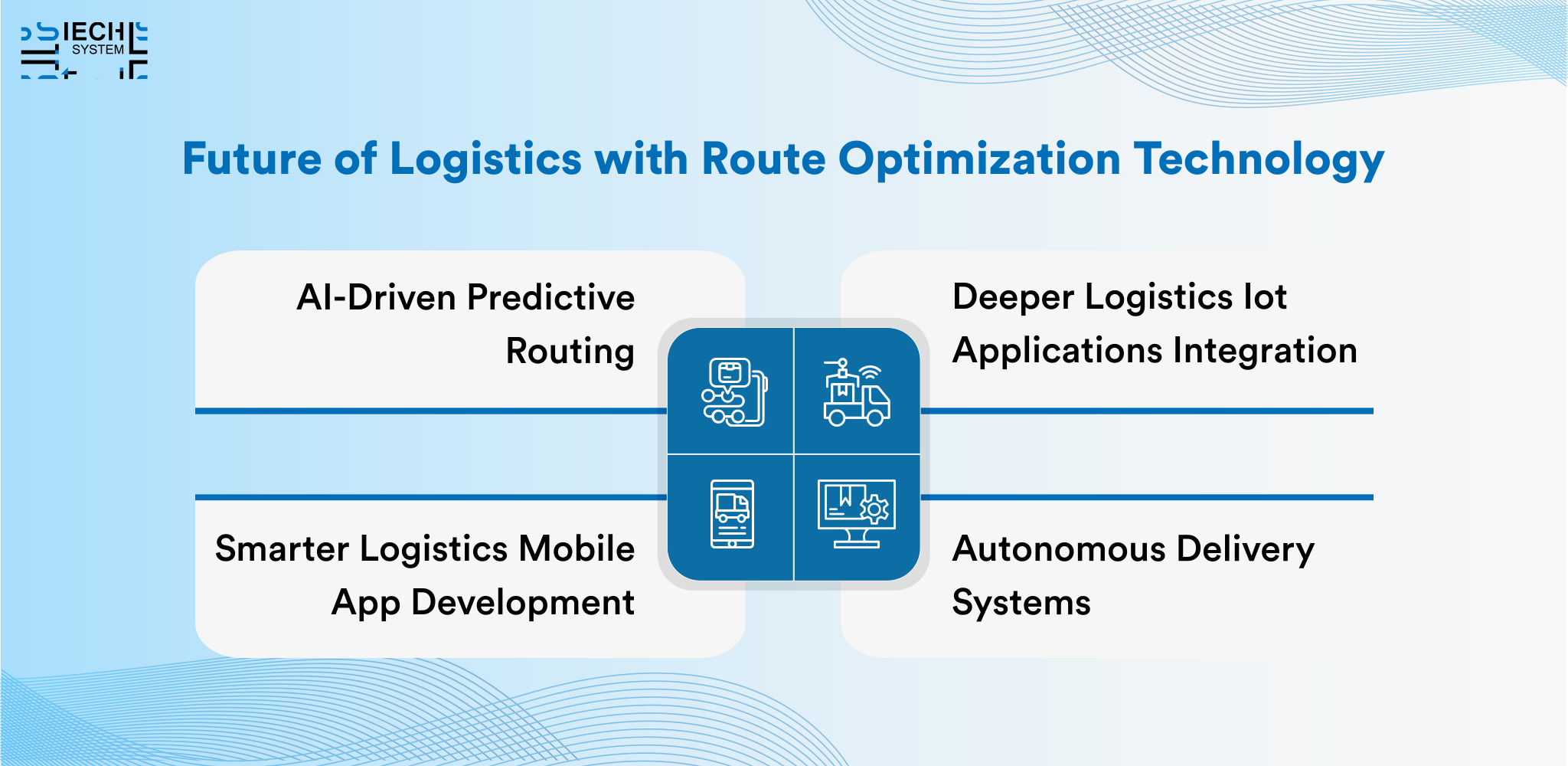
The future of logistics lies in AI, automation, and connectivity. Advanced logistics software development focuses on:
AI-driven predictive routing
One of the most impactful advancements in routing technology is AI-driven predictive routing. Instead of planning routes based solely on current data, AI algorithms forecast traffic patterns, demand spikes, weather disruptions, and delivery risks in advance. This allows logistics businesses to prepare optimized routes before problems occur.
Deeper logistics IoT applications integration
The future of routing technology is closely tied to the growth of logistics IoT applications. IoT devices embedded in vehicles, packages, and infrastructure generate continuous streams of real-time data. This data feeds directly into route optimization software, enabling instant route adjustments and deeper operational insights.
Smarter Logistics mobile app development
Mobile technology will play a critical role in the future of logistics execution. Advanced Logistics mobile app development will focus on creating intelligent driver and dispatcher apps that go beyond navigation. These apps will serve as real-time command centers, offering route updates, performance insights, and AI-driven recommendations.
Autonomous delivery systems
Autonomous delivery is emerging as a long-term innovation in logistics. Drones, autonomous vehicles, and robotic delivery systems rely heavily on precise and adaptive routing algorithms. AI-powered route optimization software will be essential for coordinating these systems, ensuring safe navigation and efficient route execution.
Conclusion
In a competitive logistics landscape, efficiency defines success. Route optimization software is no longer a luxury, it is a necessity. from reducing costs and improving delivery speed to enhancing customer satisfaction and driver safety, AI-powered routing transforms logistics operations at every level.
By investing in modern logistics route optimization, supported by logistics AI app capabilities, route optimization APIs, and seamless system integration, logistics businesses can future-proof their operations and gain a lasting competitive edge.
If your logistics business aims to scale, reduce costs, and deliver consistently exceptional service, adopting route optimization software is the smartest move you can make today.

Frequently Asked Questions
The software of route optimization assists logistic enterprises to plan the most effective delivery routes based on real-time traffic, delivery priorities, vehicles capacity, and artificial intelligence data analysis to minimize the costs, as well as enhance the speed of the delivery.
Yes, route optimization software can be scaled and applicable to small, mid-sized, and large logistics businesses due to better utilization of fleets, minimizing fuel expenses, and faster deliveries without necessarily the need to add more manpower.
Using AI to analyze traffic patterns, past shipping movement records, weather, and demand projections enables more intelligent theme planning of logistics routes and reduces the number of delivery delays.
Contemporary route optimization software is compatible across all fleet management systems, logistics mobile applications, warehouse management, ERP systems, and route optimization APIs to ensure operational efficiency at the end of the line.
Yes, AI-based route optimization software is essential to last-mile delivery through optimization of multi-stop routes, traffic congestion, tight delivery windows, and lowering last-mile operational expenses.
Related Article