


Meal kit delivery operations and prepared meal services have completely changed how people cook and eat at home. What began as a niche subscription concept is now a huge, rapidly expanding business with millions of households all over the world. However, what is under the disguise of convenience of having fresh ingredients or already prepared meals delivered to your door is a very complicated logistics network.
The meal kit delivery software of 2026 will cease being mere food suppliers: they are logistics-intensive enterprises that are a combination of supply chain accuracy, cold storage experience, and technology. Each and every order will entail procuring fresh ingredients, preparing meals, controlling the temperature, and ensuring delivery on time all at a low cost.
This article breaks down how food delivery logistics software actually works, the challenges involved, and the strategies businesses use to deliver fresh meals at scale.
What is Meal Kit & Prepared Meal Business Model?
A meal kit company provides pre-prepared ingredients and recipes, which people can cook at home without planning or shopping. A ready meal company, on the other hand, sells already cooked meals which only need to be heated up.
The two models are based on convenience however their operations vary slightly:
- Meal kits require precise ingredient portioning and packaging.
- Prepared meals require cooking, preservation, and reheating compatibility.
The Evolution of Food Delivery
Food delivery has evolved in phases:
- Phase 1: Restaurant delivery via phone orders
- Phase 2: App-based food delivery platforms
- Phase 3: Subscription-based meal kits
- Phase 4 (2026): Hyper-personalized, tech-driven meal logistics
Today, customers expect:
- Freshness similar to grocery shopping
- Convenience similar to ordering food
- Personalization based on diet and preferences
This combination has driven businesses to build highly efficient and responsive meal-delivery management systems.
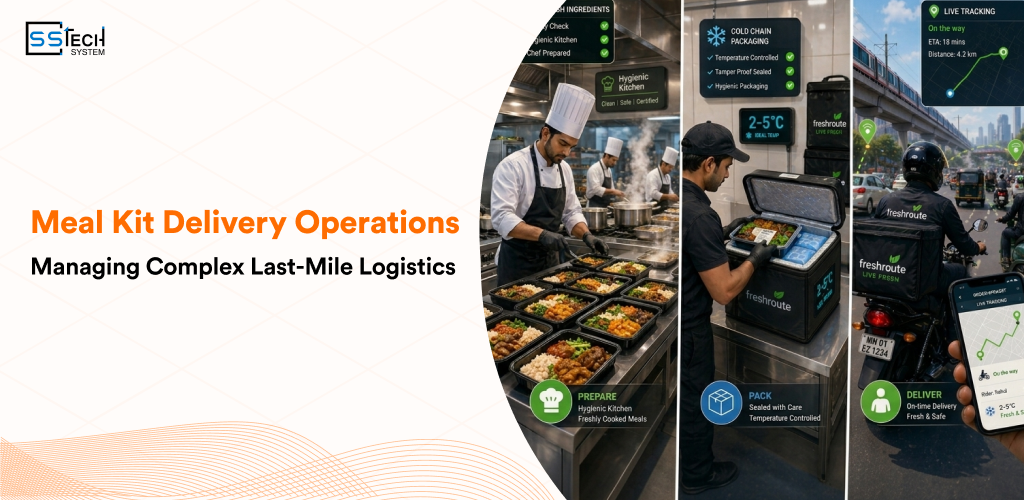
How the Supply Chain Works
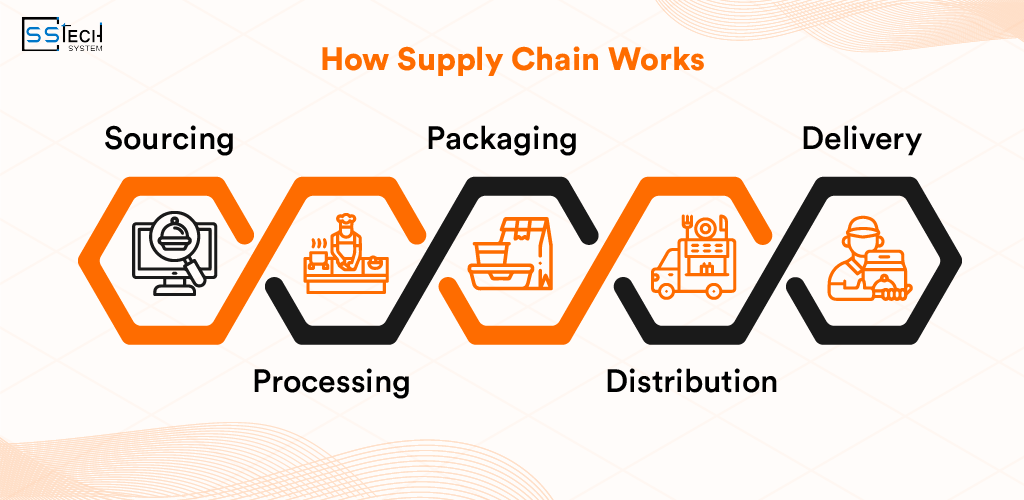
Meal kit logistics follows a tightly controlled, end-to-end supply chain powered by meal kit delivery software solutions and a meal delivery management system to ensure freshness and efficiency. Today, many businesses rely on SaaS for meal kit companies and a subscription meal delivery platform to streamline operations.
Sourcing
Corporations collaborate with farmers, fisheries, and suppliers to obtain fresh products, often supported by food delivery logistics software and food logistics automation software to improve sourcing efficiency.
Most businesses are now concerned with:
- Local sourcing to reduce transit time
- Seasonal procurement for better quality
- Direct partnerships to cut intermediaries
Processing
The preparation of ingredients, cutting, and portioning are performed at centralized locations, often managed through meal kit fulfillment software and prepared meal delivery software. In the case of ready-made food, this step involves preparation and serving, supported by advanced delivery management system for food businesses.
Packaging
Packaging plays a critical role in preserving freshness and is often monitored using cold chain delivery software to maintain temperature control. It includes:
- Insulated boxes
- Ice packs or gel packs
- Vacuum sealing
Distribution
Goods are shipped to local warehouses or centres using food delivery logistics software and route optimization for meal delivery tools. This ensures that they are close to the customer for faster service while improving operational efficiency.
Delivery
Last-mile delivery is the final process that entails transporting meals to customers within strict time constraints. Businesses depend on last-mile delivery software for food, meal delivery app development, and a robust delivery management system for food businesses to ensure timely and accurate deliveries
Read more: How AI is Transforming Last-Mile Delivery in 2026
Multi-Node Logistics Network
Unlike traditional food businesses, meal kit companies operate across multiple nodes, often connected through a meal delivery management system and meal kit delivery software solutions:
- Supplier networks
- Processing centers
- Regional warehouses
- Urban delivery hubs
This distributed network helps reduce delivery time but increases operational complexity, making food logistics automation software essential for smooth coordination.
Why Delivery Operations Are So Complex
Meal kit logistics is far more complex than standard e-commerce logistics due to several unique factors, which is why businesses increasingly adopt prepared meal delivery software and subscription meal delivery platforms.
Perishable Goods
Food items have a limited shelf life, making timing critical. Even a slight delay can affect quality, which is why cold chain delivery software plays a vital role.
Strict Time Windows
Deliveries must reach customers within specific time slots, requiring route optimization for meal delivery and efficient last-mile delivery software for food.
Customer Expectations for Freshness
Customers expect:
- Fresh vegetables
- Properly chilled meat
- No spoilage
Any compromise can lead to dissatisfaction and churn, making meal kit fulfillment software and a delivery management system for food businesses essential for maintaining service quality.
Key Challenges in Meal Kit Delivery Operations
The Meal kit delivery operations might appear simple on the surface, but in reality, it involves complex systems powered by delivery management software, route optimization software, and fleet management software.
Cold Chain Management
Keeping the correct temperature throughout the process from sourcing to final delivery is one of the most significant challenges. This is a critical part of managing cold chain logistics for food delivery, as most ingredients are perishable. Even slight temperature variations can impact quality, safety, and shelf life.
To address this, businesses increasingly rely on AI software development services and custom logistics software development to monitor and maintain temperature-sensitive supply chains.
Read more: Top Logistics Challenges in Food Delivery & How to Solve Them
Last-Mile Delivery Complexity
The final mile delivery is often the most unpredictable and expensive stage. It clearly demonstrates how prepared meal companies handle last-mile delivery, especially in urban areas where traffic congestion, inefficient routing, and parking issues are common.
To overcome this, companies adopt:
- Last-mile delivery software
- courier delivery app development
- on-demand delivery app development
These tools improve efficiency and support real-time tracking for meal delivery fleets, ensuring customers receive fresh meals on time.
Demand Forecasting & Inventory Planning
Meal kit businesses require precise demand forecasting due to the perishability of their inventory. This is a core part of automation in meal kit fulfilment, where companies use historical data, customer behavior, and seasonal trends.
Advanced logistics software development and warehouse management system tools help improve accuracy, reduce waste, and support businesses looking at how to scale a meal kit delivery operations business effectively.
Food Waste & Sustainability Pressure
Food waste is a major concern both economically and environmentally. Issues like unused ingredients, delivery failures, and poor forecasting directly impact reducing food delivery operational costs.
To tackle this, companies use AI software development services and custom logistics software development to optimize supply chains and minimize waste.
Cost Management & Thin Margins
Meal Kit Delivery Operations businesses operate on tight margins due to high operational costs. This is why many are exploring the best software for meal delivery operations in 2026 to improve efficiency.
Key cost drivers include:
- High packaging costs (especially insulated materials)
- Expensive last-mile logistics
- Risks of spoilage and returns
Using delivery management software and fleet management software helps control these costs and improve profitability.
Core Components of Meal Delivery Operations
Meal kit enterprises depend on a well-structured system supported by mobile app development services and custom logistics software development. These systems showcase the technology used by meal kit companies to ensure smooth and efficient operations.
Procurement & Supplier Coordination
Strong supplier relationships are the foundation of any meal delivery business. Efficient coordination is often managed through logistics software development tools.
To achieve this, companies implement:
- Long-term contracts for reliability
- Real-time supply tracking systems
- Backup supplier networks
These strategies play a key role in how meal kit companies manage delivery operations at scale.
Production & Assembly Centers
Production centers transform raw ingredients into ready-to-ship meal kits or prepared meals. Many businesses integrate meal delivery app development and on-demand delivery app development to connect production with delivery systems.
Processes include:
- Ingredient cleaning and portioning
- Recipe assembly and packaging
- Cooking for ready meals
This integration supports automation in meal kit delivery operations fulfilment and improves operational speed.
Packaging & Insulation Technology
Packaging is critical for maintaining freshness and safety. It is closely linked with managing cold chain logistics for food delivery.
Modern solutions include:
- Insulated liners (24–48 hours temperature control)
- Gel or ice packs
- Leak-proof materials
These innovations support route optimization for perishable food delivery by ensuring products remain safe during transit.
Warehouse & Cold Storage Systems
Warehousing plays a crucial role in meal delivery logistics. Advanced warehouse management system tools help monitor inventory and reduce waste.
Facilities include:
- Refrigeration and freezing units
- Temperature monitoring with alerts
- Inventory tracking systems
These systems enable better real-time tracking for meal delivery fleets and improve overall efficiency.
The Role of Cold Chain Logistics in 2026
The cold chain logistics has already turned out to be a staple of meal delivery business, particularly as the demand on freshness and quality of the food keep increasing among customers.
What Is Cold Chain Logistics?
Cold chain logistics involves maintaining controlled temperatures across sourcing, storage, transportation, and delivery. This ensures food remains safe and fresh for consumption.
Without proper systems like delivery management software and route optimization software, the risk of spoilage increases significantly.
Technologies Used in Cold Chain
In 2026, cold chain logistics is driven by advanced tools that reflect the evolving technology used by meal kit companies:
- IoT sensors for temperature and humidity monitoring
- Smart packaging with improved insulation
- Real-time alert systems
These innovations, supported by AI software development services, help businesses respond quickly and reduce losses.
Challenges in Maintaining Cold Chain
Despite advancements, maintaining a stable cold chain remains difficult. Common issues include:
- Power failures
- Traffic delays
- Packaging failures
These challenges reinforce the importance of last-mile delivery software and fleet management software in ensuring consistent delivery performance.
Innovations Improving Cold Chain Efficiency
To improve efficiency, companies are investing in modern solutions such as:
- AI-driven temperature prediction systems
- Advanced insulation materials
- Electric refrigerated vehicles
These innovations not only improve performance but also support businesses aiming to reduce food delivery operational costs and scale efficiently.
How Companies Optimize Last-Mile Delivery
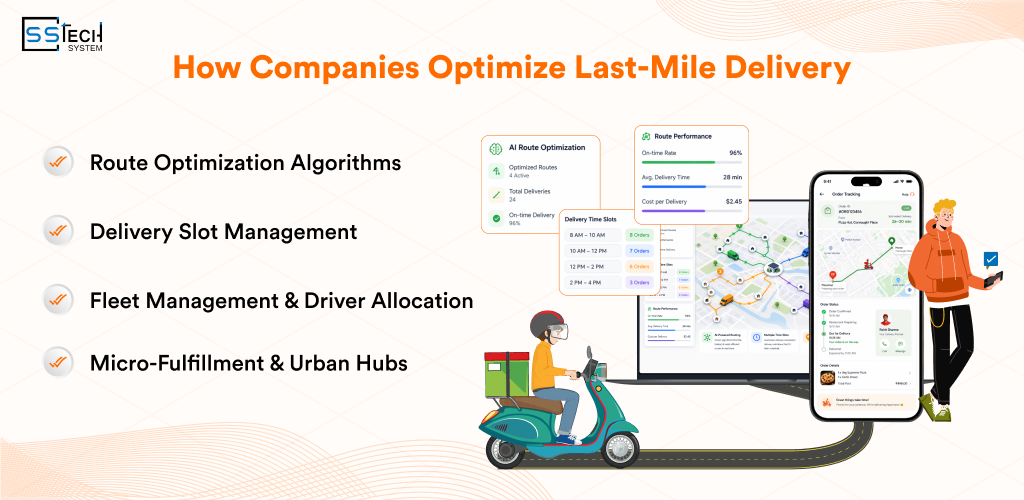
Route Optimization Algorithms
Advanced systems powered by route optimization for food delivery and AI logistics for food delivery calculate the most efficient routes based on:
- Traffic conditions
- Delivery density
- Time constraints
These systems also support delivery analytics and reporting, helping businesses continuously refine their logistics performance.
Delivery Slot Management
Customers select delivery windows, allowing businesses to:
- Plan routes efficiently using smart dispatch system tools
- Reduce missed deliveries through customer delivery notifications
This improves delivery success rates and enhances customer satisfaction.
Fleet Management & Driver Allocation
Companies use delivery management software for meal kits and logistics software for food delivery to:
- Assign drivers dynamically
- Track vehicle performance using a delivery performance dashboard
- Monitor delivery progress with real-time delivery tracking
This also enables proof of delivery for food orders, ensuring accountability and transparency.
Micro-Fulfillment & Urban Hubs
Small urban warehouses reduce the distance between storage and customers, improving delivery speed. These hubs are often integrated with food delivery app development solutions and last-mile delivery software for food businesses for seamless coordination..
Technology Powering Meal Kit Logistics
Modern operations depend heavily on logistics software for food delivery and meal delivery software solutions to stay competitive and scalable.
AI & Machine Learning in Demand Forecasting
AI plays a critical role in demand forecasting for meal kits, using historical data, weather patterns, and customer behavior.
With AI logistics for food delivery, businesses can:
- Predict demand accurately
- Reduce overstocking and waste
- Improve planning and efficiency
Automation in Warehousing
Automation tools and robotics, often part of food delivery app development ecosystems, help:
- Sort ingredients
- Pack boxes
- Reduce manual errors
This improves speed and supports large-scale operations.
Real-Time Tracking & Customer Experience
Customers now expect full visibility into their orders. With real-time delivery tracking and customer delivery notifications, businesses can:
- Improve transparency
- Build trust
- Reduce customer inquiries
These capabilities are core features of modern meal delivery software solutions.
Data-Driven Personalization
Using insights from delivery analytics and reporting, businesses can:
- Recommend meals
- Customize subscriptions
- Improve retention rates
Sustainability in Meal Delivery Operations
Reducing Packaging Waste
Companies are adopting:
- Recyclable materials
- Reusable containers
- Minimal packaging designs
Optimizing Delivery Routes for Lower Emissions
Efficient routing reduces fuel consumption and carbon footprint.
Sustainable Sourcing Practices
Businesses are focusing on:
- Organic ingredients
- Ethical sourcing
- Local suppliers
Balancing Convenience with Environmental Impact
While convenience drives demand, meal kit delivery operations must balance it with sustainability goals.
Case-Style Insights: How Leading Companies Operate
Centralized vs Decentralized Models
- Centralized model: Lower operational costs but longer delivery distances
- Decentralized model: Faster delivery but higher infrastructure costs
Subscription-Based Logistics Strategy
Subscriptions help businesses:
- Predict demand
- Plan inventory
- Optimize delivery routes
Hybrid Delivery Models
Many companies now offer both meal kits and ready meals to cater to different customer needs.
Best Practices for Managing Complex Meal Delivery Operations
The operation of meal delivery needs to be effectively managed in a strategic manner that incorporates the speed, cost, quality and customer satisfaction.
Invest in Technology & Automation
The use of technology is at the core of automating meal delivery processes. Manual errors can be minimized, speed of processing increased and overall efficiency boosted by investing in automation tools and sophisticated prepared meal delivery software systems, enabling businesses to achieve substantial improvements.
Strengthen Supplier Networks
Having a stable network of suppliers is also critical towards the maintenance of quality and continued operations. The companies need to establish good working relationships with their suppliers who are capable of producing quality products on time.
Focus on Customer Experience
One of the major differentiators in the competitive meal delivery market is customer experience. Each interaction is important, beginning with order placement to the actual delivery.
Optimize Logistics Continuously
Meal delivery operations are dynamic, and continuous optimization is necessary to stay efficient and competitive. Businesses should regularly analyze their logistics processes, identify inefficiencies, and implement improvements.
Build Scalable Infrastructure
Due to the increase in demand, the businesses should be ready to expand their operations without losing on quality or efficiency. This involves investing in scale-based infrastructure, including more fulfillment centres, improved storage options, and versatile logistics networks.
Conclusion
Meal kit logistics in 2026 have evolved into a highly advanced system powered by meal delivery software solutions, AI logistics for food delivery, and delivery management software for meal kits. While customers enjoy the convenience of fresh meals delivered to their doorstep, the backend involves precise planning, advanced technology, and continuous monitoring.
Businesses that succeed are those that adopt a holistic approach, leveraging real-time delivery tracking, automated route optimization, and delivery analytics and reporting to stay competitive. As customer expectations continue to evolve, the future of meal delivery will be shaped by innovation, personalization, efficiency, and sustainability.

Frequently Asked Questions
What makes meal kit delivery operations complex?
Meal kit delivery involves handling perishable goods, maintaining strict temperature control, managing tight delivery windows, and meeting high customer expectations, all at once.
How do companies keep food fresh during delivery?
They use cold chain logistics, including insulated packaging, ice packs, refrigerated transport, and temperature monitoring systems.
What is cold chain logistics in meal delivery?
It is the process of maintaining a controlled temperature environment throughout the supply chain to keep food fresh and safe.
How do meal kit companies reduce food waste?
They use accurate demand forecasting, portion control, and efficient inventory management to minimize excess.
What technologies are used in meal delivery logistics?
Key technologies include AI for forecasting, automation in warehouses, real-time tracking systems, and route optimization software.
Are meal kits environmentally friendly?
They can be, especially when companies use sustainable packaging, optimize delivery routes, and source ingredients responsibly. However, packaging waste remains a concern.
How do companies manage last-mile delivery efficiently?
They use route optimization, delivery slot selection, fleet management systems, and micro-fulfillment centers to improve efficiency.
Related Article