


Last-mile delivery is where logistics promises are either kept or broken.
You can optimize warehouses, automate sorting, and plan routes perfectly. Still, if the final delivery fails, the customer remembers only one thing: “the delay.” For logistics companies, courier operators, and eCommerce businesses, last-mile delivery has become the most expensive and unpredictable part of the supply chain.
In many operations, the last mile now accounts for around 53% of total shipping costs, which makes it the most expensive stage of the delivery journey. At the same time, customers expect faster deliveries, real-time tracking, and zero excuses.
This guide helps you understand how last-mile delivery solutions work, which features matter, how AI is reshaping delivery operations, and what the future looks like. More importantly, it shows how you can turn last-mile delivery from a cost center into a competitive advantage.
Let’s begin with the meaning for clarity!
What Is Last-Mile Delivery?
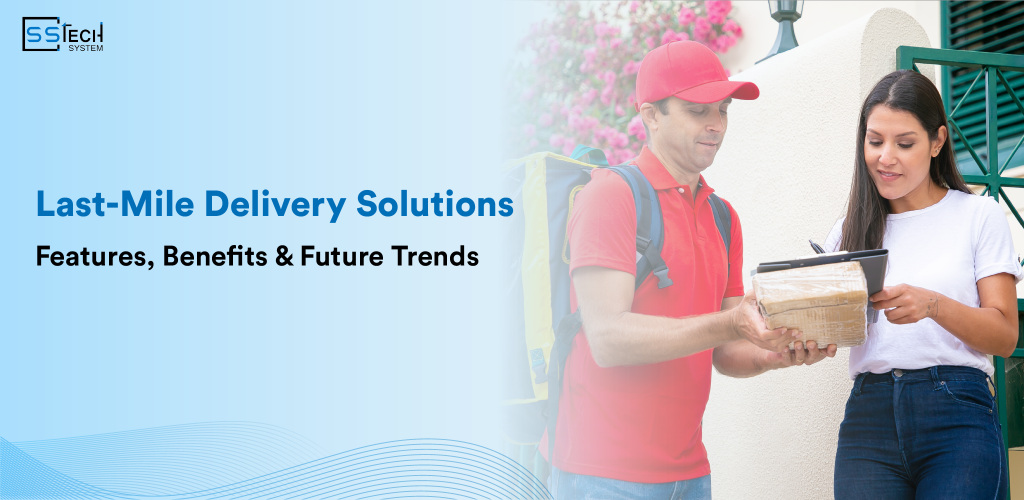
Last-mile delivery refers to the final step in the delivery journey. It starts when a package leaves a distribution hub and ends when it reaches the customer’s doorstep.
That sounds simple, right?. But in practice, it is not.
This stage deals with real-world uncertainty:
- Traffic changes without warning.
- Customers are unavailable.
- Addresses are inaccurate.
- Delivery density varies by location.
- Urban routes behave very differently from rural ones.
A typical last-mile workflow includes:
- Order confirmation
- Route planning
- Driver assignment
- Dispatch
- Delivery execution, and
- Proof of delivery and feedback
Each of these steps introduces friction if managed manually or through disconnected systems. That friction is exactly why last-mile delivery needs purpose-built technology.
Key Challenges in Last-Mile Delivery Operations
Last-mile delivery looks straightforward on paper. In reality, it is where logistics operations face the highest pressure.
The key challenges in last-mile delivery operations are:
Rising Delivery Costs
Last-mile delivery is the most expensive part of the supply chain. And fuel costs, driver wages, and low drop density increase the cost per delivery. Plus, failed delivery attempts add repeat trips, which further inflate operational expenses.
Without optimized routing and planning, costs grow faster than revenue.
Failed and Delayed Deliveries
Missed deliveries happen due to incorrect addresses, customer unavailability, and inefficient route planning. And delays often occur when traffic conditions or delivery priorities change unexpectedly.
Each failed or delayed delivery affects customer trust and increases operational workload.
Lack of Real-Time Visibility
Many delivery teams operate with limited real-time insight. And without live tracking, issues remain hidden until customers complain.
This reactive approach prevents timely intervention and makes it difficult to manage exceptions before they escalate.
Scalability Challenges
Delivery processes that work for small volumes often break at scale. Plus, manual planning, static routes, and disconnected systems struggle to handle growing order volumes.
As demand increases, inefficiencies multiply instead of stabilizing.
Poor Customer Experience
Customers expect accurate ETAs, proactive updates, and delivery flexibility. When communication is unclear or delayed, frustration builds quickly.
In last-mile delivery, poor experience often outweighs speed or price in shaping customer perception.
How AI Is Transforming the Future of Last-Mile Delivery
Once you understand the challenges, the role of AI becomes clear. AI does not replace logistics teams. It removes guesswork from delivery decisions. Here’s how:
How AI Is Reshaping Last-Mile Delivery Operations
Traditional delivery systems follow fixed rules. However, AI-driven systems learn from data. They analyze historical routes, delivery outcomes, traffic patterns, and driver behavior.
This shift turns last-mile delivery from reactive execution into predictive planning. Instead of responding to delays, AI anticipates them.
How AI Helps Reduce Failed Deliveries and Delays
AI models identify patterns that humans miss.
- They flag high-risk addresses.
- They predict delivery windows with higher accuracy.
- And they adjust routes based on live traffic and weather data.
So, when ETAs change, AI recalculates automatically. And your customers receive updates before frustration sets in. Plus, operations teams gain time to act instead of react.
How AI Helps Automate Last-Mile Delivery Workflows
Automation removes repetitive tasks from human workflows. And with AI, it’s possible to assign drivers based on proximity, workload, and performance history. Even routes adjust dynamically when conditions change.
On top of that, customer notifications run automatically. And exceptions trigger alerts without manual follow-ups. Over time, the system improves because it learns from every delivery.
AI works best when embedded into a well-designed last-mile delivery platform. That brings us to the system level.
Read more: How AI is Revolutionizing Logistics App Development?
What Are Last-Mile Delivery Solutions? (System-Level View)
A last-mile delivery solution is not just an app. It is a connected platform that manages delivery execution from dispatch to proof of delivery.
A complete solution includes:
- Route optimization engines
- Driver mobile applications
- Admin dashboards
- Customer tracking portals, and
- Integration with WMS, TMS, and order systems
And generic SaaS tools often struggle with complex workflows. Whereas custom last-mile delivery platforms adapt to your operational reality. They scale with volume, integrate deeply, and support AI-driven decision-making.
For growing logistics businesses, this flexibility becomes critical.
Core Features of an Effective Last-Mile Delivery Solution
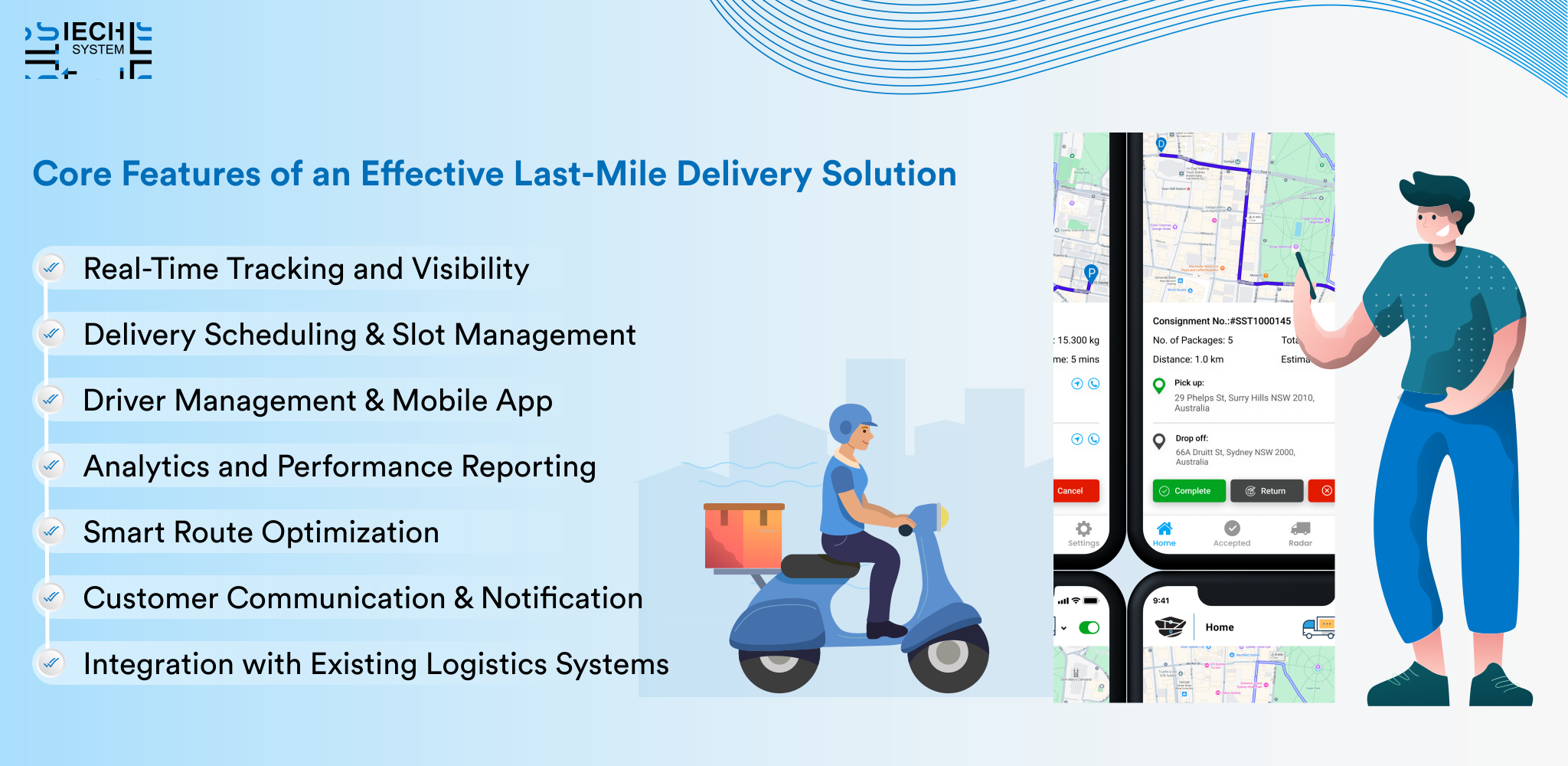
An effective last-mile delivery solution is not about adding more tools. It is about building a connected system that improves visibility, control, and execution at scale.
And that’s how the key features of an effective last-mile delivery solution should look.
They are:
Smart Route Optimization
Smart route optimization helps you plan the most efficient delivery paths in real time. It considers traffic conditions, delivery time windows, vehicle capacity, and route constraints. This reduces fuel usage, shortens delivery times, and improves on-time delivery performance.
Real-Time Tracking and Visibility
Real-time tracking gives you live insight into every delivery in progress. You can monitor driver location, delivery status, and potential delays from a single dashboard. This visibility allows you to address issues proactively before they impact customers.
Driver Management and Mobile Applications
Driver mobile applications streamline on-ground execution. Drivers receive clear delivery instructions, optimized routes, and task updates in one place. Plus, proof of delivery features such as photos, OTPs, or signatures ensure accountability and reduce disputes.
Delivery Scheduling and Slot Management
Delivery scheduling allows you to manage customer time preferences effectively. And time-window selection and priority delivery options help reduce failed delivery attempts. This feature improves delivery success rates while keeping operations predictable.
Customer Communication and Notification Tools
Automated communication tools keep customers informed at every delivery stage. And real-time updates, ETA notifications, and delivery status alerts reduce inbound support queries.
This way, clear communication builds trust and improves overall customer experience.
Analytics and Performance Reporting
Analytics turn delivery data into actionable insights. With it, you can track delivery success rates, cost per delivery, and driver performance. These insights help you identify bottlenecks and continuously improve last-mile operations.
Integration with Existing Logistics Systems
Seamless integration connects last-mile delivery with your WMS, TMS, ERP, and order management systems. And data flows smoothly across platforms without manual intervention.
This integration eliminates silos and ensures consistent, accurate information across your operations.
Read more: Must-Have Features of A Logistics App
Business Benefits of Implementing Last-Mile Delivery Solutions
Implementing a modern last-mile delivery solution does more than fix operational gaps. It helps you control costs, improve delivery reliability, and scale with confidence.
Below are the key business benefits that directly impact logistics performance and customer satisfaction.
Lower Delivery and Operational Costs
Optimized routing and better delivery planning reduce fuel usage and unnecessary trips. And fewer failed deliveries mean lower reattempt costs.
Over time, this brings down the overall cost per delivery and improves margins.
Higher On-Time and Successful Deliveries
Smart scheduling and real-time visibility improve delivery accuracy. This way, drivers reach the right locations at the right time. And this increases first-attempt delivery success and strengthens SLA compliance.
Improved Driver Productivity
Clear routes, automated task assignments, and mobile driver apps reduce manual effort. So, drivers spend less time planning and more time delivering.
This leads to better fleet utilization and consistent performance.
Enhanced Customer Experience
Real-time tracking and proactive notifications keep customers informed. Plus, accurate ETAs and delivery updates reduce frustration.
This kind of transparent delivery experience builds trust and long-term customer loyalty.
Better Operational Visibility and Control
Centralized dashboards provide a real-time view of deliveries, exceptions, and performance metrics. Plus, you gain control over daily operations without constant manual follow-ups.
This visibility supports faster, data-driven decisions.
Scalable Delivery Operations
Last-mile delivery solutions are designed to grow with your business. Whether order volumes double or delivery zones expand, the system adapts without breaking workflows.
This scalability protects operations during peak demand.
Data-Driven Continuous Improvement
Performance analytics reveal patterns in delivery success, delays, and costs. These insights help you refine routes, improve planning, and reduce inefficiencies over time.
Continuous improvement becomes part of daily operations.
Industry Use Cases of Last-Mile Delivery Solutions
Last-mile delivery challenges vary across industries. Each sector has unique delivery expectations, operational constraints, and service-level requirements.
A flexible last-mile delivery solution adapts to these differences while maintaining efficiency, visibility, and control.
| Industry | How Last-Mile Delivery Solutions Add Value |
|---|---|
| Courier and Express Delivery | Courier operations handle high delivery volumes with strict time commitments. Last-mile delivery solutions enable real-time tracking, dynamic routing, and faster exception handling, thereby helping you meet tight SLAs without increasing operational costs. |
| eCommerce and Retail | eCommerce businesses depend on reliable, transparent deliveries to protect brand trust. Last-mile delivery solutions provide accurate ETAs, automated customer notifications, and seamless order-to-delivery visibility, while improving customer satisfaction and reducing return rates. |
| Grocery and Quick Commerce | Grocery deliveries require speed, precision, and temperature-sensitive handling. Last-mile delivery solutions support time-slot management, optimized routing, and real-time updates, while ensuring fresh products reach customers within narrow delivery windows. |
| Healthcare and Pharmaceutical Deliveries | Healthcare logistics demand accuracy, compliance, and traceability. Last-mile delivery solutions enable secure tracking, proof of delivery, and controlled workflows, which helps you meet regulatory requirements while maintaining delivery reliability. |
| B2B and Industrial Logistics | B2B deliveries often involve scheduled routes, bulk shipments, and multiple delivery points. Last-mile delivery solutions improve coordination, route efficiency, and documentation accuracy, which reduces delays and improves operational predictability. |
Read more: Logistics App Features and Benefits That Drive Smarter Supply Chain Decisions
Build vs Buy: Choosing the Right Last-Mile Delivery Solution
When planning a last-mile delivery platform, one of the most important decisions you face is whether to buy an off-the-shelf solution or build a custom system.
The right choice depends on delivery complexity, growth plans, and how much control you need over your operations. Let’s see how!
Buying an Off-the-Shelf Last-Mile Delivery Solution
Off-the-shelf solutions offer a quick way to get started. They work well for standard delivery workflows with limited customization needs.
Key Considerations include:
- Faster deployment with minimal setup effort
- Lower upfront cost but recurring subscription fees
- Limited flexibility when workflows or volumes change
This option suits businesses with predictable delivery models and basic operational requirements.
Building a Custom Last-Mile Delivery Solution
Custom-built solutions are designed around your specific delivery workflows. They provide greater control, scalability, and long-term value.
Key Considerations include:
- Tailored features that match your delivery processes
- Seamless integration with WMS, TMS, ERP, and other systems
- Better scalability and cost efficiency as volumes grow
This approach is ideal if your operations are complex, high-volume, or evolving rapidly.
How to Decide What’s Right for Your Business
The decision comes down to long-term strategy.
If speed to launch is your priority, buying may work initially.
If operational efficiency, flexibility, and future readiness matter more, building a custom last-mile delivery solution offers stronger returns over time.
Future Implications of Last-Mile Delivery Solutions

As last-mile delivery continues to evolve, businesses must look beyond today’s challenges.
The future of delivery will be shaped by smarter systems, deeper automation, and a stronger focus on sustainability and customer experience.
Key future implications include:
- AI-Driven Predictive Logistics: Delivery planning will shift from reactive decisions to predictive models. AI will anticipate delays, optimize routes in advance, and improve delivery success rates over time.
- Greater Automation Across Delivery Workflows: Automated dispatching, dynamic routing, and exception handling will reduce manual effort. Teams will manage by oversight rather than constant intervention.
- Unified Logistics Control Towers: Centralized dashboards will bring routing, tracking, analytics, and communication into one view. This will improve coordination across last-mile, mid-mile, and warehouse operations.
- Sustainability and Electric Vehicle Adoption: Route optimization will support lower emissions. EV integration and sustainability tracking will become standard, especially in urban delivery networks.
- Hyperlocal and Micro-Fulfillment Models: Businesses will move inventory closer to customers. Last-mile solutions will support shorter delivery windows and faster fulfillment.
- Customer-Centric Delivery Experiences: Real-time visibility, delivery personalization, and proactive communication will set service benchmarks. Customer experience will become a competitive differentiator.
Read more: Logistics Tech Trends for 2026 That Are Reshaping the Industry
How to Prepare Your Business for the Future of Last-Mile Delivery
Preparing for the future of last-mile delivery requires more than adding new tools. It starts with building a strong operational and technology foundation that can adapt as delivery demands evolve.
Key steps to prepare your business include:
- Assess Your Current Last-Mile Operations: Review delivery workflows, costs, failure points, and customer feedback. Identify where delays, inefficiencies, or visibility gaps occur most often.
- Prioritize Data Visibility and Accuracy: Ensure real-time access to delivery data across routes, drivers, and orders. Accurate data is essential for informed decisions and AI-driven optimization.
- Strengthen System Integrations: Connect your last-mile solution with WMS, TMS, ERP, and order management platforms. Seamless data flow eliminates manual work and operational silos.
- Adopt Scalable and Flexible Technology: Choose platforms that can handle volume growth, new delivery models, and changing customer expectations without frequent rework.
- Focus on Automation and Intelligence: Gradually introduce automation for routing, dispatching, and communication. This reduces dependency on manual intervention and improves consistency.
- Work with Domain-Focused Technology Partners: Partner with teams that understand logistics operations deeply. Domain expertise ensures solutions align with real-world delivery challenges.
Conclusion
Last-mile delivery has become a defining factor for logistics performance and customer trust. As delivery volumes grow and expectations rise, relying on manual processes or disconnected tools creates more risk than control.
Industry data shows that the last mile now accounts for around 53% of total shipping costs, making it the most cost-intensive stage of the delivery journey. Improving this stage is no longer optional; it is a strategic priority.
Modern last-mile delivery solutions bring structure to complexity. They improve visibility, reduce delivery failures, and help operations scale without disruption. And when combined with AI and automation, these platforms move delivery teams from reactive firefighting to proactive decision-making.
At SSTech System, we help logistics companies, eCommerce businesses, and enterprises design and build scalable last-mile delivery solutions tailored to real operational needs. Our team focuses on efficiency, flexibility, and long-term value, not quick fixes.
If you are planning to optimize or modernize your last-mile delivery operations, speak with our experts to explore the right approach for your business.

Related Article