


Over the past two years, the grocery industry has turned rapidly toward digital, tech-enabled fulfilment models, The consumer appetite for speed and transparency has made retailers update their delivery infrastructure.
On-demand grocery delivery and same-day grocery delivery have become a strong market for the rest of the urban markets as this demand ramped up significantly. This spike is changing the landscape of retail last-mile logistics and driving retailers to adopt faster execution models.
In a race to serve customers within the tightest of time windows, digital-first grocery brands are spending significantly on hyperlocal delivery solutions. These are in line with new tech trends in grocery delivery around automation and predictive routing.
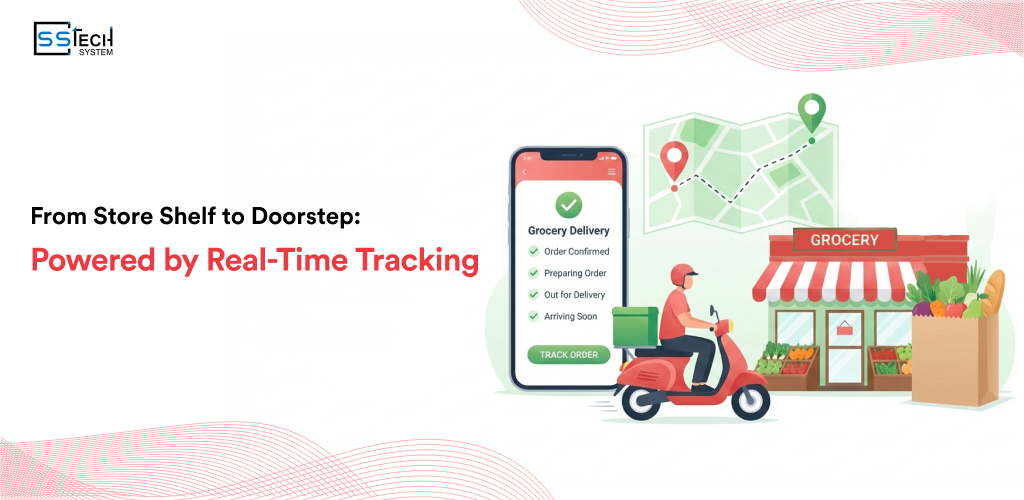
Through a Grocery Last-Mile Delivery App, customers today look for visibility via real-time grocery delivery tracking. In absence of that transparency, retailers these days are risking customers’ trust and their retention.
Grocery Last-Mile Delivery App is irreplaceable for every competitive supermarket chain It, in fact, has been a key element of scalable, technology-backed grocery operations.
The Evolution of Grocery Last-Mile Delivery
Before, it needed a ton of coordination and the delivery of groceries was quite a manual process, however, over time an integrated digital platform of grocery delivery ecosystem has come. In helping retailers provide better operational control, automation and visibility are currently the primary focus.
A. Traditional Grocery Logistics Challenges
Previous grocery chain logistics were dependent on manual dispatching and phone-based coordination. It led to inefficiencies in supermarket delivery management and lengthy fulfillment cycles, due to the lack of a standardized framework.
- Without real-time data, errors made during the manual dispatch process were likely to occur and lead to overlapping deliveries. The high fuel and labor costs were largely due to the sub-optimal grocery supply chain.
- Lack of visibility into deliveries eroded consumer trust and lowered operational predictability. Such inefficiencies created challenges in figuring out how grocery chains profitably make last mile deliveries.
B. Shift Toward Digital Infrastructure
But with more sophisticated last mile delivery technology, retailers are now able to automate their fulfillment. Centralised systems enable smooth coordination among warehouses, dispatch teams, and drivers.
- Delivery management system in an organized manner to automate the assignment of dispatch and routes. Advanced grocery delivery software allows for tracking, reporting, and performance monitoring.
- With digital transformation, delivery errors have decreased noticeably, while service levels have risen sharply. Systems based on data enable tangible improvements in efficiency and cost management.
Why Real-Time Tracking Is the Game Changer
Real-time tracking is the backbone of how grocery fulfillment is done these days. It helps for end-users and merchants to have tracking who see the delivery status.
A. What Is Grocery Real-Time Delivery Tracking?
In real-time delivery management system, a centralized system tracks all the operating systems connected to dispatch and the driver network. It guarantees real-time updates on the fulfillment journey.
- This is when it comes to track your delivery using GPS tracking. Clients obtain this info through a delivery monitoring application, built-in within a grocery store system.
- Infrastructure that is real-time provides an opportunity to visualize the complete shipment in real-time from dispatch to doorstep.
- Real-time tracking is the best way to get rid of uncertainties and to make grocery delivery more dependable.
B. Business Impact
The ability to see things in real time enhances both operational efficiency and customer satisfaction. It puts delivery performance on a measurable and competitive advantage scale.
- Reduced failed deliveries is one of the most significant advantages of real-time tracking in last mile delivery.
- An accurate ETA and live update in-app reduces complaints, support tickets too.
- It also promotes faster routing decisions and transparency, which ultimately leads to improved fulfillment cycles.
- Retailers get bottom-line control and enhanced ability to forge customer trust and loyalty.
Core Technologies Powering Modern Grocery Delivery
At its core, modern grocery fulfillment is ultimately automated, routed, and interconnected. Enabling scalable, efficient, and consumer-centric delivery ecosystems, these technologies seamlessly collaborate.
A. AI & Automation
You have increased efficiency in dispatching, routing, and performance optimization through AI-powered grocery delivery app. These days, a modern grocery delivery application, powered by artificial intelligence, uses predictive analytics in grocery delivery to enhance accuracy and speed in grocery delivery.
- With AI playing a critical role for smart last mile delivery with intelligent delivery route planning, tutorials on batching active orders dynamically, and automated dispatch software for optimised fleet movement.
- Grocery delivery gets delayed smart route optimization helps reduce delays Integrates with strategic Logistics AI development, and seamlessly works with advanced last-mile delivery tracking software.
B. Cloud & IoT Integration
Cloud infrastructure allows centralised visibility and seamless coordination among systems irrespective of geolocations. IoT devices enable operational awareness with synchronized data in real-time.
- Cloud based delivery platforms integrated with IoT in logistics allow real time synchronization between various systems and help provide real-time inventory tracking with accuracy.
- Integrated systems will bring visibility and contactless delivery tracking along with improved responsiveness between hubs of distribution and retail establishments.
C. Fleet & Dispatch Optimization
In grocery delivery, fleet efficiency has a direct relation to cost, speed and reliability. An optimized dispatch system can further ensure that the drivers are on their productivity.
- Fleet management software such as Fleet monitoring software, improves overall driver performance while automating the coordination of drivers with the help of a Delivery partner management system & an intelligent automated dispatch system.
- Using integrated platforms, driver assignments can be matched against real-time demand, while enabling stronger execution on routes and accountability on operations.
The Role of Custom Grocery App Development
Grocery is a complex business, and off-the-shelf never really works. This means systems that are customized for your workflows and growth path that are both flexible and scalable.
A. Why Must Generic Apps Fail
Generic platforms are incapable of providing the kind of customization required for high-volume grocery environments. More often than not, they are also lacking in integration with POS system, inventory tools, and backend logistics platforms.
Generic architectures create bottlenecks for scalability and silo processes, leading to sub-optimal operational efficiency.
B. Tailor-Made for a Competitive Edge
Custom grocery app development would allow you to implement features as per your fulfillment strategy and market positioning. A tailored solution powers real-time order/delivery tracking in grocery apps directly integrated with a delivery management system and centralized courier management software.
Due to unique integration with specialized real-time delivery tracking system, strategic Grocery App Development with Logistics mobile app development ensures full operational control and in-depth customer visibility.
How Grocery Chains Reduce Delivery Costs with Smart Technology
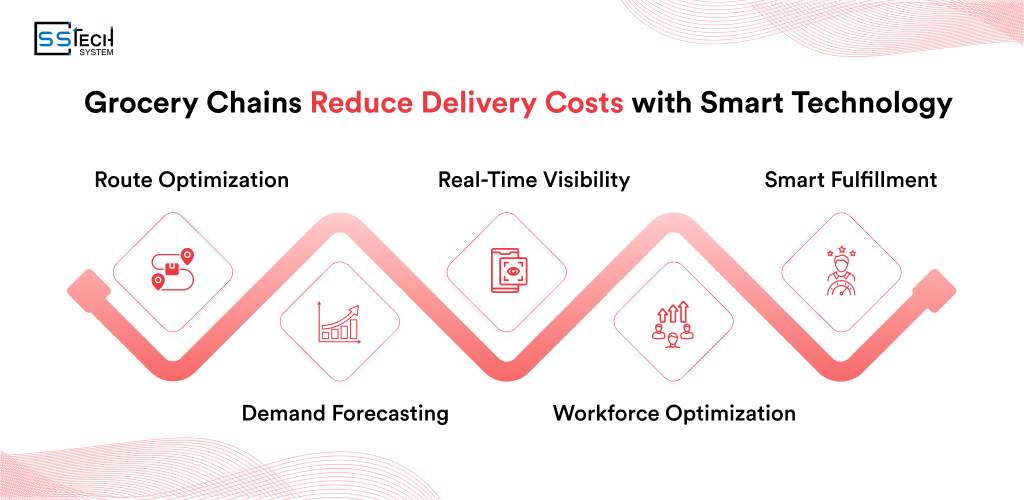
Digital transformation in grocery logistics is primarily being driven by cost efficiency. Simplified operational waste and increased delivery accuracy can be achieved by leveraging advanced capabilities.
Route Optimization
Using AI to optimize the route minimizes the fuel consumption and time spent in waiting and becomes a part of the economical Last-mile supply chain delivery system for grocery business.
Real-Time Visibility
Real Time Tracking: Real-time tracking helps reduce no delivery, provides workforce allocation, and ensures execution in an organized retail delivery management system.
Smart Fulfillment
The retailers leverage the dark store fulfillment model and the micro-fulfillment centers to facilitate proximity-based dispatching and is an example of how the supermarkets are succeeding in decreasing delivery costs whilst increasing the speed of delivery.
Demand Forecasting
By improving the link between order patterns and inventory allocation, predictive analytics can minimize overstock writedowns and increase replenishment cycle optimization across fulfillment hubs.
Workforce Optimization
Automated performance analytics and scheduling facilitate optimal driver distribution, reducing overtime costs while keeping the quality of service on par.

Hyperlocal & Same-Day Delivery Models
Grocery fulfillment today is all about speed. In an environment where localized inventory and delivery radices are paramount, retailers are reaping measurable operational and competitive benefits.
A. Rise of Hyperlocal Fulfillment
Modern grocery solutions are evolving with the growth of hyperlocal delivery solutions. Retailers now have less dependence on big centralized warehouses; they have instead run neighborhood based micro hubs dispersing around within areas to minimize transit time and maximize speed of fulfillment.
- The model is most evident with hyperlocal grocery delivery India that has a dense urban population requiring on-demand order fulfilments. Just as USA supermarket last mile delivery networks are using decentralized storage models to support faster window of deliveries,
- Retailers with grocery delivery solutions Australia are also using proximity based distribution to make services more reliable. When you localize inventory near customers, your fuel expenses decrease, delivery is faster, and operational efficiency is higher.
B. Same-Day & On-Demand Impact
The behaviour of consumers is changing towards immediacy. We have seen the expectations for delivery shortening with the rise of on-demand grocery and same-day grocery delivery.
- The thing is that speed has become a differentiator. When you can provide a solution within hours rather than days, you boost customer retention and positioning in the market as well as increase the frequency of orders made.
Real-Time Tracking’s Impact on Customer Experience
Customer satisfaction directly relates to delivery transparency. Eliminating the uncertainty that accompanies order delivery, whilst instilling greater trust in online orders, by allowing shoppers to track their orders in real time.
- Structured Real-time order tracking in grocery app guarantees customers get continuous ETA updates from dispatch to doorstep. Inbuilt feature of live order tracking system helps them to track the live locations of the delivery partner.
- And features like contactless delivery tracking and automated notifications make it more convenient and safer. By providing customers end-to-end real-time shipment visibility, they know where their order is, so there is no cause for concern.
- An ideal & modern delivery tracking app takes tracking to interactivity. This type of transparency will also lead you towards fewer support requests, higher satisfaction rates and repeat orders.
- It takes time, but reliability consistently creates brand loyalty. People will come back to platforms that maximize their time and communicate effectively.
The Future of Grocery Last-Mile Delivery
The future of grocery fulfillment will be defined by automation, predictive intelligence, and deeper system integration. As technology trends in grocery delivery continue evolving, you will see smarter, faster, and more cost-efficient models powered by AI in last-mile delivery and advanced tracking infrastructure.
- AI-driven predictive analytics: Predictive intelligence and automation will power the next generation of grocery logistics. Retailers that jump early to new systems will reap strategic rewards for decades.
- Autonomous delivery vehicles: AI in last mile delivery is moving from predicting demand patterns as well as traffic and driver availability. Last mile delivery tracking is getting smarter by advanced tracking software, not just finding reactive fixes when things go wrong, but preventing problems from occurring in the first place.
- Drone trials: Autonomous delivery vehicles for trial in some markets, as well as drone-based trials, are examples of emerging technology trends in grocery delivery.
- Advanced IoT fleet systems: IoT connected fleet system are strengthening the grocery supply chain optimization across multi-location networks, by providing enhanced operational visibility.
- Blockchain-based supply chain transparency: To ensure traceability and transparency throughout the grocery logistics operations, testing is also being done on blockchain integration within this field.
Once this tech gets matured, you can expect more automation, lesser operational costs, and better end-to-end visibility in the fulfilment ecosystem.
Read more: The Future of Mobile App Development: Can Flutter Conquer iOS & Android?
Real-World Use Cases in Grocery Last-Mile Delivery
Lessons from actual practice on technology structured steps, grocery chains example These are the order-less quantifiers of reduced and increased customer experience, and efficiency benefits to the numbers.
Recently, a multinational grocery chain deployed AI-based dispatch in tandem with predictive routing. The retailer saw over 25% reduction in failed deliveries through grocery real-time delivery tracking and intelligent driver allocation, and improved same-day fulfilment rates across metro locations.
In urban neighborhoods, a regional supermarket group implemented micro-fulfillment centers. Transportations using this decentralized storage model have observed a 40% lower average delivery radius; this, in turn, resulted in faster order processing and quantifiable fuel savings.
Here, for example, a hyperlocal grocery startup used a cloud-based tracking ecosystem for full-spectrum visibility throughout the order process. The startup captured increased customer retention rates with reduced inbound support queries by integrating live driver tracking and automated notifications into their service.
These examples show how execution via technology is no longer a thing of theory, it is outcome–based and scalable in nature.
Strategic Implementation Framework for Grocery Chains
It’s more like having a structured execution when it comes to transformation, rather than randomly adopting the tools. A phased approach for grocery ecosystem modernization
Step 1: Survey of Where We Are Gaps in Logistics
Identify the system limitations by assessing the inefficiencies in routing, dispatch coordination and delivery visibility.
Step 2: Integrate Real-Time Tracking
Have a centralized delivery management system with live tracking and performance metrics
Step 3: Deploy AI Route Optimization
Use logistic ai development to create predictive routing models and scalable last mile delivery software.
Step 4: Automate Dispatch & Fleet Monitoring
Employ state-of-the-art automated dispatch software with fleet tracking software to expedite driver assignment and manoeuvre operational control.
Step 5: Optimization of Inventory & Fulfilment Nodes
Use smart, real-time inventory tracking systems for dark stores and micro hubs to synchronize stock with demand patterns.
The moment you apply this framework roadmap, operational efficiency is quantifiable and scalable.
Conclusion
As a result, tech-based grocery chains are raising the bar for fulfillment speed and customer service. Companies that emphasize automation, AI, or decentralized infrastructure can respond faster, more reliably, and at lower cost, while all other retailers fall behind.
When it comes to grocery, a scalable Grocery Last-Mile Delivery App is no longer a choice, it is the base of grocery nowadays. Live tracking of grocery deliveries integrated into the app creates transparency, minimizes operational hiccups, and builds trust among customers.
By investing in an AI-based grocery delivery app with sophisticated last-mile logistics technology, armed with your brand potential to scale over time. In a speed and visibility-driven market, adopting an AI-powered and hyperlocal delivery model is a strategic imperative and in no way something to be looked at in the future.
Frequently Asked Questions
Real-time tracking provides live updates, accurate ETAs, and transparency, improving customer trust and reducing failed deliveries.
AI optimizes delivery routes, predicts demand, automates dispatching, and enhances efficiency, reducing delivery time and operational costs.
Hyperlocal delivery uses nearby stores or micro-fulfillment centers to deliver groceries faster within a limited geographic area.
Key technologies include AI, IoT, cloud computing, GPS tracking, and automated fleet management systems.
It offers live delivery updates, reduces uncertainty, enables contactless delivery, and increases customer satisfaction.
Related Article