


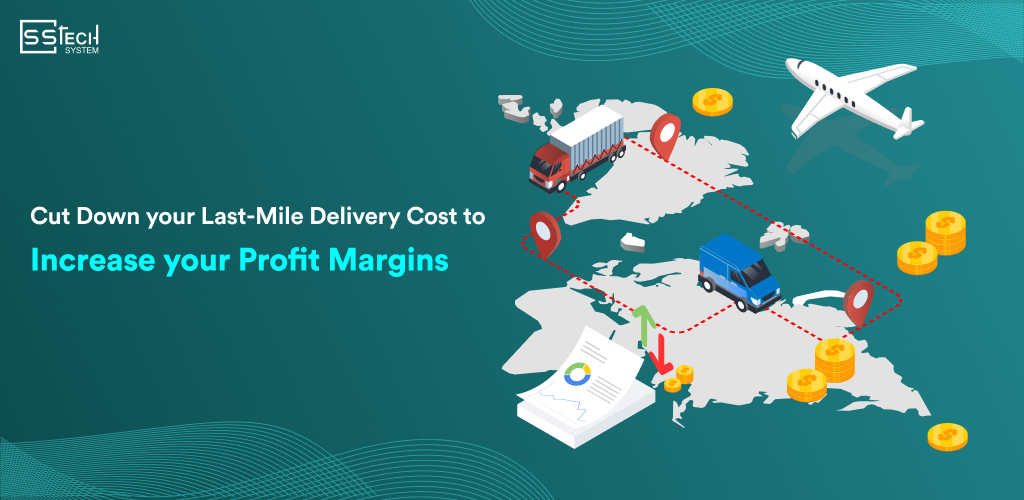
If you run a delivery business, you already feel how rising operational expenses are quietly shrinking your margins, and last-mile delivery cost is usually the biggest culprit behind this pressure. You may optimize upstream logistics, but without focused last mile delivery cost optimization, your delivery cost vs profit margin equation stays unbalanced.
Last-Mile Delivery Cost is the single costliest segment of the delivery chain because it aggregates fuel, labor, fleet usage, routing complexity and customer expectations at a single high-risk point in the operations chain. With increasing fuel prices, shortage of labor, missed deliveries, inefficiencies piling up, last mile delivery cost starts shooting up and outrun revenue growth.
If you want to increase profit margins in delivery business, you must treat lowering delivery costs as a strategic priority rather than a short-term fix. By adopting smarter processes, logistics cost reduction strategies, and the right last mile delivery solutions, you can cut delivery costs while building scalable delivery operations that support long-term growth.
Understanding the True Components of Last-Mile Delivery Expenses
In order to reduce last mile delivery costs, the first step you need is just having a clear idea of your actual expenditure as majority of businesses also only think of their last-mile delivery expenses but in reality it goes beyond the last mile delivery scope. Operationally breaking costs reveals how inefficiencies grow exponentially and affect Lastmile delivery business profits on a day-to-day basis.
Key Cost Drivers in Last-Mile Operations
Driver salaries and fleet costs account for most of your budget, making driver productivity gain and delivery fleet optimization key to cost control.
- If delivery route planning is not supported by route optimization software, manual or partial manual processes increase operational costs by fueling, maintaining and inefficient routes.
- Failed deliveries and repeated attempts can compound costs through extra fuel usage and labor hours, as well as increasing the customer service workload while impeding the improvement of delivery efficiency.
- A courier dispatch system can eliminate these issues like manual dispatching and lack of visibility making your vehicle under-utilized, delivering late and expensive.
Hidden Costs Businesses Often Overlook
Overhead in customer service because of delivery problems silently rises up when customers chase updates, refunds or redeliveries due to execution failures.
- Without real-time delivery tracking software, you would hardly be able to make the proper decisions early on to mitigate inefficiencies as you only have historical data to run the analysis on.
- Left unmanaged, these stealth last-mile delivery costs chip away at margins and hamper the ability to scale last mile delivery operations at lower costs.
Why Reducing Last-Mile Delivery Cost Directly Increases Profit Margins
Delivery cost vs profit margin is literally the bottom line thing delivery efficiency has a direct impact on since every kilometer saved, and each failed delivery mitigated will improve your delivery costs compared to the generated profit. By thinking about how to minimise last-mile delivery costs, you are leaving more capital available for reinvestment into growth and customer experience.
- Reducing last mile delivery costs gives you capital to reinvest into scaling, technology, and customer experience.
- With high delivery volumes, small advancements in opportunities like fleet utilization optimization, delivery time optimization and automation ends up generating exponential savings.
- Companies with cost-effective last mile delivery are able to beat competition with faster delivery and without margin erosion.
- Short-term solutions can only take you so far, and many businesses will find that when they rely on the quick-fix approach to growth, they end up limiting themselves. Implementing delivery automation solutions, courier management software and delivery operations software will leverage cost control in a sustainable way.
- Strengthen delivery business profitability and future-proof you against increasing demand and operational complexity with a long-term optimization strategy.
Route Optimization: The Foundation of Cost-Efficient Last-Mile Delivery
Route optimization would have to be the first lever you pull if you wish to take control of Last-Mile Delivery Cost, because inefficient routing translates to more fuel spend, longer delivery time, and high labor cost. Smarter delivery route planning and route optimization software help you build a sustainable last mile delivery model that truly cuts costs but scales up without inflating costs.
Common Routing Inefficiencies
- Route planning done manually is based on guesswork, resulting in higher travel distances and lower improvements in delivery efficiency.
- Static routes that ignore traffic and density of order waiting cause delays, fuel wastage, and bad fleet utilization optimization.
Harnessing Technology to Maximize Routing
- Real-time Data Last mile delivery optimization engines, dynamically allocates the optimal routes for all deliveries in real time.
- Traffic-aware and order-clustered routing reduces congestion delays while improving delivery time optimization.
- Decreased fuel consumption and swift deliveries contribute directly to reducing labor and fuel costs in the delivery procedure.
Business Impact
- Less distance per delivery reduces fuel and servicing costs throughout your fleet.
- Minimized driver overtime enhances optimization in driver productivity and manages labor expenses.
- All of these enhancements help directly in bringing down last mile delivery costs and in safeguarding your profit margins.
Read more: Why You Must Have Route Optimization Software for Your Logistics Business?
Automating Dispatch to Eliminate Operational Waste
Manual dispatching slows your operations and increases errors, making it harder for you to cut delivery costs at scale. Automating dispatch with a smart courier dispatch system boosts delivery efficiency while allowing you to retire wasteful operational costs.
Problems with Manual Dispatching
- Missed delivery windows and inefficient fleet usage is a result of human errors and delayed assignments.
- Idle drivers and unbalanced workload is something that results from inefficiency utilization of resource.
Advantages of Smart Courier Dispatch System
- The automatic allocation of jobs based on location and capacity ensures the best utilization of the fleet and the driver.
- Better efficiency in delivery means faster turnaround time and improved driver productivity.
Read more: Modernizing Parcel & Courier Delivery Operations in 2026
Cost Savings Achieved
- Minimise idle time means you can make more deliveries with the same number of vehicles.
- Higher delivery density leads to lower cost per order across routes.
- Which makes the approach data-driven to efficiently reduce delivery cost with sustainability.
Real-Time Visibility to Prevent Costly Delivery Failures
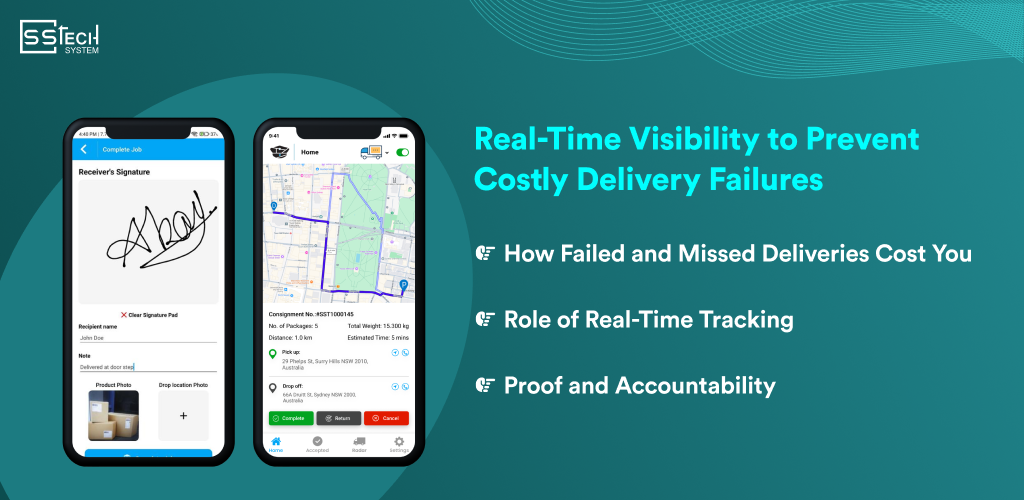
It’s no surprise that lack of visibility contributes to higher last mile delivery costs, especially when deliveries fail to materialize at the click of a button. Using real-time delivery tracking software means controlling execution and eliminating avoidable losses in delivery.
How Failed and Missed Deliveries Cost You
- If something needs re-delivery, the driver has to burn fuel and spend at least that much time again on a repeat order.
- The profitability of the last-miledelivery business is directly harmed by customer dissatisfaction and returns.
Role of Real-Time Tracking
- Real-time delivery tracking software provides you with live updates on the driver’s location as well as delivery status.
- Identifying potential issues and fixing them before any failures actually occur helps you prevent failures and thus improve delivery success rate and service reliability.
Proof and Accountability
- With proof of delivery solutions, you eliminate disputes via digital drop-off confirmation.
- This allows scalable delivery operations while digital confirmations releasing extra resources from customer service costs.
Improving Driver Productivity with Courier Management Software
Since drivers are one of the largest operational costs, enhancing their efficiency improves the Last-Mile Delivery Cost directly. Courier management software that tracks driver performance effectively will allow you to improve ride efficiency without increasing labor cost per delivery.
Managing Drivers More Effectively
- Performance tracking and KPIs allow you to pinpoint issues and celebrate high-performing drivers.
- Making efficiency and accuracy rewarding ensures on-time delivery more often and better service.
Reducing Manual Workloads
- Digital workflows that replace paperwork cut mistakes and free up driver hours.
- Courier management software streamlines task management that helps drivers concentrate on deliveries, not administration.
Financial Impact
- If each driver can handle more deliveries every shift, we’re able to crank our revenue output without needing to expand the fleet.
- And lower labour cost per order lends further strength to margins and profits out of the delivery business sustenance over the long run.
Centralizing Operations with Delivery Operations Software
Deliveries across disjointed tools mean inefficiencies, delays, and a lack of clear visibility, which quietly ramp up costs and can result in increasing your Last-Mile Delivery Cost. A single source of truth eliminates fragmentation, ensuring control over execution, and ultimately delivering predictable operational savings at scale through delivery operations software.
Challenges of Fragmented Systems
- Data silos created by multiple tools prevent teams from sharing true, real-time delivery data.
- Without operational visibility you struggle to find inefficiencies ultimately paying more because you cannot act quickly enough.
Benefits of a Unified Delivery Management System
- Tracking performance across the entire last mile is made easier with end-to-end visibility from order to delivery.
- Centralized dashboards help improve decision-making, optimize their resources, and facilitate last mile deliver optimization.
Cost Control at Scale
- Decreased admin overhead lowers the cost of manual coordination and reporting.
- Greater control over last mile delivery costs adds to your capacity to scale with profitability.
Leveraging Delivery Automation Solutions for Long-Term Cost Reduction
When your last mile delivery operational costs need slashing but not your operational complexities, automation comes into play. The delivery automation solutions you adopt will push the manual effort aside, instead creating predictable and efficient workflows that can support a delivery operation that scales.
Last-Mile Delivery Automation
- Order Allocation ensures that Jobs are assigned based on location, capacity and availability.
- Automated scheduling for delivery routes to maximize fuel efficiency.
- Customers can stay up-to-date with status updates and notifications not requiring increased support.
Business Value of Automation
- Less reliance on human intervention minimizes mistakes and reduces operational friction.
- Quicker and error-proof execution enhances efficiency in delivery and reliability in service.
Make automation a means of cost
- Orchestration solutions for delivery can keep costs consistent as volume increases, enabling sustainable growth.
- This has built a genuinely capital-level sustainable last-mile delivery infrastructure model.
Off-the-Shelf Tools vs Custom Logistics Software Development
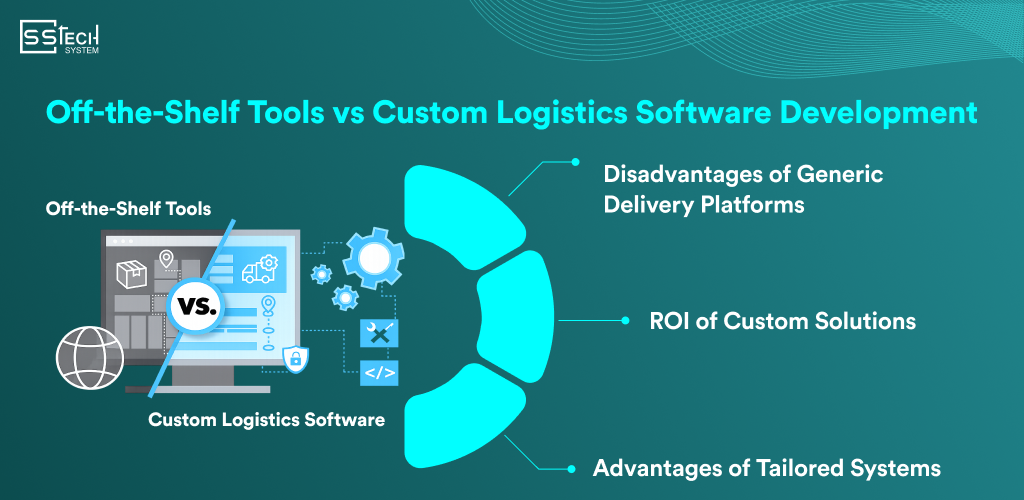
The decision of generic platforms or specialized systems is a long-term stake impacting your Last-Mile Delivery Cost significantly. Although ready-to-use tools seem cheaper upfront, custom logistics software development provides much higher value as your business grows.
Disadvantages of Generic Delivery Platforms
- Non-flexibility limits your scope to optimize delivery model workflows as per your requirements.
- Unable to adjust to specific business models lock you into less than optimal processes that drive up costs.
Advantages of Tailored Systems
- Through custom workflows and integrations, you align technology in the path of your operational needs.
- More alignment with the operational needs make the delivery efficient and resource optimally utilized.
ROI of Custom Solutions
- Although can be expensive at first, it pays off in the long term with custom logistics software development.
- Logistics software solutions allow for deeper cost optimization as they drive automation, analytics and scale.
Read more: How to Remove Bottlenecks in Logistic Operations Using Custom Software
Choosing the Right Last-Mile Delivery Solutions to Control Costs
The key in choosing the best technology that you will use is the extent to which you will be able to slash delivery costs and the way to protect margins. Your ideal last mile delivery solutions should unite operational convenience with your future profits.
- Some of the key features one should look for last mile delivery solutions is automation, real-time visibility, and performance analytics.
- Scale, automation, analytics, and integrations keep your platform aligned with scale.
- This is easy enough to do when technology investments are closely aligned with profit goals, as they improve delivery cost vs profit margin.
- Demonstrating resilience to increase in operational costs protects you from the volatility in fuel, labor, and demand, among other things.
Conclusion:
Since best cannot be measured in cost per delivery, reducing Last-Mile Delivery Cost involves a mix of smarter routing, automation, systems and data-driven decision making centred around cost to serve. By understanding last mile delivery expense, you are better able to plan for efficient margins and thus boost delivery business profits.
Bringing together people, process, and technology allows you to develop logistics cost reduction strategies that are repeatable and effective at scale. The lesson is simple: last-mile operations become more profitable if they are intelligent, accelerated, automated and designed for scale.
Frequently Asked Questions
Automation simplifies routing, tracking, and dispatch to minimize operational inefficiencies in a Last-mile delivery business. Logistics mobile app development solutions, gives you better visibility and control over your daily delivery costs.
Real-time routing, demand forecasting and delivery execution accuracy are improved as AI analyses real-time and historical data. Logistics AI App development helps g row in smarter decision-making, long-term cost optimization for the delivery business.
A bespoke application allows you to match any workflows, pricing models, and customer expectations that suit your operations. With Logistics mobile app development, you can automate processes that directly affect profitability and scalability.
A Vehicle tracking app gives you a clear display of your fleets movement in real-time which in turn aids you in eliminating fuel wastage, idle time as well as unauthorized usage. It increases accountability and offers transparency so mean delivery time optimization.
Absolutely not anymore, modern tooling scales for volume. They are no longer reserved for large organizations. High upfront investment is an indicator of innovation, but while last-mile delivery businesses are growing these days, they can still gain from AI, automation, tracking et al.
Related Article