


You run deliveries every day. The trucks move, drivers hustle, and customers wait. But here’s the real question: do you truly see what is happening between dispatch and doorstep?
For many logistics teams, the answer used to be no. Why? Because you relied on phone calls and waited for manual updates. And you found out about problems only when customers complained.
In today’s market, that gap hurts margins, service quality, and customer trust.
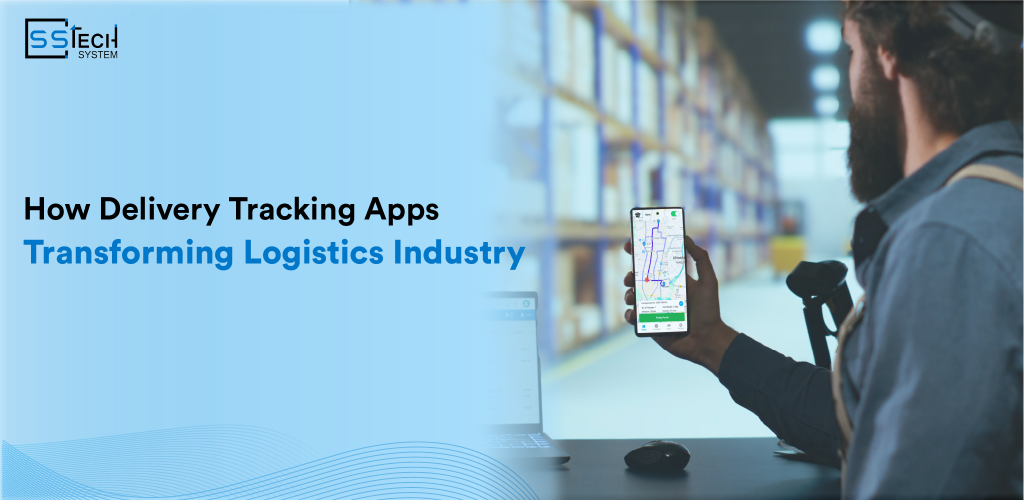
That is why delivery tracking apps have changed the rules. They turn scattered delivery data into one clear picture where you see routes, status, and get real-time delivery tracking that helps you act before issues escalate.
This blog walks you through exactly how tracking apps reshape operations, reduce chaos, improve customer experience, and set a new standard for logistics teams.
Let’s begin!
The Logistics Industry Before Tracking Apps
Before delivery tracking apps existed, logistics were fast on paper but slow in reality. You had vehicles on the road and had orders moving.
Yet you did not have true logistics operations visibility. The information arrived late, updates were fragmented, and decisions were reactive instead of controlled.
Read more: Why GPS Logistics Tracking is Essential for Your Supply Chain?
This is the world in which many teams operated, and some still do today.
Let’s break down what that looked like.
Fragmented Delivery Information
In the past, delivery information lived everywhere except in one place. Dispatchers relied on paper logs. And drivers called when they had time. Plus, the supervisors pieced together updates from spreadsheets, emails, and WhatsApp chats.
Everyone worked hard. Nobody had a single source of truth.
- A shipment delay might be known by the driver
- The warehouse team might not know yet
- Customer support would only find out when the customer called
This created friction across every step of the delivery lifecycle.
Why Manual Status Updates Fail at Scale
Manual updates work when you manage five vehicles. But they collapse when you manage fifty.
This is because drivers get busy, calls go unanswered, and details get forgotten. And by the time the status reaches the system, it is already outdated, and outdated information leads to bad decisions.
Dependency on Human Follow-Ups
With human follow-ups:
- Operations teams ended up chasing drivers for answers.
- Drivers felt micromanaged.
- Customers waited in uncertainty.
It was a constant game of catch-up.
Reactive Operations and Firefighting
- Without real-time visibility, logistics teams used to spend most of their day responding to problems after they happened.
- A vehicle breakdown, a missed route, and failed delivery attempt. You usually discover all these issues too late to fix them.
- As a result, operational planning turned into operational firefighting. Teams stayed busy, performance did not always improve, and predictability was nearly impossible.
Customer Experience Gaps
Customers today expect transparency. But before delivery tracking tools existed, customers simply waited.
They did not know:
- Where their package was
- When it would arrive
- Whether a delay had happened
Due to this, support teams handled endless “Where is my order?” calls. Hence, trust declined, and missed expectations felt like broken promises.
What Delivery Tracking Apps Really Do
- Delivery tracking apps are often misunderstood. Many people think they only show a map and a moving vehicle icon.
- In reality, they work as a logistics tracking software layer that brings your entire delivery lifecycle into one unified system.
- You move from guessing to knowing, reacting to predicting, and from scattered data to real-time delivery visibility.
Let’s break down how they create that transformation in practical, everyday terms.
Create Real-Time Delivery Visibility
The first and biggest shift you feel is control. A delivery tracking app gives you live visibility into every delivery, every vehicle, and every route, on a single dashboard.
You can see:
- Which orders are on time
- Which routes face delays
- Which drivers need support
- Which customers should receive updates
Instead of waiting for calls, you already have the facts. Plus, your teams stop chasing information and start managing operations confidently.
This is the foundation for smarter logistics decisions.
Live Status Across the Delivery Lifecycle
Every stage of delivery is visible with these apps. From dispatch to transit to delivery completion, each event is recorded automatically inside the system.
So, you no longer rely on memory or handwritten notes. You track progress in real time.
From Pickup to Final Handover
With delivery tracking tools:
- You see, when the order is picked up
- You see, when it reaches the customer, and
- You track the final handover without confusion
That single change removes uncertainty for operations, drivers, and customers.
Digitize Proof of Delivery
Paper-based delivery confirmation creates disputes. Moreover, handwritten notes fade and signatures can get misplaced.
A delivery tracking app replaces this with digital proof of delivery.
Drivers capture:
- Customer signatures
- Time-stamped photos
- Barcode scans
- OTP confirmations
Everything is stored securely without any confusion or argument. And you always have a record.
Plus, digital proof protects your revenue, reduces false complaints, and strengthens accountability across the chain.
Eliminating Manual Confirmation Gaps
Manual confirmations leave room for error. Drivers may forget details, and support teams may misinterpret notes.
With digital records, information becomes accurate and traceable automatically.
And when customers question deliveries, you respond with facts, not assumptions.
Enable Data-Driven Delivery Decisions
This is where delivery tracking apps move from operational tools to strategic intelligence platforms.
The system turns raw delivery data into delivery analytics that highlight patterns:
- Delayed routes
- Repeat failure locations
- Underperforming time windows
- Driver productivity trends
Instead of solving the same problems again and again, you understand their root causes.
This way, you can optimize operations proactively, reduce costs, and improve fleet performance with clarity.
Operational Areas Transformed by Tracking Apps
When you adopt last-mile delivery tracking, the impact doesn’t stay on the map alone. It changes how your teams plan, execute, coordinate, and resolve delivery challenges every single day.
In short, tracking apps transform the backbone of delivery operations management.
Let’s walk through how this plays out in real workflows.
Dispatch and Route Planning
Dispatch used to feel like organized chaos, where you assigned deliveries and hoped drivers would follow the plan. You could only intervene when something went wrong.
With a delivery tracking app powered by route optimization software, dispatch becomes smarter and far more controlled.
- You can see which drivers are closest.
- You assign jobs based on load capacity, delivery windows, and traffic patterns.
- You balance workloads instead of overloading a few drivers.
The system helps you plan routes that reduce delays, fuel use, and idle time.
So, instead of reacting after issues occur, your dispatch team prevents them upfront.
Dynamic Allocation of Deliveries
When new orders come in. Priorities change, and sometimes customers update addresses.
Earlier, these changes caused stress because they disrupted everything.
Now, dispatchers adjust quickly.
- They reassign deliveries to available drivers
- They reroute trips in real time
- They handle exceptions without panic, and
- You keep operations moving without breaking the system
Reducing Manual Dispatch Dependency
Manual dispatch relies heavily on one or two experienced people. If they are unavailable, operations slow down.
Tracking software standardizes decisions. Anyone in your team can view routes, delivery queues, and driver availability, and make informed choices.
As a result, your business becomes scalable, not personality-dependent.
Driver Execution on the Ground
Your drivers are the face of your business. So, when they have clarity, they perform better.
A driver delivery app gives them guided workflows via which drivers can see their route list clearly, get navigation support, receive instructions instantly, and capture proof of delivery without paperwork.
This way, drivers spend less time coordinating and more time delivering. Plus, the errors reduce, and the miscommunication drops.
Their day feels structured instead of stressful.
Guided Workflows for Drivers
Every delivery becomes a simple step-by-step process:
- Start delivery
- Navigate to the location
- Capture ePOD
- Mark completion
Drivers don’t guess. They don’t rely on memory. Plus, they complete tasks with confidence.
And you gain visibility into every action, without calling them constantly.
Customer Support and Service Teams
Customer support teams carry a heavy burden when logistics lack visibility. Most calls revolve around one question:
“Where is my order?”
- With delivery exception management inside the tracking platform, support agents see real-time updates, delays, and delivery attempts instantly.
- They communicate proactively, inform customers instead of chasing status internally, and resolve issues before frustration builds.
- Support shifts from reactive firefighting to genuine service.
Proactive Issue Resolution
Imagine spotting a stalled delivery before the customer does. You notify them. You set new expectations. And you coordinate recovery faster.
That simple change improves trust, reduces escalations, and protects brand reputation without extra effort.
From Tracking to Transparency – Customer Experience Impact
Tracking apps do more than help operations. They change how customers feel about your brand. And transparency removes uncertainty. That is what modern logistics customers value most.
Let’s see how that plays out in everyday delivery experiences.
Setting Clear Delivery Expectations: Customers know what is happening and when it will happen. They see live ETAs, updates, and alerts that reduce confusion right from the start.
Reducing Customer Anxiety and Follow-Ups: Real-time visibility means fewer “Where is my order?” calls. This way, customers stay informed automatically, and your support team finally gets breathing room.
Building Trust Through Transparency: When delays occur, customers still feel informed instead of ignored. Consistent communication builds reliability, and reliability builds loyalty.
Implementation Approach – Adopting Tracking Apps the Right Way

Buying a delivery tracking app is the easy part. Rolling it out the right way is where success happens, or problems begin.
Here is a practical roadmap that works in real-world logistics environments.
Step 1 – Define Your Delivery Workflow
Before any software goes live, you map how deliveries actually move in your business.
You need to identify who updates status, where handoffs happen, and where mistakes usually occur.
This helps the tracking app mirror your real workflows, instead of forcing teams to change overnight. The clearer your workflow, the smoother your rollout.
Mapping Status Milestones
You break the delivery journey into milestones such as dispatched, out for delivery, arrived, delayed, and completed.
Each milestone becomes a trigger inside the system. This allows teams to track progress consistently instead of guessing.
Standardizing Delivery Terminology
Everyone must speak the same operational language. “In transit” should mean the same thing to dispatch, drivers, and support. When terminology is clear, reporting improves, and miscommunication drops dramatically.
Step 2 – Start With a Controlled Rollout
You do not need to digitize your entire fleet on day one. Start with a pilot region, a few drivers, or a specific delivery type. Observe how teams use the app, where they get stuck, and what training gaps exist.
This controlled rollout helps you refine processes before scaling, thereby reducing resistance and technical hiccups.
Step 3 – Train Teams and Align Processes
Tracking software only works when people are confident using it. Drivers learn guided workflows. Dispatch teams learn dashboards and alerts. And support teams learn how to view delivery exceptions quickly so that you can focus on practical scenarios, not theory.
Once everyone understands why the app helps them, adoption becomes easier, and results become measurable.
Step 4 – Scale Across Regions and Services
After your pilot stabilizes, you expand. More routes, more drivers, more service types.
Data from the system highlights where automation helps most and where adjustments are needed. And you build repeatable processes instead of reinventing them for every branch.
Over time, the app becomes part of your logistics culture, while supporting consistent performance at scale.
Key Features to Look for in a Delivery Tracking App
Not every delivery tracking app delivers the same value. Some look impressive on the surface but fall short once operations scale. Others solve visibility but fail when you need reports, integrations, or reliability.
The best approach is simple: evaluate features through the lens of control, growth, and usability. When you do that, choosing the right platform becomes easier and smarter.
Let’s break down the features that matter most, and why they matter to your business.
Core Functional Capabilities
A strong delivery tracking app must handle the essentials flawlessly. The key core-fucntional capalities like real-time tracking, electronic proof of delivery, and customer notifications work together as your operational backbone.
These features reduce confusion, protect revenue, and keep customers in the loop without manual intervention. If these basics feel slow or unreliable, everything else collapses on top of them.
Real-Time Tracking, POD, Notifications
You look at four things here.
- First, accuracy, because lagging GPS ruins decision-making.
- Second, ePOD flexibility, since photos, signatures, and barcodes help resolve disputes instantly.
- Third, customer notifications, because proactive updates cut support calls.
- Finally, offline continuity, ro ensure drivers still work even when connectivity drops.
Each factor shapes your day-to-day performance.
Integration and Flexibility
Your tracking app should not live in isolation. It should connect smoothly with TMS, WMS, ERP, CRM, and partner systems.
Strong integration capabilities remove double entry, reduce errors, and create one unified source of truth.
Over time, this flexibility helps your logistics strategy evolve instead of hitting technical walls.
Evaluate Integration Depth Using These Factors
Check
- Whether APIs are well-documented
- Whether the system supports webhooks for event alerts, and
- Whether integrations work without endless custom coding.
Plus, look for compatibility with your existing stack. Also confirm how easy it is to onboard new carriers, partners, or third-party tools. The right integration layer protects your future.
Reporting and Operational Insights
A good app tracks deliveries. But a great app teaches you why things happen.
Robust delivery performance insights give leaders clarity on delays, failed attempts, route inefficiencies, and driver productivity trends.
This turns your tracking system into a continuous improvement engine, not just a monitoring screen.
Assess Insights Using These Factors
Look for dashboards that show real KPIs, not vanity numbers. You want exception reports, driver scorecards, and trend analysis over time.
Predictive insights also help spot recurring bottlenecks before they become costly. And if reports are difficult to read or export, teams simply won’t use them.
Security, Scalability, and Reliability
Over time, operations grow, data increases, and eams expand. Your delivery tracking platform must handle that growth without slowing down or risking security.
Reliability isn’t a luxury in logistics; it is the foundation that keeps customers satisfied and compliance teams confident.
Evaluate Long-Term Stability Using These Factors
Confirm data encryption, role-based permissions, and compliance standards such as SOC or ISO where relevant.
Review uptime commitments and support SLAs. Ans ask how the platform handles multi-region fleets or seasonal volume spikes.
Because a scalable system grows with you instead of forcing expensive migrations later.
Driver Adoption and Ease of Use
Technology only succeeds if drivers actually use it. A complicated interface leads to skipped updates, incorrect entries, and frustration.
A driver delivery app should feel intuitive, supportive, and lightweight, so drivers focus on their job, not on the software.
Evaluate Usability With These Factors
Check whether workflows are step-by-step, whether navigation is clear, and whether the app supports multiple languages.
Low data and battery usage also matter on long routes. And when the app feels simple, adoption rises, accuracy improves, and training time drops.
Up next, we look at how to measure success once your tracking system goes live, so you know the investment is truly working.

Measuring Success After Implementation
Once your delivery tracking app goes live, the real question begins: is it actually improving logistics performance?
The smartest teams track a few clear metrics and use them to guide ongoing improvements.
Here’s how it is measured:
Operational Efficiency Indicators
You start by measuring how smoothly operations run compared to before. Look at delivery times, failed delivery rates, and manual coordination effort. If teams communicate less by phone and resolve issues faster, the system is working.
Continuous Improvement Using Tracking Data
The next step is using data to refine processes. Analytics show recurring problem routes, driver behavior patterns, and bottlenecks across regions. You turn these insights into targeted changes that reduce costs, improve delivery reliability, and strengthen service consistency over time.
The Future of Logistics with Tracking-First Operations
When visibility becomes the default, your logistics strategy shifts from reacting to planning ahead.
Tracking-first operations lay the groundwork for smarter automation, predictive insights, and more scalable delivery models.
Here’s what the future of logistics look like with tracking-first operations:
From Visibility to Predictability
Today you can see what is happening. Tomorrow you forecast what will happen next.
Data from every delivery helps predict delays, optimize routes automatically, and identify risks before they affect the customer. H’ence, decisions become proactive instead of urgent.
Tracking Apps as a Foundation for Automation
Automation depends on accurate, real-time data. With reliable tracking, you automate alerts, escalations, dispatch decisions, and reporting with confidence.
Instead of managing every detail manually, your teams focus on strategy, partnerships, and service innovation.
Read more: Top Logistics Tech Trends to Watch in 2026
Conclusion
Reliable delivery is no longer driven by guesswork. It is driven by visibility.
When every delivery is tracked, recorded, and monitored in real time, you get control over operations instead of reacting when things go wrong.
Delivery tracking apps help you reduce confusion, resolve issues faster, and give customers the confidence that their orders are handled professionally.
This shift is not about adding another tool. It’s about building a logistics system that supports smarter planning, measurable performance, and continuous improvement.
You create a process that works the same way every day, even as volumes grow and demands change.
At SSTech System, we work closely with logistics teams to design tracking-first solutions that fit real operations. If you want clearer delivery visibility, stronger last-mile performance, and data you can trust, our experts are here to help.
Frequently Asked Questions
A delivery tracking app is a digital solution that provides real time delivery visibility from dispatch to final delivery. It allows logistics teams to track order status, live location, ETAs, and proof of delivery, ensuring clear coordination between drivers, operations teams, and customers.
Delivery tracking apps improve logistics operations by reducing manual coordination and increasing delivery visibility. Teams can identify delays early, resolve delivery issues faster, and make informed decisions using real time delivery data instead of relying on phone calls or assumptions.
A reliable delivery tracking app should include real time tracking, digital proof of delivery, driver workflow management, customer notifications, exception alerts, and delivery performance reporting. These features help logistics teams manage deliveries efficiently and maintain consistent service quality.
Yes, delivery tracking apps are suitable for small logistics and courier businesses. They help organize deliveries, reduce missed delivery attempts, improve customer communication, and provide better operational control while scaling smoothly as the business grows.
The time required to implement a delivery tracking app depends on operational complexity and fleet size. Most logistics businesses start with a pilot rollout and expand gradually, allowing them to adopt the system without disrupting daily delivery operations.
Related Article